

LONG BEACH, CALIFORNIA – On Monday, March 9, 2026, Vast Space announced it has raised $500 million in new funding to accelerate the development of its commercial space station fleet. The capital infusion consists of $300 million in Series A equity and $200 million in debt financing, positioning the company to meet the critical timeline for replacing the International Space Station (ISS) after its planned retirement in 2030.
The financing round was led by Balerion Space Ventures with participation from a diverse group of strategic investors including the Qatar Investment Authority (QIA), IQT, Mitsui & Co., MUFG, and Nikon Corporation. Founder and first investor Jed McCaleb also participated in the round.
Infrastructure Development: From Haven-1 to Haven-2
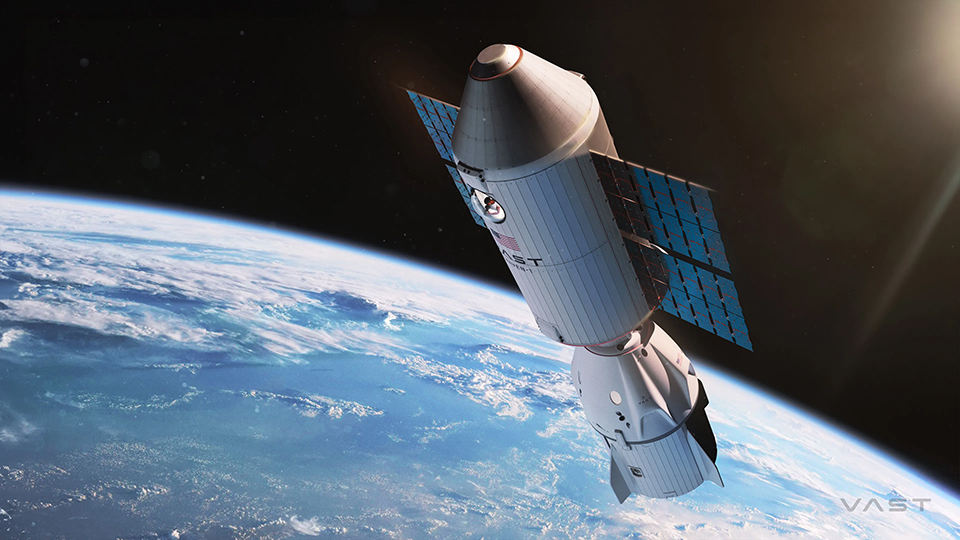
The new capital is earmarked for the completion of Haven-1, which Vast aims to be the world’s first commercial space station, and the scaling of the larger, multi-module Haven-2 architecture.
Haven-1 is currently in its final phases of integration at Vast’s Long Beach headquarters. Following the successful mission of the Haven Demo testbed—which proved out the company’s software, avionics, and thermal control systems in late 2025—the company is now preparing the full-scale flight article for environmental testing.
The Haven-2 platform is Vast’s primary bid for NASA’s Commercial Low Earth Orbit Destinations (CLD) Phase 2 program. Unlike the single-module Haven-1, Haven-2 is designed as a direct successor to the ISS, offering expanded habitable volume, advanced microgravity research labs, and sovereign modules for international partners.
Vertically Integrated Manufacturing
Vast attributes its rapid development pace to a vertically integrated model that has reportedly reduced primary structure manufacturing costs by 10x compared to traditional aerospace programs. The company machines its own flight panels, welds its pressure hulls, and develops its own life support systems in-house.
“This investment underscores the market’s strong conviction in both our strategy and our engineering,” said Max Haot, CEO of Vast. “The low-Earth orbit economy is at a pivotal inflection point, poised for rapid growth. Vast’s Haven stations are engineered to deliver safe, cost-effective access to microgravity research and in-space manufacturing.”
Strategic Outlook and Launch Schedule
The funding arrives as the commercial LEO race intensifies, with competitors like Axiom Space and Starlab also seeking to capture the post-ISS market. Vast recently updated its Haven-1 schedule to Q1 2027 to allow for additional system-level environmental testing at NASA’s Neil Armstrong Test Facility.
The station will launch on a SpaceX Falcon 9 from Cape Canaveral. Shortly after reaching orbit, the Vast-1 mission—the first private astronaut mission to the station—will ferry a crew of four aboard a SpaceX Dragon for a 30-day stay focused on materials science and biotechnology.
