

THE PENTAGON – Long before the first F-35 stealth fighters entered Iranian airspace on February 28, 2026, the battle for dominance was already being won 22,000 miles above the Earth. In the opening minutes of Operation Epic Fury, U.S. Space Command and U.S. Cyber Command acted as the “first movers,” executing a coordinated non-kinetic strike that blinded Iranian sensors and severed military communications networks.
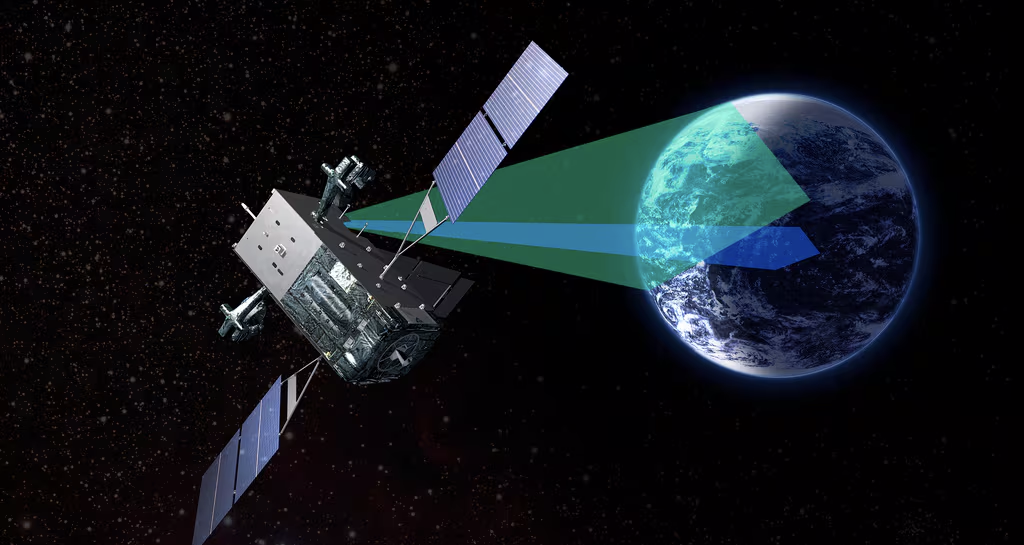
This operational debut of the U.S. Space Force (USSF) in a high-intensity conflict marks a historical shift in warfare, where orbital assets are no longer just support tools but primary offensive catalysts.
The 5th Space Warning Squadron and OPIR Detection
As Iran launched retaliatory ballistic missiles against U.S. installations across the Middle East, the 5th Space Warning Squadron out of Buckley Space Force Base, Colorado, became the frontline of defense. Utilizing the Joint Tactical Ground Station (JTAGS), Guardians monitored Overhead Persistent Infrared (OPIR) satellites to detect heat signatures within milliseconds of ignition.
Technical performance of the OPIR grid during the first 100 hours included:
- Detection Speed: Ballistic missile launches were identified and tracked in real-time.
- Warning Latency: Targeting data was pushed to Patriot and THAAD interceptor batteries in the field within seconds.
- Threat Mitigation: According to Chairman of the Joint Chiefs of Staff Gen. Dan Caine, ballistic missile effectiveness was reduced by 90% due to Space Force early warning and localized electronic warfare.
Spectrum Warfare: Mission Delta 3
While the 5th SWS provided the “eyes,” Mission Delta 3 provided the “cloak.” Responsible for space electromagnetic warfare, Guardians from Delta 3 layered non-kinetic effects to disrupt Iran’s ability to coordinate a response. This “spectrum superiority” allowed U.S. B-2 bombers to penetrate deeply buried targets around Tehran with minimal risk from surface-to-air missile (SAM) batteries.
“The first movers were U.S. SPACECOM and U.S. CYBERCOM, layering non-kinetic effects, disrupting and degrading Iran’s ability to see, communicate, and respond,” Gen. Caine told reporters during a March 2 briefing.
Rationale: The Proliferated Kill Chain
The integration of space assets into the “kill chain” has transitioned from theoretical doctrine to active combat reality. By leveraging the Proliferated Warfighter Space Architecture (PWSA), the USSF provided a resilient mesh network that remained operational despite Iranian attempts at uplink jamming.
This “commercial-plus-military” hybrid model ensured that GPS and communication signals remained hardened. Secretary of Defense Pete Hegseth noted that the degradation of Iran’s air defenses—facilitated by initial space and cyber strikes—enabled the U.S. to achieve air superiority across the southern coast within the first 72 hours of the campaign.
Next Steps and Operational Outlook
As Operation Epic Fury enters its second week, the Space Force is pivoting to a “sustainment and targeting” phase.
- BDA (Battle Damage Assessment): Guardians are utilizing high-resolution commercial and military imaging to verify the destruction of over 30 Iranian naval vessels and 200 deep-inland targets.
- Targeting Production: The mission has shifted to dismantling Iran’s ballistic missile industrial base, using space-based SIGINT (Signals Intelligence) to track mobile launcher movements.
The operation is currently estimated to cost $891 million per day, with the Pentagon requesting a supplemental budget to replenish the high-end munitions and space-launch capabilities expended during the surge.
