

On Tuesday, March 3, 2026, the latest PwC Lunar Market Assessment projected that the lunar economy will reach $127.3 billion in annual revenue by 2050. However, the report and industry experts warn that current energy infrastructure—rather than transportation—remains the most significant hurdle to sustainable surface operations.
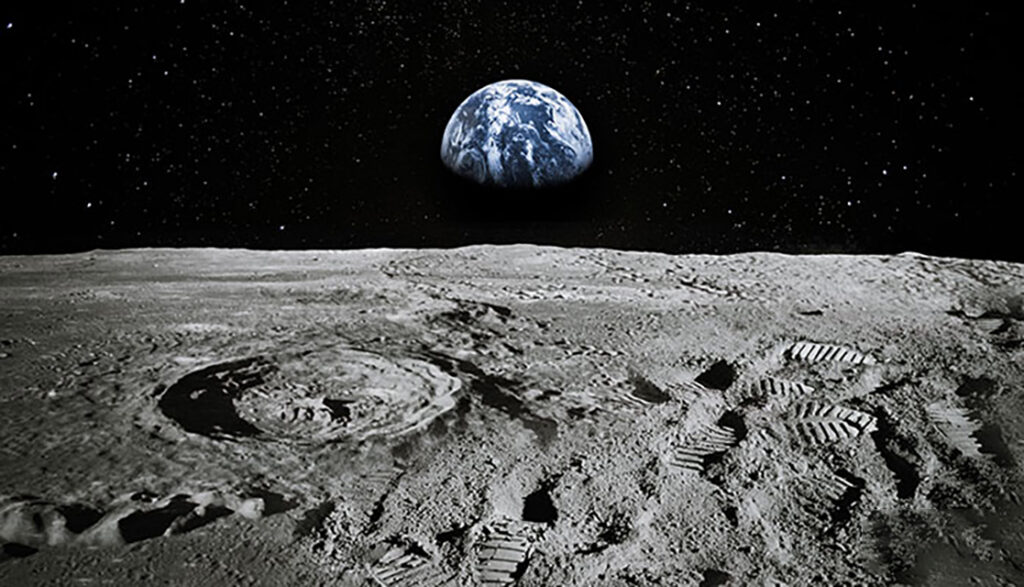
The projection comes as NASA executes a strategic overhaul of the Artemis program to prioritize incremental mission validation and “operational muscle memory.”
Artemis Architecture Restructuring
NASA Administrator Jared Isaacman recently announced a fundamental shift in the Artemis program roadmap. To reduce risk and stabilize launch cadence, the agency has cancelled the Space Launch System (SLS) Block 1B upgrades and redirected the Artemis III mission (2027) to a Low Earth Orbit (LEO) docking and systems validation flight. This “Apollo 9-style” rehearsal will test commercial lunar landers from SpaceX and Blue Origin before attempting a crewed surface landing with Artemis IV in 2028.
The Lunar Night Energy Gap
While transportation risks are being mitigated, the “energy gap” remains unaddressed. A single lunar night lasts approximately 14 Earth days, during which temperatures plummet to –274°F (–170°C). Mihails Ščepanskis, CEO of Latvian startup Deep Space Energy, notes that solar-only solutions require prohibitive battery mass to survive these cycles. “Reliable surface energy is still one of the biggest gaps on the Moon,” Ščepanskis stated, emphasizing that stationary bases and mobile rovers cannot depend on “afterthought” power systems if commercial operations are to scale.
Alternative Power Architectures: Fission vs. Radioisotopes
To resolve this, major space powers are accelerating nuclear initiatives:
- Stationary Power: NASA and the U.S. Department of Energy (DOE) solidified a memorandum of understanding in January 2026 to deploy a 100-kWe fission surface power (FSP) reactor by 2030. Russia has also signaled intent for a nuclear-powered station concept by the mid-2030s.
- Mobile Power: For rovers and prospecting missions operating far from fixed grids, startups like Deep Space Energy—the first Latvian firm selected for the NATO DIANA accelerator—are developing compact radioisotope dynamic generators. These systems aim to be five times more efficient than traditional thermoelectric units by utilizing a simplified thermo-acoustic Stirling conversion.
Resource Scaling and Americium-241
The scalability of the Moon economy is tied directly to the availability of space-grade radioisotope fuel. By moving toward Americium-241 sourced from commercial nuclear waste, companies hope to bypass the scarcity of Plutonium-238. Deep Space Energy, which recently secured €930,000 in combined pre-seed funding and ESA/NATO contracts, argues that quintupling conversion efficiency effectively quintuples the number of missions that can be supported by existing fuel supplies.
Outlook for 2030 and Beyond
The PwC assessment identifies five foundational pillars for lunar growth: mobility, communication, habitation, energy, and water. While solar remains the primary solution for daytime sorties, the transition to a permanent presence will require a multi-modal energy grid. “By the middle of the century, the Moon economy will be roughly equivalent to Poland’s GDP,” Ščepanskis concluded. To unlock this, the industry must move toward standardized nuclear and radioisotope power interfaces before the first crewed Artemis landings in 2028.
