

On January 6, Intuitive Machines (NASDAQ: LUNR) was highlighted in market analyses for its strategic pivot toward becoming a primary satellite and communications infrastructure provider for the lunar domain.
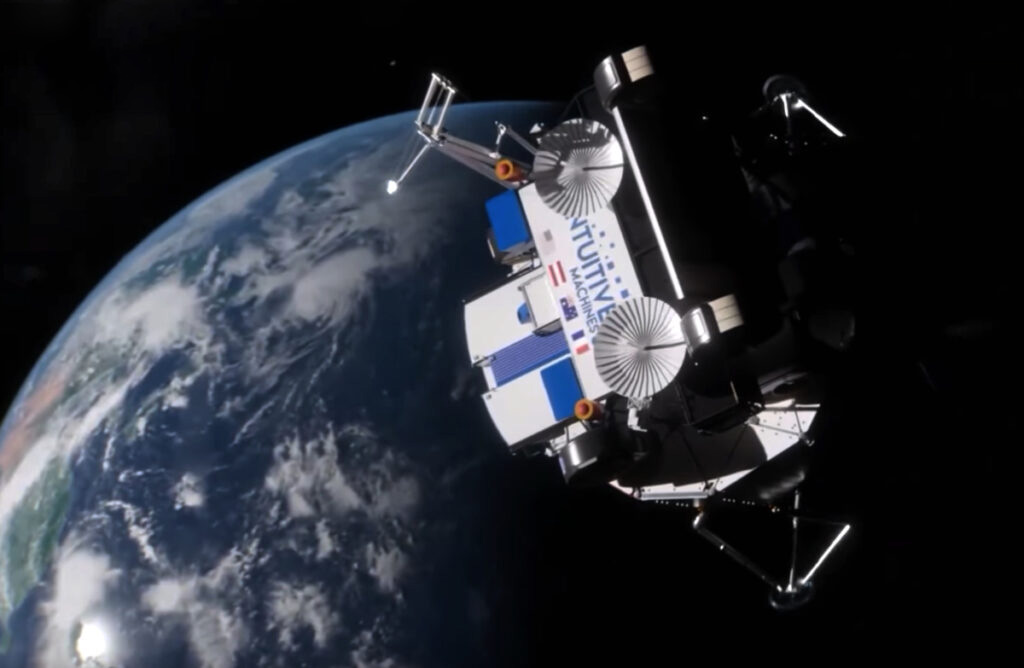
While the company gained global recognition for its Odysseus lander mission, its long-term business model is increasingly centered on the Near Space Network Services (NSNS) and the establishment of a persistent lunar satellite constellation.
Satellite and Communication Specifications
The company’s growth is anchored by its Lunar Data Network (LDN), a system designed to provide continuous communication, navigation, and timing (PNT) services for lunar assets. Key technical components include:
- Orbital Configuration: A constellation of small satellites in High Earth Orbit (HEO) and Lunar Orbit.
- Service Capability: Providing data relay services for both NASA and commercial lunar landers that lack direct-to-earth communication capabilities.
- Integration: Utilization of the South Pole lunar region as a primary data hub for upcoming Artemis-era missions.
Strategic Infrastructure Growth
By transitioning from a pure-play landing service to a multi-layered infrastructure provider, the company aims to capture recurring revenue from the growing lunar economy. This “Golden Dome” strategy focuses on controlling the essential data links required for any sustained human presence on the Moon. This shift positions Intuitive Machines not just as a transport provider, but as the primary “telecommunications utility” for the lunar surface.
This infrastructure focus aims to secure recurring revenue streams that are less dependent on individual landing windows. The strategy leverages the lessons learned from the IM-1 mission in early 2024 and the IM-2 landing in March 2025.
Acquisition Milestones and 2026 Timeline
Intuitive Machines is currently moving to close its $800 million acquisition of Lanteris Space Systems, which is expected to finalize in Q1 2026. This acquisition is intended to integrate advanced deep-space navigation and propulsion technologies into the company’s orbital transfer vehicles.
The company’s next major mission, IM-3, is currently targeted for launch in the second half of 2026. This mission will carry a diverse manifest of science and technology payloads to the Reiner Gamma region, while simultaneously acting as a deployment platform for further nodes of the company’s orbital communication network.
