


The European Space Agency’s Smile mission has passed its qualification and flight acceptance review, meaning that it meets all requirements for launch. The launch window has been set for April 8th to May 7th in 2026.
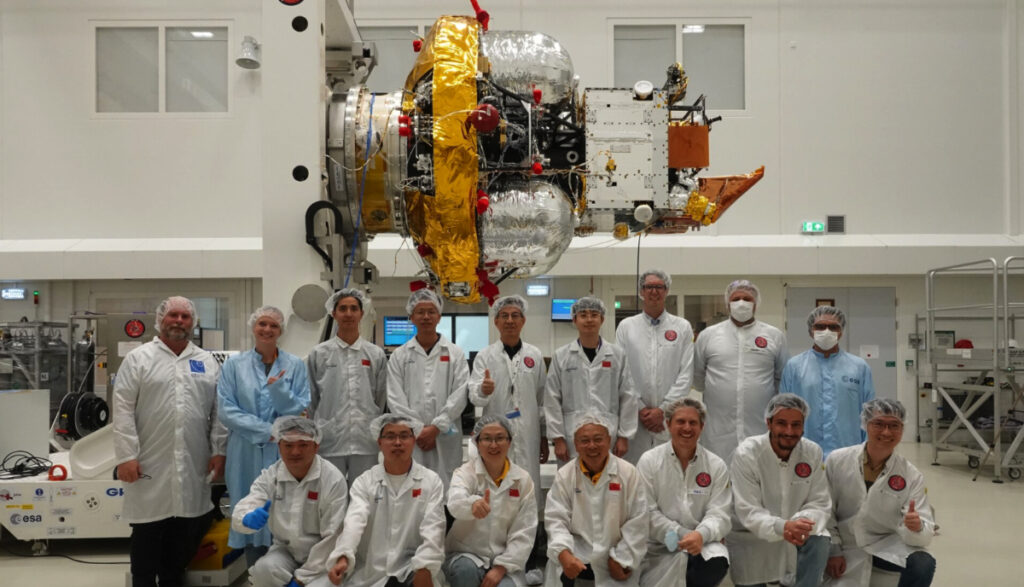

The Solar Wind Magnetosphere Ionosphere Link Explorer (Smile) is a joint mission between the European Space Agency (ESA) and the Chinese Academy of Sciences (CAS). Using X-ray and UV cameras, as well as particle and magnetic field detectors, Smile will give humankind its first complete look at how Earth reacts to streams of particles and bursts of radiation from the Sun.
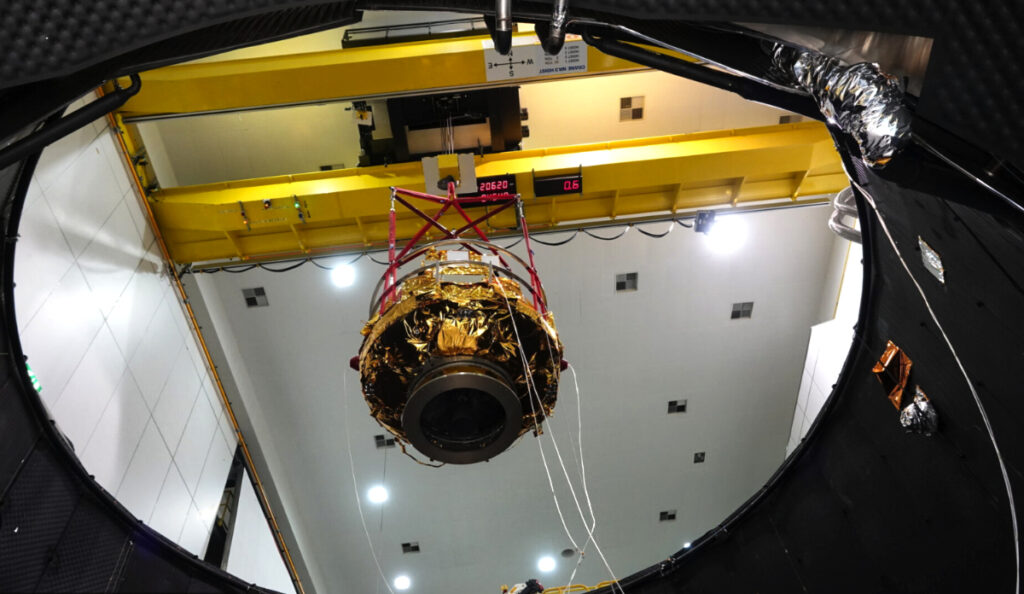
The latest milestone confirms that Smile has successfully completed its ten-month Assembly, Integration and Testing (AIT) phase, which lasted from November 2024 to September 2025 at ESA’s technical centre, ESTEC, in the Netherlands.
The mission is now ready for the launch preparation activities, with launch scheduled during the period April 8th to May 7th, 2026, on a Vega-C rocket from Europe’s Spaceport in French Guiana. With many launches planned from Europe’s Spaceport next year, the logistics of launch campaigns require careful planning and launch windows. The launch day within the month-long window will be defined early next year.
Smile is due to leave ESTEC in February, heading to French Guiana by boat from the Port of Amsterdam. The boat trip will take 12 days. The final launch preparations will then begin.
I’m very proud that the collaboration between our Chinese colleagues and our ESA teams has gone so well and that we’re on the right track to launch in spring 2026,” said ESA Director of Science, Prof. Carole Mundell. “Building on the 24-year legacy of our Cluster mission, which ended science operations last year, Smile is the next big step in revealing how our planet’s magnetic shield protects us from the solar wind.”
