

Intuitive Machines, Inc. (Nasdaq: LUNR) has received an $8.2 million contract extension from the U.S. Air Force Research Laboratory’s Space Vehicles Directorate (AFRL/RV) to develop next-generation nuclear power systems for spacecraft and lunar infrastructure.
Intuitive Machines is using the funding to accelerate readiness of compact nuclear power conversion technology that overcomes solar power limitations and enables lengthier missions on the Moon and in deep space.
The award builds on Intuitive Machines’ earlier $9.5 million progress under a previous AFRL program, an initiative led by AFRL to develop compact nuclear power systems for space applications. That effort included the design of a Stirling-based power conversion system which transforms heat from a radioisotope source into electricity.
That phase culminated in a successful Preliminary Design Review by Intuitive Machines in September. With this new funding, the Company will begin preparing the system for flight, marking a critical step toward demonstrating space-based nuclear power in orbit.
Solar is the most pervasively used energy source to power today’s space missions. However, current approaches limit mission duration in harsh environments like the two-week-long lunar night where temperatures fall below –200 Fahrenheit. These conditions prevent systems from operating without supplemental power systems like radioisotope thermoelectric generators or battery banks that add bulk, weight, and complexity to the mission footprint.
Intuitive Machines believes demand is growing for reliable, scalable energy systems like Stirling engines which offer continuous power and heat in a much smaller package to support spacecraft and planetary surface missions. Intuitive Machines is meeting that demand by building reliable, scalable energy systems that may power spacecraft and planetary surface missions beyond solar powered limitations.
START: Driving Sustainable Space Operations
The Stirling Technology spAce Research experimenT (START) is a flight experiment designed to demonstrate Stirling power conversion technology in space. While onboard the ISS National Laboratory, the Stirling system will be exposed to conditions that cause conventional power systems to degrade more quickly, limiting their operational lifespan and cutting missions short.
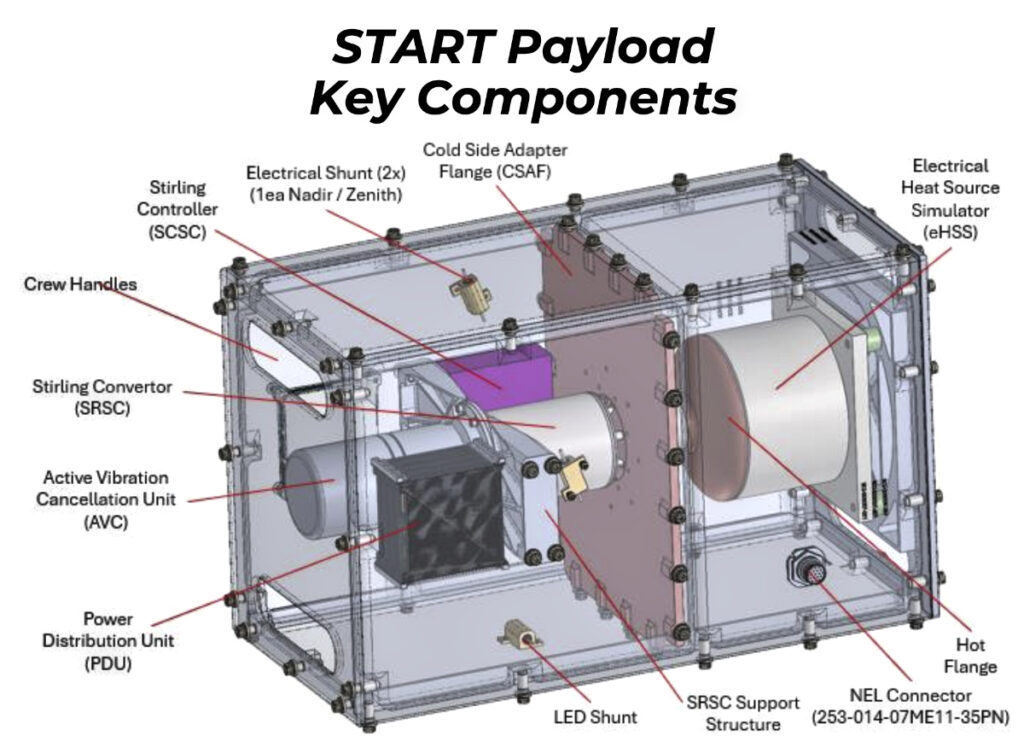
By flying the Stirling technology on the ISS National Lab, Intuitive Machines intends to raise the nuclear power technology system’s readiness level from prototype to space-flown, which is a critical step toward commercial, civil, and national security space flight-ready acceptance. The Stirling technology is designed to support critical mission needs by delivering compact, continuous power in space.
These capabilities are essential for enabling stealth spacecraft operations in national security missions, ensuring generators remain functional during prolonged darkness and extreme cold, and powering Position, Navigation, and Timing (PNT) beacons with long-duration nuclear energy to support sustained lunar navigation. In addition, Intuitive Machines has been studying high powered nuclear fission-based systems under contract to the Department of Energy with funding provided by NASA’s Fission Surface Power (“FSP”) project.
This award moves us from design to flight hardware, which is a critical step toward proving that compact nuclear power systems can survive and perform in space,” said Tim Crain Ph.D., co-founder and chief growth officer for Intuitive Machines. “Because Intuitive Machines is vertically integrated across space data, infrastructure, and delivery services, we can rapidly innovate across the entire mission lifecycle and deliver compact, high-performance technologies and scalable solutions required for sustained operations in space. We believe the progress under the AFRL program strengthens our position for future nuclear power programs including NASA’s FSP initiative. Maturing dynamic power conversion and control technologies that scale is how we evolve from a lunar delivery to a commercial infrastructure service provider on the Moon.”
