

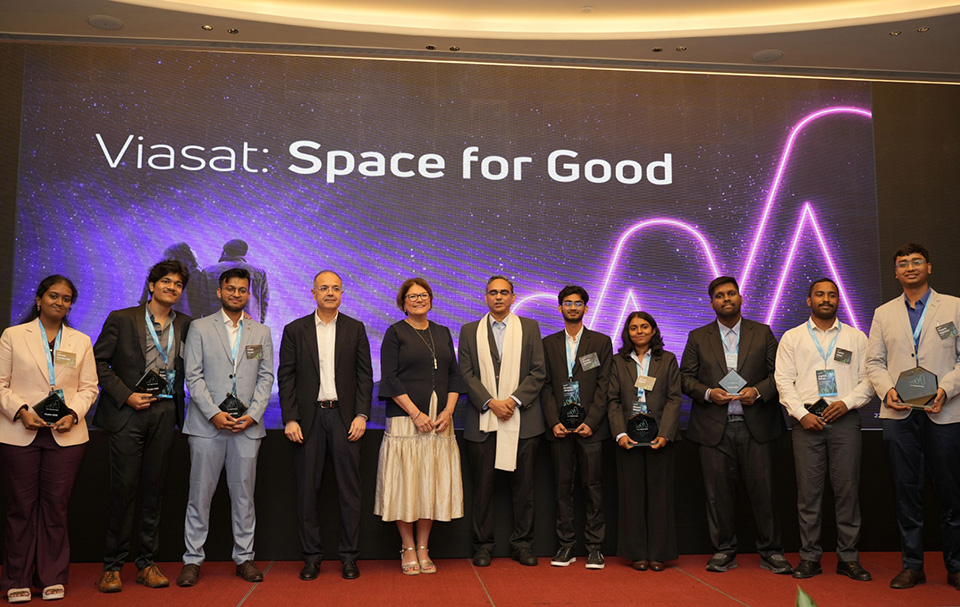
Global satellite communications leader Viasat has officially announced the launch of the Space for Good India Challenge 2026, marking the commencement of Phase 1 concept submissions. This initiative is designed to inspire and mobilize the next generation of space innovators across India’s academic landscape.
Fostering Talent in a Liberalized Ecosystem
The program directly intersects with India’s rapidly evolving space sector, which has seen significant regulatory liberalization intended to attract foreign technology, expertise, and direct investment. By engaging directly with university students, Viasat aims to stimulate localized research and development that aligns with both commercial advancements and regional socio-economic needs.
Technical Focus on Next-Generation Architectures
The challenge encourages university students across various disciplines—including engineering, computer science, environmental studies, and business—to develop novel applications for satellite technology. Participants are tasked with addressing real-world problems on Earth by leveraging cutting-edge space architectures.
The core areas of innovation targeted by the challenge include direct-to-device communications, Internet of Things telemetry, and the optimization of multi-orbit satellite constellations. These specific technological domains represent the frontline of modern satellite connectivity, shifting the industry away from legacy standalone systems toward highly integrated, low-latency hybrid networks.
Structure and Incentives of the Competition
The competition is structured to run over a multi-month timeline, providing student teams with mentorship, resource access, and a platform to validate their concepts. To drive high-quality engagement, Viasat has established a total prize pool of 1,150,000 Indian Rupees. The grand prize winner will secure 500,000 Indian Rupees to help further develop or incubate their space-based solution. The evaluation process will culminate in a final pitch event where selected teams will present their refined architectures to a panel of prominent space industry experts, academics, and commercial leaders in New Delhi later this year.
Strategic Market Positioning
By establishing this challenge, Viasat strengthens its collaborative footprint within India at a time when the country is actively positioning itself as a global hub for space manufacturing and software development. Unlike regional strategies that rely strictly on state-controlled infrastructure development, India’s open-market approach encourages international aerospace leaders to participate directly in talent cultivation. This initiative serves as a mechanism for identifying early-stage technical breakthroughs and building a robust pipeline of engineering talent capable of supporting complex, multi-orbit satellite connectivity frameworks across Southern Asia.
