

Tokyo-based Astroscale Holdings has officially announced the launch of the Atmospheric Impact of Reentered Spacecraft initiative.
Addressing an Underexplored Environmental Challenge
Known as AIRS, this new collaborative effort brings together commercial operators and academic institutions to deepen the scientific understanding of how satellite reentries affect Earth’s upper atmosphere. Earth observation company Planet Labs and the University of Southampton have joined Astroscale as the founding participants in this environmental endeavor.
With commercial activity in low Earth orbit accelerating at an unprecedented rate, the volume of satellites destined to burn up in the atmosphere at the end of their operational lifespans is projected to rise dramatically over the coming decade. Historically, space sustainability initiatives have concentrated heavily on active in-orbit operations and the physical mitigation of orbital debris. However, the exact environmental and chemical consequences of spacecraft vaporizing during their descent remain largely underexplored.
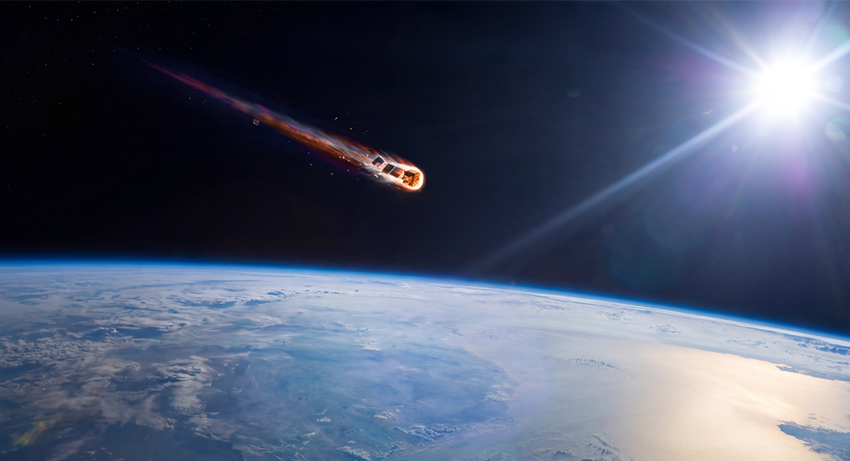
When a satellite reenters the atmosphere, it faces extreme thermal and aerodynamic stress, causing its structural materials and internal components to melt, fragment, and vaporize. This high-energy ablation process releases various chemical compounds into the upper layers of the atmosphere. Tracking, measuring, and predicting these specific emissions is a notoriously difficult scientific challenge.
Facilitating Secure Data Sharing
A significant hurdle for researchers attempting to model these atmospheric impacts has been a lack of accurate manufacturing data. Academic simulations often rely on oversimplified assumptions regarding spacecraft composition because precise material data is tightly guarded by commercial manufacturers. The AIRS initiative was specifically convened by Astroscale to bridge this exact informational gap.
The program creates a secure framework allowing commercial space operators to share non-proprietary spacecraft design information with academic researchers. Under confidential bilateral agreements, aerospace companies can disclose material compositions and mass breakdowns without compromising commercially sensitive intellectual property. Participants also have the option to provide more granular details, such as internal component layouts and anticipated reentry flight profiles, to further refine the accuracy of atmospheric models.
Founding Partners and Future Objectives
Astroscale Chief Technology Officer Mike Lindsay noted that while atmospheric reentry has long been considered the optimal and responsible end-of-life solution for orbital missions, the scientific community urgently needs a clearer picture of the subsequent atmospheric effects. By facilitating the flow of real-world manufacturing data into academic circles, the initiative removes a critical bottleneck in environmental research.
Planet Labs brings extensive experience in scaled satellite manufacturing and fleet operations to the coalition, emphasizing that sustainable operations must account for the entire lifecycle of a spacecraft. The University of Southampton provides the specialized aerospace engineering and atmospheric science capabilities required to process the data effectively. Professor Minkwan Kim from the university highlighted that the scarcity of high-quality data has been the primary obstacle to robust environmental modeling, and this initiative will play a crucial role in ensuring low Earth orbit remains sustainable for future generations.
