

• Skip to primary navigation
  • Skip to main content
  • Skip to primary sidebar
  • Skip to secondary sidebar
  • Skip to footer
  • NEWS:
  • SatNews
  • SatMagazine
  • MilSatMagazine
  • SmallSat News
  • |     EVENTS:
  • SmallSat Symposium
  • Satellite Innovation
  • MilSat Symposium
  • SmallSat Europe

SatNews

Satellite Industry Intelligence Since 1983

Subscribe
  • LATEST
  • SatNews Events
  • Magazines
  • Calendar
  • Subscribe
  • Missions & Constellations
    • Exploration & Science Missions
    • In-Orbit Servicing & Orbital Operations
    • LEO Constellations
    • Mission Autonomy & Onboard Systems
    • Mission Deployments & Manifests
    • Navigation & PNT
    • SmallSat
    • Spacecraft & Payload Technology
    View All in Missions & Constellations →
    NASA Shuts Off Instrument on Voyager 1 to Extend Interstellar MissionNASA Shuts Off Instrument on Voyager 1 to Extend Interstellar Mission
    Starlink Outages Disrupt Navy Drone Tests as Pentagon Dependency GrowsStarlink Outages Disrupt Navy Drone Tests as Pentagon Dependency Grows
    Iridium Unveils Core Role in Artemis II and Next-Gen PNT at Space Symposium 2026Iridium Unveils Core Role in Artemis II and Next-Gen PNT at Space Symposium 2026
    Boeing and Millennium Unveil Resolute Mid-Class Satellite PlatformBoeing and Millennium Unveil Resolute Mid-Class Satellite Platform
  • Business
    • Contracts & Commercial Deals
    • Earnings & Financial Reporting
    • Events & Conferences
    • Funding & Venture Capital
    • Market Forecasts
    • Mergers & Acquisitions
    • Personnel Moves & Appointments
    View All in Business & Finance →
    Geographic Hotspots: Where Demand Is AcceleratingGeographic Hotspots: Where Demand Is Accelerating
    Amazon+Globalstar. Turbocharging the industryAmazon+Globalstar. Turbocharging the industry
    SmallSat Europe Speaker Focus: Martin Langer, OroraTechSmallSat Europe Speaker Focus: Martin Langer, OroraTech
    SmallSat Europe Speaker Focus: Jaume Sanpera, SateliotSmallSat Europe Speaker Focus: Jaume Sanpera, Sateliot
  • Defense
    • Counterspace & ASAT
    • Defense Budgets & Procurement
    • ISR & Reconnaissance
    • MILSATCOM
    • Missile Warning & Defense
    • National Security Programs
    • Space Domain Awareness
    View All in Military & Defense →
    Saltzman Unveils 2040 Blueprint to Scale Space Force for Great Power CompetitionSaltzman Unveils 2040 Blueprint to Scale Space Force for Great Power Competition
    The Rise of Grey Zone Satellites: Ambiguity as a Tactical AdvantageThe Rise of Grey Zone Satellites: Ambiguity as a Tactical Advantage
    SmallSat Europe Speaker Focus: Col. Marcin Mazur, Polish Space AgencySmallSat Europe Speaker Focus: Col. Marcin Mazur, Polish Space Agency
    US Space Force Awards $68.6M Modification to Lockheed Martin for Next-Gen OPIRUS Space Force Awards $68.6M Modification to Lockheed Martin for Next-Gen OPIR
  • Gov
    • Export Controls & Compliance
    • International Space Agreements
    • National Space Policy
    • Space Law & Treaties
    • Space Sustainability & Debris Policy
    • Space Traffic Management / Debris Removal
    View All in Government & Regulation →
    SmallSat Europe Speaker Focus: Chris Quilty, Quilty SpaceSmallSat Europe Speaker Focus: Chris Quilty, Quilty Space
    NRL to Showcase Sovereign Space Capabilities at 41st Space SymposiumNRL to Showcase Sovereign Space Capabilities at 41st Space Symposium
    FCC Modernizes Satellite Spectrum Rules to Unleash Next-Generation BroadbandFCC Modernizes Satellite Spectrum Rules to Unleash Next-Generation Broadband
    SmallSat Europe Speaker Focus: Daniel Bock, Morpheus SpaceSmallSat Europe Speaker Focus: Daniel Bock, Morpheus Space
  • Launch
    • Launch Providers
    • Launch Schedule & Calendars
    • Launch Sites & Infrastructure
    • Rocket Technology & Vehicles
    View All in Launch →
    Blue Origin Achieves First Booster Reuse but Satellite Enters Off-Nominal OrbitBlue Origin Achieves First Booster Reuse but Satellite Enters Off-Nominal Orbit
    Ensign-Bickford Hardware Supports Successful Artemis II Lunar MissionEnsign-Bickford Hardware Supports Successful Artemis II Lunar Mission
    China Accelerates Orbital Internet Deployment with Successful Smart Dragon-3 Sea LaunchChina Accelerates Orbital Internet Deployment with Successful Smart Dragon-3 Sea Launch
    What the SpaceX IPO Changes for Every Satellite OperatorWhat the SpaceX IPO Changes for Every Satellite Operator
  • Software
    • Autonomous Ground Operations
    • Data Processing & AI/ML
    • Digital Twins & Modeling
    • Ground Segment & Teleports
    • Mission Planning & Simulation
    • Space Systems Software Engineering
    • Spectrum & Licensing
    View All in Software Automation & Ground Systems →
    Blue Origin Unveils Project Quartz Global Ground Station NetworkBlue Origin Unveils Project Quartz Global Ground Station Network
    Cloudcomputing Targets 1.5M Identities in Spain and Finalizes Innovate IT AcquisitionCloudcomputing Targets 1.5M Identities in Spain and Finalizes Innovate IT Acquisition
    Archangel Lightworks Secures £10M Series A to Scale Optical Ground InfrastructureArchangel Lightworks Secures £10M Series A to Scale Optical Ground Infrastructure
    Keysight and Sateliot Win ESA and GSMA Foundry Challenge for 6G InnovationKeysight and Sateliot Win ESA and GSMA Foundry Challenge for 6G Innovation
  • Services & Apps
    • Climate & Environmental Monitoring
    • Disaster Response & Security Mapping
    • Earth Observation & Imaging
    • Maritime & Aviation Satcom
    • Satellite Communications
    View All in Services & Applications →
    NASA Targets Commercial Relays to Replace Aging TDRSS InfrastructureNASA Targets Commercial Relays to Replace Aging TDRSS Infrastructure
    OQ Technology Awarded ESA Contract to Adapt 5G Beamforming for SpaceOQ Technology Awarded ESA Contract to Adapt 5G Beamforming for Space
    Kraken Robotics Integrates KATFISH Sonar on SEFINE RD-22 USV Following Multi-Naval DemonstrationsKraken Robotics Integrates KATFISH Sonar on SEFINE RD-22 USV Following Multi-Naval Demonstrations
    Astroscale Plans World-First Multi-Orbit Satellite Inspection MissionAstroscale Plans World-First Multi-Orbit Satellite Inspection Mission

Galileo R&D tests new uplink antenna

October 4, 2025

Galileo relies on ground-based uplink stations (ULS) to maintain accurate positioning for users worldwide—these stations transmit essential data to the satellites, including the information required to compute the satellites’ orbits and clock corrections.
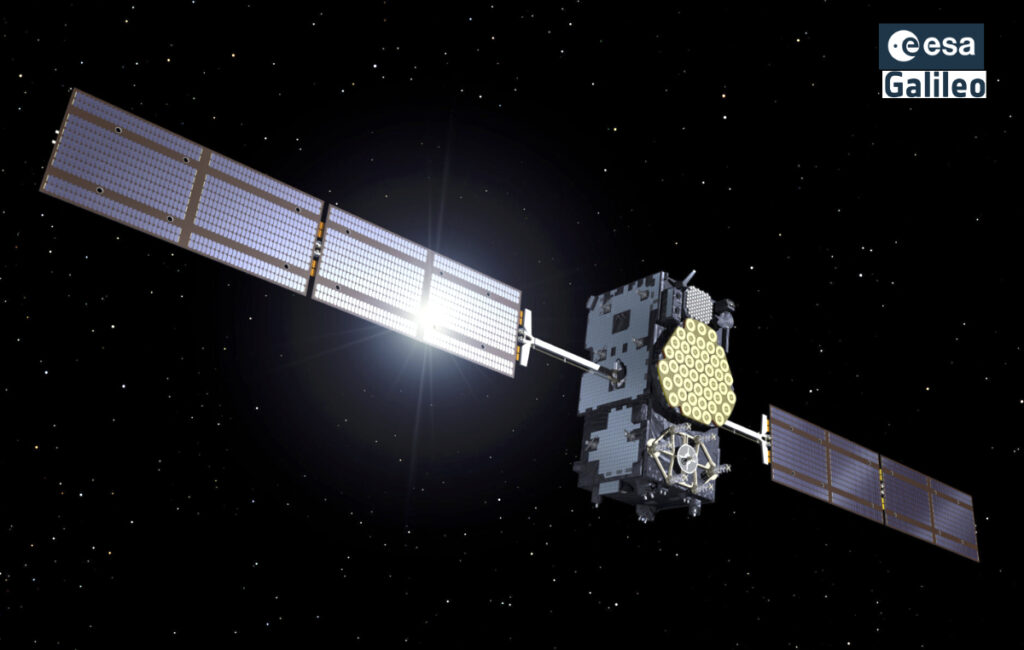
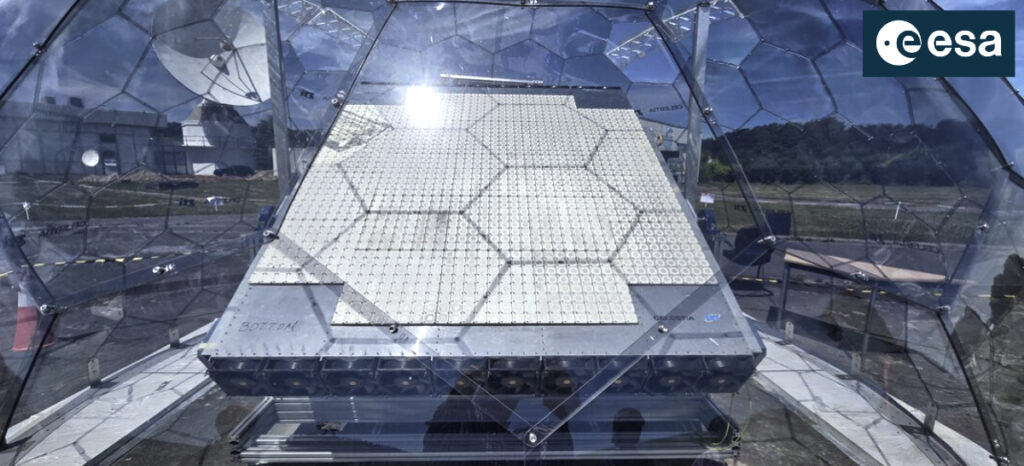
Traditionally, such messages are sent using dish antennas. However, a new type of ground uplink antenna – a phased array antenna – was recently tested at the European Space Agency’s (ESA) site in Redu, Belgium. Developed under ESA’s Horizon 2020 program for R&D, which aims to keep Galileo up to date with the latest innovations, this innovative antenna could benefit Galileo operations.

While traditional ground stations, using dish antennas, rely on mechanical steering to track and maintain contact with a single satellite, phased array antennas use electronics to steer the radio waves and communicate with satellites. This enables faster satellite pointing and re-pointing, improved reliability over the station’s lifetime and simultaneous communication with multiple satellites.

The ability of one phased array antenna to contact multiple satellites at once could be useful for satellite constellations, such as Galileo Second Generation (G2), which is currently under development. Phased array antennas for uplink could be a more efficient system capable of transmitting more data to more satellites. This could support new and improved services and reduce the number of ground stations and amount of maintenance needed.

As a part of its R&D Program for Galileo and EGNOS Evolutions, Horizon 2020 (the predecessor of Horizon Europe) has enabled the development of novel technologies which will now be used in G2 space and ground segments. In one of these projects, the ESA Navigation Directorate explores the advantages of using phased array antennas for future ULS of Galileo.
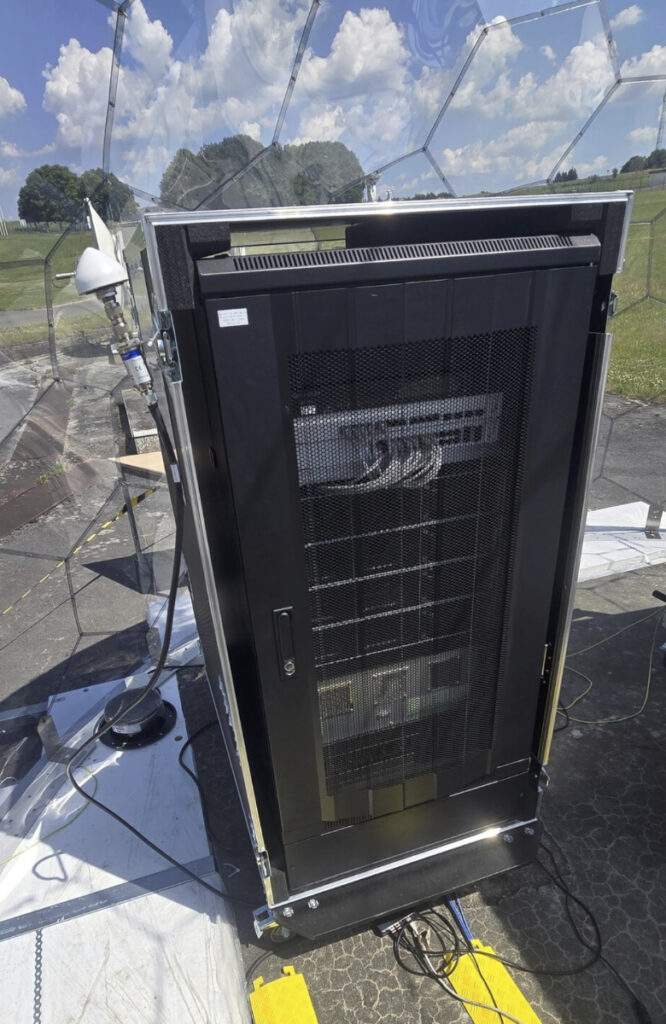
NDIU developed by Celestia Antwerp

Phased array antennas are already used on satellites, but in 2021, a contract for the development of an ULS Advanced Station was awarded to TTI Norte, with Celestia Antwerp and GMV as subcontractors. This activity aimed to develop and test a phased array antenna prototype compliant with Galileo requirements. Industry teams have now reached the last phase of the demonstration, which involved over-the-air testing and verified the promises of this new technology.

The development of the new uplink antenna involved two main components: the phased array antenna to uplink signals to the satellite and its modem, to receive information and transform it into a signal the antenna can transmit.

The full antenna consists of several panels arranged in a truncated pyramid shape. Depending on the design, each panel could communicate with more than one satellite simultaneously. Long-distance testing

On July 4, 2025, a single panel of the newly developed phased array antennas was put through a demonstration at ESA’s European Space Security and Education Centre (ESEC) in Redu, Belgium. The test aimed to establish a reliable connection with a Galileo satellite dedicated to testing and demonstrate the feasibility of using this technology for data uplink.

For the test, the modem developed by Celestia Antwerp during this project generated the signal. This signal was then amplified and steered by the panel of the phased array antenna.
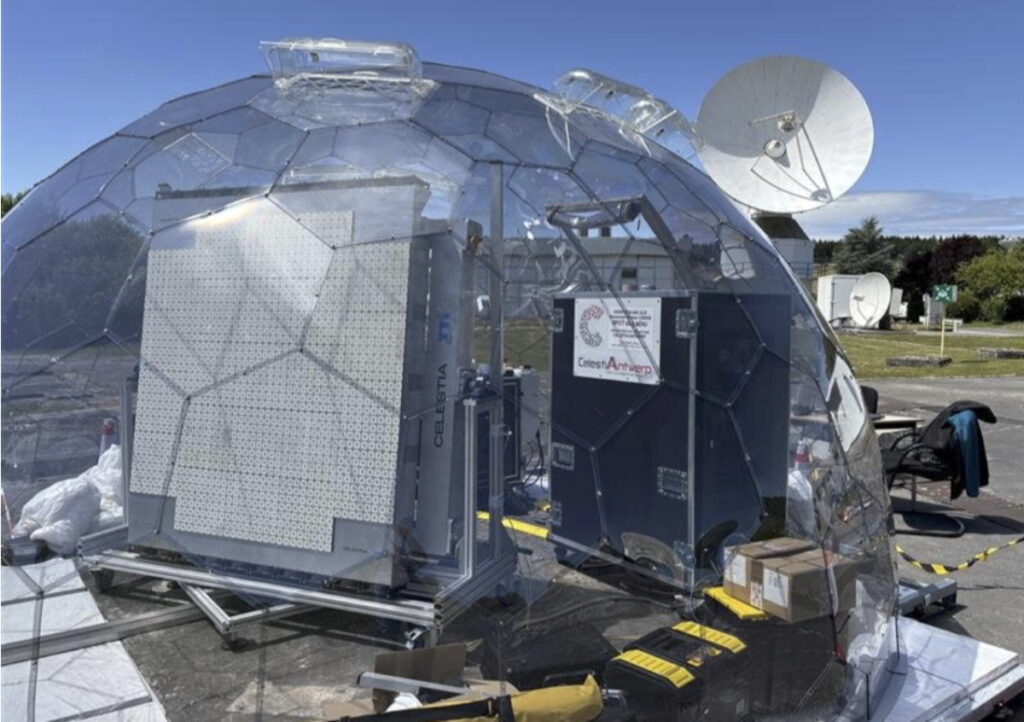
Modem and phased array antenna panel for satellite uplink

To verify that the signal successfully reached the Galileo satellite, the Galileo Test User Receiver and telemetry data from the satellites that are available at ESA’s European Space Research and Technology Centre (ESTEC) in Noordwijk, the Netherlands, were used. Additionally, the tests were coordinated with the Galileo Service Operator to avoid any impact on Galileo services.

Currently the Galileo Program is exploring different technologies for the future Ground Segment infrastructure evolution, one of them being phased array antennas.

Galileo Second Generation satellites will integrate seamlessly with the current fleet to form the largest European satellite constellation and deliver essential services worldwide. With fully digital navigation payloads, electric propulsion, a better-performing navigation antenna, inter-satellite link capacity and an advanced atomic clock configuration, G2 satellites will provide more robust and reliable positioning, navigation and timing.
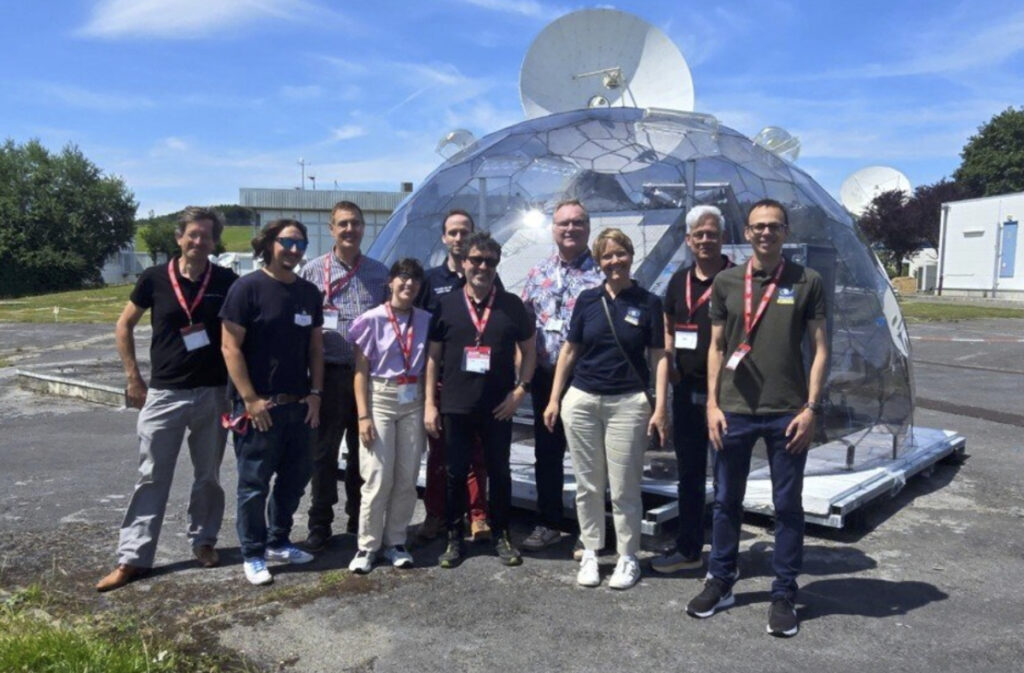
Engineers involved in development of new phased array antenna

For TTI Norte, the main contractor on this project, developing the phased array antenna meant building nearly everything from scratch. “After the initial design phase, it was decided to develop and manufacture the antenna from basic components, making it a fully European product,” said Carlos Garcia, ESA Navigation Engineer and Technical Officer for the project. “Each panel of the phased array antenna is made of nearly 1500 individual basic transmission elements, which TTI Norte put together to create the full antenna.”

This test was a cooperation among several ESA sites,” said Karen Ravel, ESA activity coordinator for the Galileo and EGNOS Evolutions Program. “Many engineers collaborated across sites to verify that the transmitted signal was acquired and tracked by the satellite during the entire pass. The full antenna will be more complex and able to contact as many satellites as there are panels on the full antenna,” Karen Ravel says. “But the recent tests in Redu were a key performance demonstration for this technology that confirm the performances achieved on a single link. The test showed that the phased array antenna can transmit signals that reach a satellite in MEO more than 23 000 km above Earth”

In modern constellations such as Galileo, additional services may be needed,” said David Gomez-Casco, ESA Radio Navigation Engineer and Technical Officer for the project. “If more data needs to be transmitted from the ground to the satellites, more frequent contacts with the satellites will be necessary. To do this, we could either build new parabolic dish antennas, or we could use one or a few phased array antennas composed of multiple panels to reduce the footprint of the station as one antenna can contact several satellites at once.”

Filed Under: International Space Agreements, Navigation & PNT

Primary Sidebar

Coverage

  • Missions & Constellations
  • Business & Finance
  • Military & Defense
  • Launch
  • Software Automation & Ground Systems
  • Government & Regulation
  • Services & Applications

Most Read Stories

  • SpaceX Loses Contact With Starlink Satellite
  • Rocket Lab Emerging as Potential Bus Provider for 2,800-Satellite Equatys Constellation
  • SpaceX Accelerates Record-Breaking IPO Following Trillion-Dollar xAI Merger
  • Planet Labs Imposes Indefinite Blackout on Iran Satellite Imagery at U.S. Request
  • Amazon in Reported Talks to Acquire Globalstar in $9 Billion Move to Challenge Starlink

Secondary Sidebar

Footer


Satnews is a leading provider of satellite news, events, publications, research and other satellite industry information in both commercial and military enterprises worldwide.

Stories By Category

  • Business & Finance
  • Government & Regulation
  • Launch
  • Military & Defense
  • Missions & Constellations
  • Services & Applications
  • Software Automation & Ground Systems
  • Spectrum & Licensing
  • Startups & NewSpace Business

About Us

  • Leadership & Editorial Team
  • SatNews History
  • Free Satnews Subscription
  • SatNews Events
  • Magazines

Navigation

  • Latest Stories
  • Magazines
  • Events
  • Contact
  • Cookie & Privacy Policy for Satnews

We use cookies to ensure that we give you the best experience on our website. If you continue to use this site we will assume that you are happy with it.
x
Sign up Now (For Free)
Access daily or weekly satellite news updates covering all aspects of the commercial and military satellite industry.
Invalid email address
Notify Me Regarding ( At least one ):
We value your privacy and will not sell or share your email or other information with any other company. You may also unsubscribe at anytime.

Click Here to see our full privacy policy.
Thanks for subscribing!