

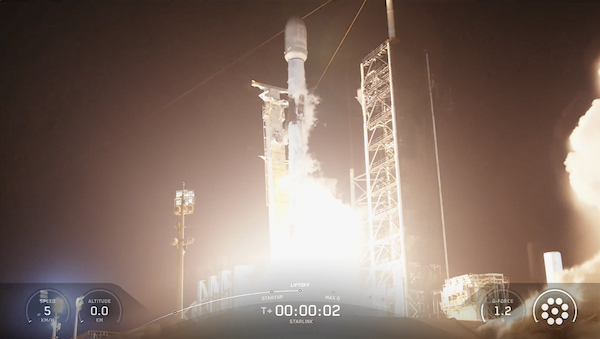
On Thursday, August 28 at 1:12 a.m. ET, Falcon 9 launched 28 Starlink smallsats to low-Earth orbit to join the Starlink constellation from Launch Complex 39A (LC-39A) at Kennedy Space Center in Florida. Photos captured by Satnews.
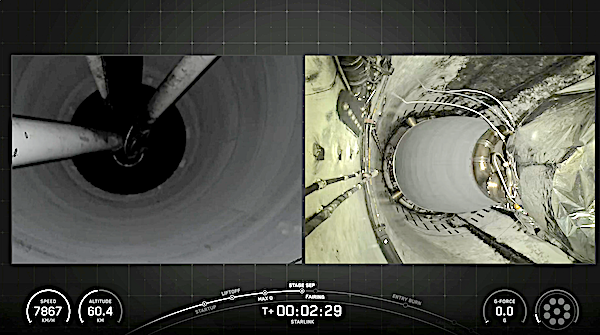
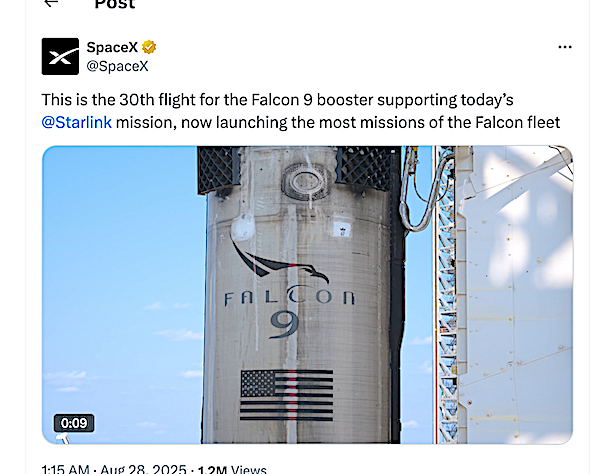
This was Space’X’s second Starlink launch in 24 hours featuring Falcon 9 booster that set a record 30th flight. Weather had been a consideration as the 45th Weather Squadron forecast an 85 percent chance for favorable weather at liftoff.
“Most of the thunderstorm activity will be confined along the sea breeze both Thursday and Friday afternoon, with most of the activity petering out by the late evening hours,” launch weather officers wrote in their forecast. “With light, onshore flow, the main concern for the primary and backup launch windows will be cumulus clouds that push in from the gulf stream.”
SpaceX has launched more than 1,800 of these satellites across 74 missions so far in 2025.
A record was set as this was the 30th flight for the first stage booster supporting this mission, which previously launched CRS-22, Crew-3, Turksat 5B, Crew-4, CRS-25, Eutelsat HOTBIRD 13G, O3B mPOWER-A, PSN SATRIA, Telkomsat Merah Putih 2, Galileo L13, Koreasat-6A, and now 19 Starlink missions.

Following stage separation, the first stage landed on the A Shortfall of Gravitas droneship, which was stationed in the Atlantic Ocean.
SpaceX to launch 28 Starlink smallsats Group 10-11 from the Cape on Thursday
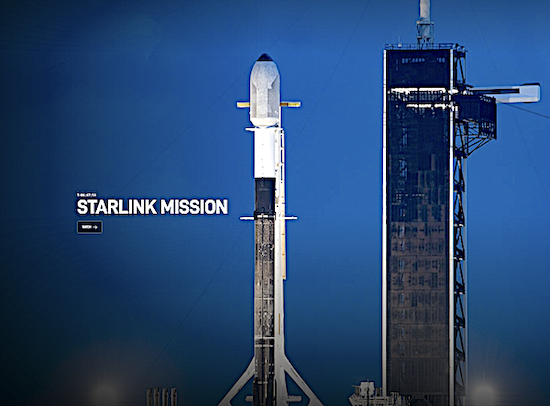
SpaceX’s Falcon 9 is targeting the launch of 28 Starlink smallsats from Group 10-11 to low-Earth orbit to join the Starlink constellation from Launch Complex 39A (LC-39A) at Kennedy Space Center in Florida.
A live webcast of this mission will begin about five minutes prior to liftoff, which you can watch here and on X @SpaceX. You can also watch the webcast on the new X TV app.
This will be the 30th flight for the first stage booster supporting this mission, which previously launched CRS-22, Crew-3, Turksat 5B, Crew-4, CRS-25, Eutelsat HOTBIRD 13G, O3B mPOWER-A, PSN SATRIA, Telkomsat Merah Putih 2, Galileo L13, Koreasat-6A, and 18 Starlink missions. Following stage separation, the first stage will land on the A Shortfall of Gravitas droneship, which will be stationed in the Atlantic Ocean.
