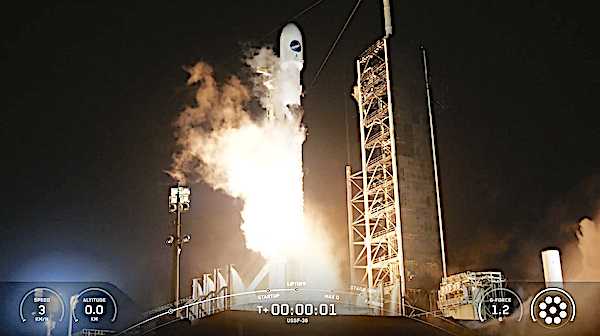
SpaceX’s Falcon 9 on Thursday, August 21 at 11:50 p.m. ET launched the USSF-36 mission to orbit from Launch Complex 39A (LC-39A) at NASA’s Kennedy Space Center in Florida. Photos captured by Satnews.
“OTV-8 exemplifies the X-37B’s status as the U.S. Space Force’s premier test platform for the critical space technologies of tomorrow. Through its mission-focused innovation, the X-37B continues to redefine the art of the possible in the final frontier of space,” said AFRCO Acting Director William Blauser.
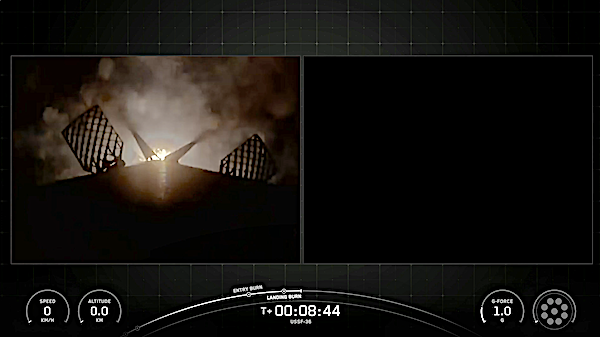
This will be the sixth flight for the first stage booster supporting this mission, which previously launched NROL-69, CRS-32, GPS III-7, and two Starlink missions. Following stage separation, the first stage will land on SpaceX’s Landing Zone 2 (LZ-2) at Cape Canaveral Space Force Station in Florida.
SpaceX still plans for Thursday launch from the Cape of USSF-36 mission of the X-37B Orbital Test Vehicle
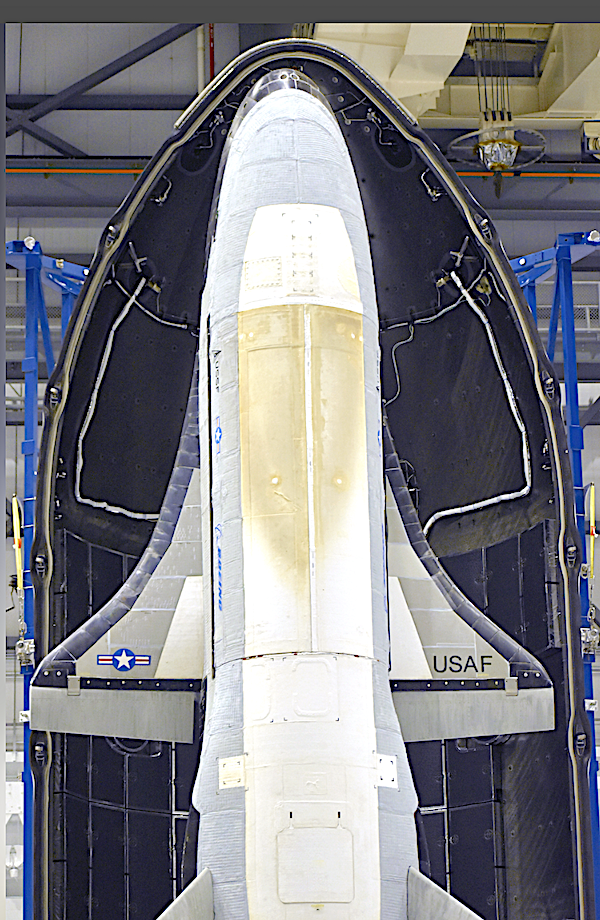
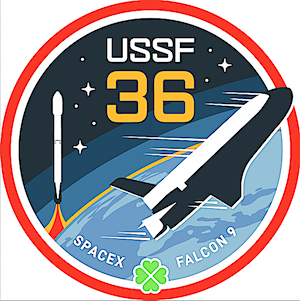
The U.S. Space Force, in partnership with the Air Force Rapid Capabilities Office and SpaceX, is making final preparations for Falcon 9 to launch the eighth mission of the X-37B Orbital Test Vehicle (OTV-8) on August 21 at 11:50 p.m. ET from Kennedy Space Center, Florida.
The eighth mission of the X-37B Orbital Test Vehicle will launch on a SpaceX Falcon 9 rocket, designated USSF-36, with a wide range of test and experimentation objectives. These will include demonstrations of high-bandwidth inter-satellite laser communications technologies and enhanced space navigation using the highest performing quantum inertial sensor in space and the highest performing strategic grade quantum inertial sensor ever tested in space.
“OTV-8 exemplifies the X-37B’s status as the U.S. Space Force’s premier test platform for the critical space technologies of tomorrow. Through its mission-focused innovation, the X-37B continues to redefine the art of the possible in the final frontier of space,” said AFRCO Acting Director William Blauser.
SpaceX’s live webcast of this mission will begin about 20 minutes prior to liftoff, which you can watch on X @SpaceX. You can also watch the webcast on the new X TV app.
This will be the sixth flight for the first stage booster supporting this mission, which previously launched NROL-69, CRS-32, GPS III-7, and two Starlink missions. Following stage separation, the first stage will land on SpaceX’s Landing Zone 2 (LZ-2) at Cape Canaveral Space Force Station in Florida.
USSF-36 is the eighth launch of the X-37B Orbital Test Vehicle (OTV-8) and third Falcon launch of the spacecraft, after SpaceX previously launched OTV-5 and OTV-7 (USSF-52). The OTV-8 mission in Low Earth Orbit includes operational demonstrations and experiments of next-generation technologies, including laser communications and the highest performing strategic grade quantum inertial sensor ever tested in space. Mission partners include the Air Force Research Lab and the Defense Innovation Unit, respectively
SpaceX ready for Thursday launch of USSF-36 mission of the X-37B Orbital Test Vehicle

SpaceX is targeting Thursday, August 21 at 11:50 p.m. ET for Falcon 9’s launch of the USSF-36 mission to orbit from Launch Complex 39A (LC-39A) at NASA’s Kennedy Space Center in Florida. A backup launch opportunity is available at the same time on Friday, August 22.
SpaceX’s live webcast of this mission will begin about 20 minutes prior to liftoff, which you can watch on X @SpaceX. You can also watch the webcast on the new X TV app.
This will be the sixth flight for the first stage booster supporting this mission, which previously launched NROL-69, CRS-32, GPS III-7, and two Starlink missions. Following stage separation, the first stage will land on SpaceX’s Landing Zone 2 (LZ-2) at Cape Canaveral Space Force Station in Florida.
USSF-36 is the eighth launch of the X-37B Orbital Test Vehicle (OTV-8) and third Falcon launch of the spacecraft, after SpaceX previously launched OTV-5 and OTV-7 (USSF-52). The OTV-8 mission in Low Earth Orbit includes operational demonstrations and experiments of next-generation technologies, including laser communications and the highest performing strategic grade quantum inertial sensor ever tested in space. Mission partners include the Air Force Research Lab and the Defense Innovation Unit, respectively.