

• Skip to primary navigation
  • Skip to main content
  • Skip to primary sidebar
  • Skip to secondary sidebar
  • Skip to footer
  • NEWS:
  • SatNews
  • SatMagazine
  • MilSatMagazine
  • SmallSat News
  • |     EVENTS:
  • SmallSat Symposium
  • Satellite Innovation
  • MilSat Symposium
  • SmallSat Europe

SatNews

Satellite Industry Intelligence Since 1983

Subscribe
  • LATEST
  • SatNews Events
  • Magazines
  • Calendar
  • Subscribe
  • Missions & Constellations
    • Exploration & Science Missions
    • In-Orbit Servicing & Orbital Operations
    • LEO Constellations
    • Mission Autonomy & Onboard Systems
    • Mission Deployments & Manifests
    • Navigation & PNT
    • SmallSat
    • Spacecraft & Payload Technology
    View All in Missions & Constellations →
    Smallsat Sector to Deploy 16,900 Satellites Through 2035 as Market Reaches Industrial MaturitySmallsat Sector to Deploy 16,900 Satellites Through 2035 as Market Reaches Industrial Maturity
    NanoAvionics Satellites Reach Orbit on SpaceX CAS500-2 MissionNanoAvionics Satellites Reach Orbit on SpaceX CAS500-2 Mission
    Viasat Completes ViaSat-3 Constellation with Successful Flight 3 LaunchViasat Completes ViaSat-3 Constellation with Successful Flight 3 Launch
    GMV to Lead Mission Planning for ESA’s Next-Generation Copernicus ExpansionGMV to Lead Mission Planning for ESA’s Next-Generation Copernicus Expansion
  • Business
    • Contracts & Commercial Deals
    • Earnings & Financial Reporting
    • Events & Conferences
    • Funding & Venture Capital
    • Market Forecasts
    • Mergers & Acquisitions
    • Personnel Moves & Appointments
    View All in Business & Finance →
    SmallSat Europe Speaker Focus: Massimo Comparini, Leonardo Space DivisionSmallSat Europe Speaker Focus: Massimo Comparini, Leonardo Space Division
    Lockheed Martin, Firefly, and Seagate Partner for Sea-Based National Security LaunchLockheed Martin, Firefly, and Seagate Partner for Sea-Based National Security Launch
    SmallSat Europe Speaker Focus: Jorge Ciccorossi, ITU Radiocommunications BureauSmallSat Europe Speaker Focus: Jorge Ciccorossi, ITU Radiocommunications Bureau
    XDLINX Space Labs Inaugurates Advanced Satellite Integration Lab with ISRO LeadershipXDLINX Space Labs Inaugurates Advanced Satellite Integration Lab with ISRO Leadership
  • Defense
    • Counterspace & ASAT
    • Defense Budgets & Procurement
    • ISR & Reconnaissance
    • MILSATCOM
    • Missile Warning & Defense
    • National Security Programs
    • Space Domain Awareness
    View All in Military & Defense →
    BAE Systems Enters Production for NavGuide M-Code GPS ReceiverBAE Systems Enters Production for NavGuide M-Code GPS Receiver
    Space Force Awards $3.2 Billion in Golden Dome Contracts for Orbital Interceptor ConstellationSpace Force Awards $3.2 Billion in Golden Dome Contracts for Orbital Interceptor Constellation
    USSF Finalizes GPS III Constellation with Successful SV-10 DeploymentUSSF Finalizes GPS III Constellation with Successful SV-10 Deployment
    Meink: Space Force Programs Ready to Execute Once FY27 Budget LandsMeink: Space Force Programs Ready to Execute Once FY27 Budget Lands
  • Gov
    • Export Controls & Compliance
    • International Space Agreements
    • National Space Policy
    • Space Law & Treaties
    • Space Sustainability & Debris Policy
    • Space Traffic Management / Debris Removal
    View All in Government & Regulation →
    ESA spells out satellite benefits – and risksESA spells out satellite benefits – and risks
    Canada Tightens Re-entry Regulations as SpaceX Starlink Constellations DescendCanada Tightens Re-entry Regulations as SpaceX Starlink Constellations Descend
    The waiver was the policy. Thursday is the paperwork.The waiver was the policy. Thursday is the paperwork.
    SmallSat Europe Speaker Focus: Tanja Masson-Zwaan, Leiden UniversitySmallSat Europe Speaker Focus: Tanja Masson-Zwaan, Leiden University
  • Launch
    • Launch Providers
    • Launch Schedule & Calendars
    • Launch Sites & Infrastructure
    • Rocket Technology & Vehicles
    View All in Launch →
    GalaxEye Successfully Launches “Mission Drishti” OptoSAR SatelliteGalaxEye Successfully Launches “Mission Drishti” OptoSAR Satellite
    Foxconn Launches Second-Generation PEARL Satellites via SpaceX Falcon 9Foxconn Launches Second-Generation PEARL Satellites via SpaceX Falcon 9
    FAA Grounds Blue Origin Following New Glenn Upper Stage Failure and Facility AnomalyFAA Grounds Blue Origin Following New Glenn Upper Stage Failure and Facility Anomaly
    NanoAvionics to Launch Trio of Milestone Payloads on SpaceX CAS500-2 MissionNanoAvionics to Launch Trio of Milestone Payloads on SpaceX CAS500-2 Mission
  • Software
    • Autonomous Ground Operations
    • Data Processing & AI/ML
    • Digital Twins & Modeling
    • Ground Segment & Teleports
    • Mission Planning & Simulation
    • Space Systems Software Engineering
    • Spectrum & Licensing
    View All in Software Automation & Ground Systems →
    SES Accelerates Multi-Orbit IFC Strategy with meoSphere and Next-Gen ESA DevelopmentSES Accelerates Multi-Orbit IFC Strategy with meoSphere and Next-Gen ESA Development
    SmallSat Europe Speaker Focus: Koen Willems, ST Engineering iDirect EuropeSmallSat Europe Speaker Focus: Koen Willems, ST Engineering iDirect Europe
    Global Invacom Secures Exclusive Worldwide Distribution for Prodelin Antenna RangeGlobal Invacom Secures Exclusive Worldwide Distribution for Prodelin Antenna Range
    SmallSat Europe Speaker Focus: Giovanni Pandolfi Bortoletto, Leaf SpaceSmallSat Europe Speaker Focus: Giovanni Pandolfi Bortoletto, Leaf Space
  • Services & Apps
    • Climate & Environmental Monitoring
    • Disaster Response & Security Mapping
    • Earth Observation & Imaging
    • Maritime & Aviation Satcom
    • Satellite Communications
    View All in Services & Applications →
    Solstar Confirms Successful On-Orbit Operation of Deke Space Communicator Following Launch on SpaceX Transporter-16 MissionSolstar Confirms Successful On-Orbit Operation of Deke Space Communicator Following Launch on SpaceX Transporter-16 Mission
    IEC Telecom Unveils Voucher-Based Connectivity Solution at Singapore Maritime Week 2026IEC Telecom Unveils Voucher-Based Connectivity Solution at Singapore Maritime Week 2026
    GomSpace and STETMAN Establish UASAT Joint Venture for Ukrainian Sovereign CommunicationsGomSpace and STETMAN Establish UASAT Joint Venture for Ukrainian Sovereign Communications
    Market Dynamics and Non-Terrestrial Network (NTN) ChipsetsMarket Dynamics and Non-Terrestrial Network (NTN) Chipsets

SpaceX to launch ESA’s Galileo L13, two more satellites for Europe’s alternative to American GPS

September 12, 2024

SpaceX is scheduled to launch Galileo L13 (FOC FM26 & FM32) to Medium Earth Orbit, on Sunday, September 15th, at 3:57 PM – 4:39 PM PDT from Space Launch Complex 40, Cape Canaveral, Florida.

The launch is of two satellites for Europe’s Galileo navigation system. Originally planned for launch on Soyuz-ST and then Ariane 6 but both were unavailable.

Galileo provides Europe with an alternative to the American GPS and Russian GLONASS constellations, but will be interoperable with both systems.

Three months after their launch from Cape Canaveral, Galileo satellites 29 and 30 have reached their target positions at an altitude of 23 222 km, where they have been fully tested and declared operational.

Galileo is Europe’s own global navigation satellite system, providing a highly accurate, guaranteed global positioning service under civilian control. Currently providing Initial Services, Galileo is interoperable with GPS and Glonass, the US and Russian global satellite navigation systems. By offering dual frequencies as standard, Galileo can deliver real-time positioning accuracy down to the metre range.

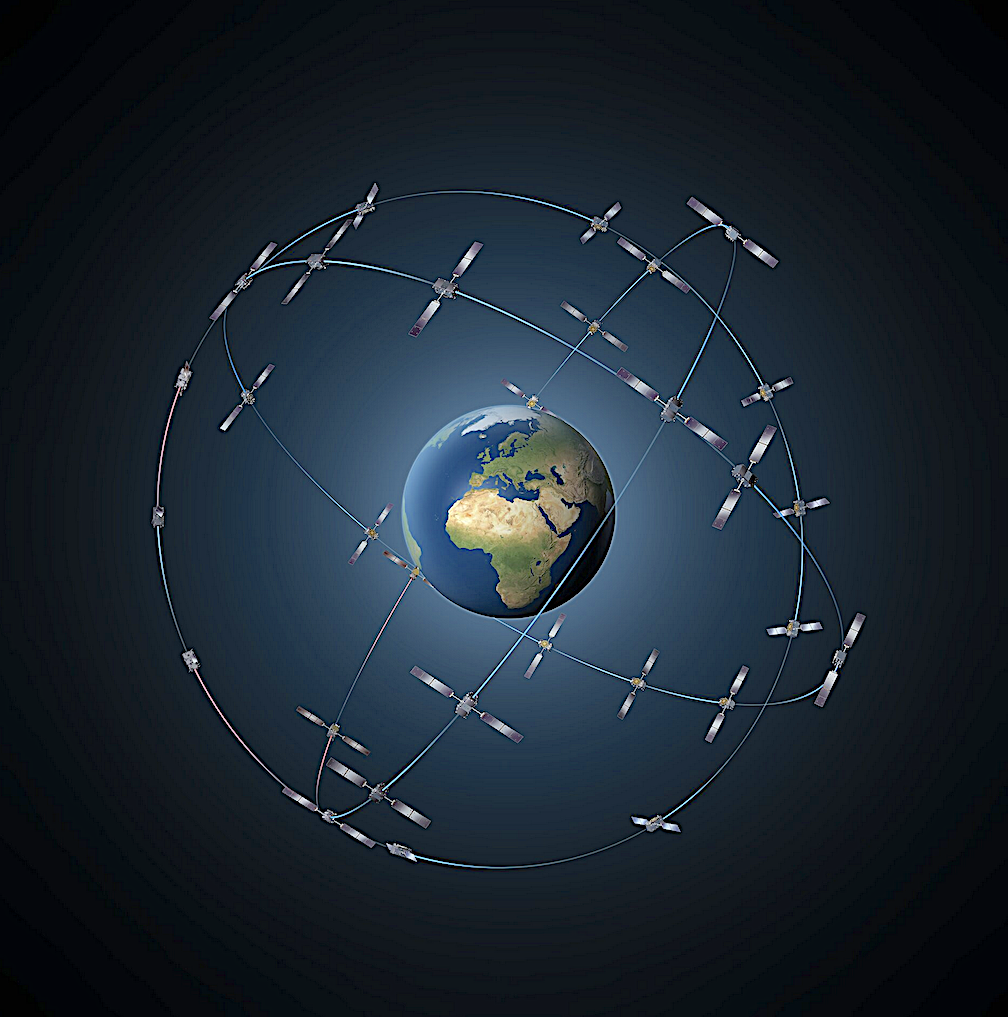
Galileo services The current Galileo system consists of 28 satellites in all. All but two of these are positioned in three circular Medium Earth Orbit (MEO) planes at 23 222 km altitude above the Earth, and at an inclination of the orbital planes of 56 degrees to the equator. The remaining pair were placed in incorrect orbits by a Soyuz launcher error, and are currently employed for search and rescue but not as operational members of the constellation.

Initial services became available on 15 December 2016. Then as the constellation is built-up beyond that, new services will be tested and made available.

Galileo navigation signals provide good coverage even at latitudes up to 75 degrees north, which corresponds to Norway’s North Cape – the most northerly tip of Europe – and beyond. The large number of satellites together with the carefully-optimised constellation design, plus the planned availability of three active spare satellites per orbital plane, should ensure that the loss of one satellite should have no discernible effect on the user.

Ground infrastructure Two Galileo Control Centres (GCCs) have been implemented on European ground to provide for the control of the satellites and to perform the navigation mission management. The data provided by a global network of Galileo Sensor Stations (GSSs) are sent to the Galileo Control Centres through a redundant communications network. The GCCs use the data from the Sensor Stations to compute the integrity information and to synchronise the time signal of all satellites with the ground station clocks. The exchange of the data between the Control Centres and the satellites is performed through up-link stations.

As a further feature, Galileo is providing a global Search and Rescue (SAR) function, based on the operational Cospas-Sarsat system. Satellites are therefore equipped with a transponder, which is able to transfer the distress signals from the user transmitters to regional rescue co-ordination centres, which will then initiate the rescue operation.

At the same time, the system will send a response signal to the user, informing him that his situation has been detected and that help is on the way. This latter feature is new and is considered a major upgrade compared to the existing system, which does not provide user feedback.

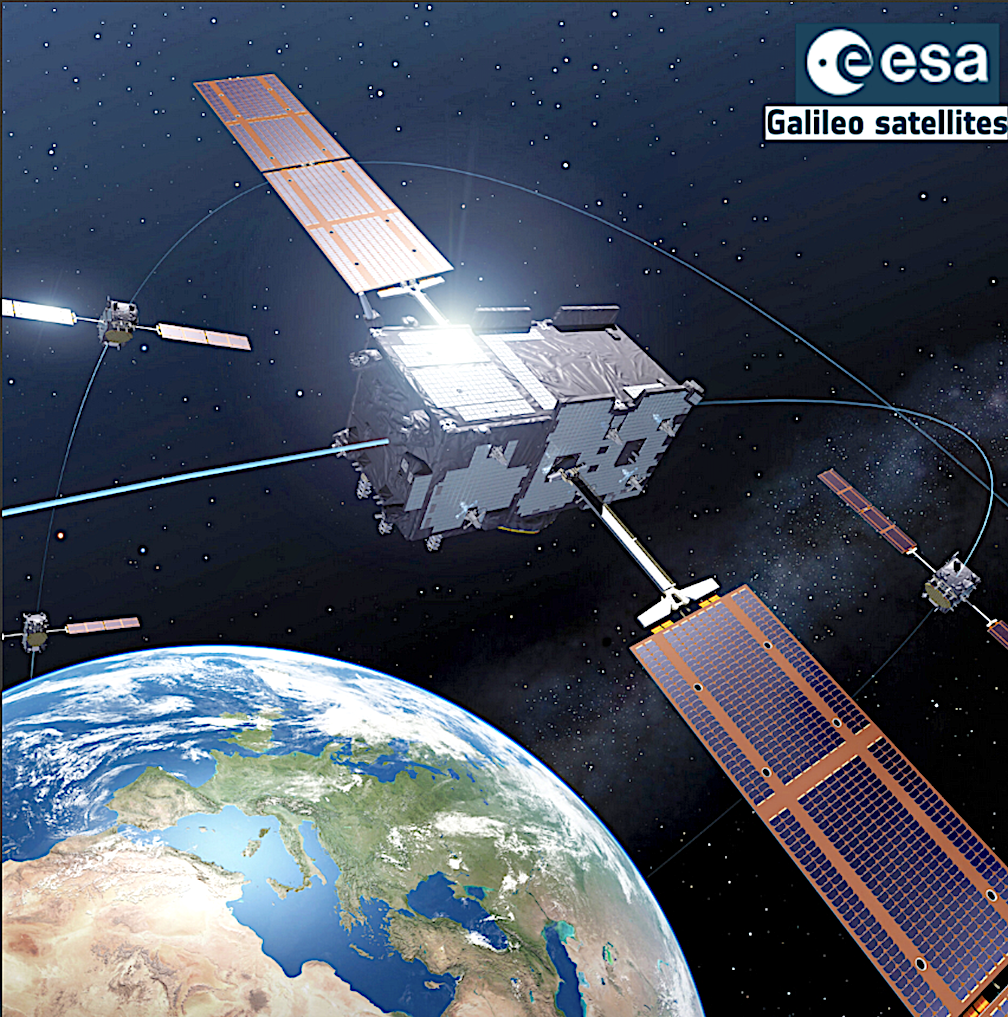
SpaceX to launch Galileo L13, Europe’s alternative to American GPS
This image has an empty alt attribute; its file name is Screen-Shot-2024-09-10-at-12.43.47-PM.png
ESA’s Galileo planned constellation

SpaceX is scheduled to launch Galileo L13 (FOC FM26 & FM32) to Medium Earth Orbit, on Sunday, September 15th, at 3:57 PM – 4:39 PM PDT from Space Launch Complex 40, Cape Canaveral, Florida.

The launch is of two satellites for Europe’s Galileo navigation system. Originally planned for launch on Soyuz-ST and then Ariane 6 but both were unavailable.

Galileo provides Europe with an alternative to the American GPS and Russian GLONASS constellations, but will be interoperable with both systems.

New Galileo satellites operational after successful on-orbit testing

This image has an empty alt attribute; its file name is ESA-Galileo-on-orbit-b-L.jpg

Galileo satellites on-orbit, image courtesy of ESA.

The two new Galileo satellites launched in April have entered service, completing the second of three constellation planes.

With every addition to the constellation, the precision, availability and robustness of the Galileo signal is improved. The next launch is planned in the coming weeks and the remaining six Galileo First Generation satellites will join the constellation in the next years.

Three months after their launch from Cape Canaveral, Galileo satellites 29 and 30 have reached their target positions at an altitude of 23 222 km, where they have been fully tested and declared operational.

Both satellites have been deployed on the same orbital plane, one of the three that make up the Galileo constellation. Now two of the three Galileo orbital planes are fully populated, bringing the constellation one launch away from completion. The next couple of Galileo satellites are planned to launch in the coming weeks from the Kennedy Space Center in Florida onboard a Falcon 9.

The two new satellites are active and providing navigation signals to users. Their addition to the constellation slightly increases the accuracy of the system and further guarantees the availability and robustness of Galileo signals.

To know more about the Galileo constellation status, consult the European GNSS Service Center.
Galileo launch L12

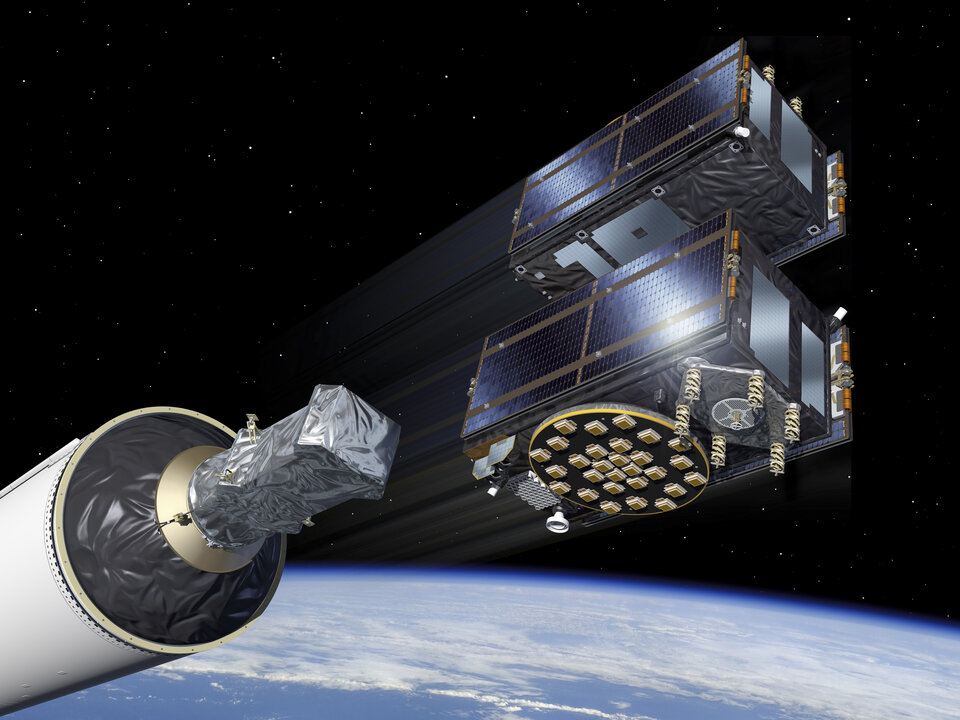
Galileo launch L12

The satellites were launched on April 28  by SpaceX under contract with ESA. A Falcon 9 rocket injected the Galileo satellites into MEO, not far from their final position. During the first hours after launch, the Mission Control Team made sure that the satellites had successfully completed the initialization sequence, that the solar arrays were correctly deployed and able to generate power and that the network of ground stations could track and control them correctly.

Early operations were executed by the Galileo Service Operator, supported by a team of around 30 satellite experts from ESA and satellite manufacturer OHB on site at the Galileo Control Centre in Oberpfaffenhofen, Germany, under the responsibility of EUSPA.

The drift phase then started, with teams on ground guiding manoeuvres to bring the satellites to their final positions, reached on 24 June.

Over the last months, every component on the satellites has been tested to make sure nothing was damaged by the severe launch conditions. Both platform and payload, including antennas and clocks, have been examined.

On August 21st, ESA, OHB and payload manufacturer SSTL assessed the on-orbit test results and concluded that the satellites had not suffered any degradation during launch. ESA, in collaboration with EUSPA, validated the satellites’ performance at system level. In light of these results, the Security Accreditation Board has given the green light for both satellites to begin nominal operations.

This success is a result of the joint efforts of ESA, EUSPA, the European Commission, manufacturer OHB, payload manufacturer SSTL teams at Galileo Control Centers and the Security Accreditation Board.

Galileo is currently the world’s most precise satellite navigation system, serving over four billion smartphone users around the globe since entering Open Service in 2017. All smartphones sold in the European Single Market are now guaranteed Galileo-enabled. In addition, Galileo is making a difference across the fields of rail, maritime, agriculture, financial timing services and rescue operations.

A flagship program of the European Union (EU), Galileo is managed and funded by the European Commission. Since its inception, ESA, as system development prime and design authority, leads the design, development and qualification of the space and ground systems, and procures launch services. ESA is also entrusted with research and development activities for the future of Galileo within the EU programme Horizon Europe.

The EU Agency for the Space Programme (EUSPA) acts as the system prime for the operational system provider, ensuring exploitation and safe and secure delivery of services while overseeing market demands and application needs.
This image has an empty alt attribute; its file name is EUSPA-Galileo-b-L.jpg

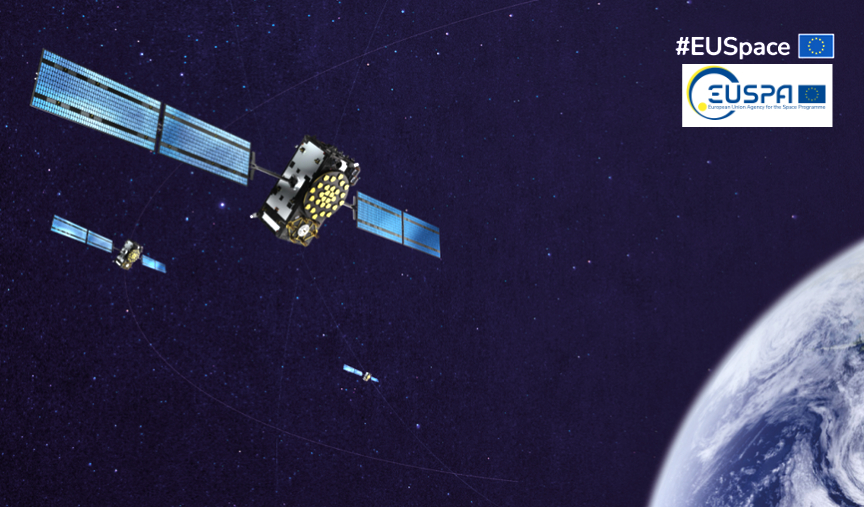
For more info about Galileo, access this direct link…

Filed Under: International Space Agreements, Launch Providers

Primary Sidebar

Coverage

  • Missions & Constellations
  • Business & Finance
  • Military & Defense
  • Launch
  • Software Automation & Ground Systems
  • Government & Regulation
  • Services & Applications

Most Read Stories

  • Planet Labs Imposes Indefinite Blackout on Iran Satellite Imagery at U.S. Request
  • What the SpaceX IPO Changes for Every Satellite Operator
  • Russia Replaces Starlink With European-Built Satellites
  • NASA Shuts Off Instrument on Voyager 1 to Extend Interstellar Mission
  • Space42 and Viasat: Contract close for 2800 satellites

Secondary Sidebar

Footer


Satnews is a leading provider of satellite news, events, publications, research and other satellite industry information in both commercial and military enterprises worldwide.

Stories By Category

  • Business & Finance
  • Government & Regulation
  • Launch
  • Military & Defense
  • Missions & Constellations
  • Services & Applications
  • Software Automation & Ground Systems
  • Spectrum & Licensing
  • Startups & NewSpace Business

About Us

  • Leadership & Editorial Team
  • SatNews History
  • Free Satnews Subscription
  • SatNews Events
  • Magazines

Navigation

  • Latest Stories
  • Magazines
  • Events
  • Contact
  • Cookie & Privacy Policy for Satnews

We use cookies to ensure that we give you the best experience on our website. If you continue to use this site we will assume that you are happy with it.
x
Sign up Now (For Free)
Access daily or weekly satellite news updates covering all aspects of the commercial and military satellite industry.
Invalid email address
Notify Me Regarding ( At least one ):
We value your privacy and will not sell or share your email or other information with any other company. You may also unsubscribe at anytime.

Click Here to see our full privacy policy.
Thanks for subscribing!