

Wednesday was busy again with the responsibilities and plans for United Launch Alliance (ULA) Atlas V rocket’s launch on May 6, 2024 at 10:34 p.m. EDT Boeing’s Crew Space Transportation (CST)-100 Starliner spacecraft with two NASA astronauts, Barry “Butch” Wilmore and Sunita (Suni) Williams on the Crew Flight Test (CFT).
Following separation from Atlas V, Starliner engines will burn taking it the rest of the way to orbit and on to the International Space Station. CFT is ULA’s first human launch. Liftoff will occur from Space Launch Complex-41 at Cape Canaveral Space Force Station, Florida.
Go Atlas! Go Centaur! Go Starliner!
On the shoulders of Atlas, Boeing’s CST-100 Starliner spacecraft will soon launch two NASA astronauts on the Crew Test Flight (CFT) to the International Space Station for NASA’s Commercial Crew Program.
United Launch Alliance (ULA) is readying the Atlas V rocket for the historic flight test that is targeted for launch on May 6 from Space Launch Complex-41 at Cape Canaveral Space Force Station in Florida.
Astronauts Butch Wilmore and Suni Williams will be the first crew members to fly aboard Starliner. Wilmore, the CFT commander, is a retired U.S. Navy captain and veteran of two previous spaceflights to the space station. Williams, serving as the CFT pilot, is also a retired Navy captain and veteran of two previous spaceflights as a long-duration resident aboard the orbiting laboratory.
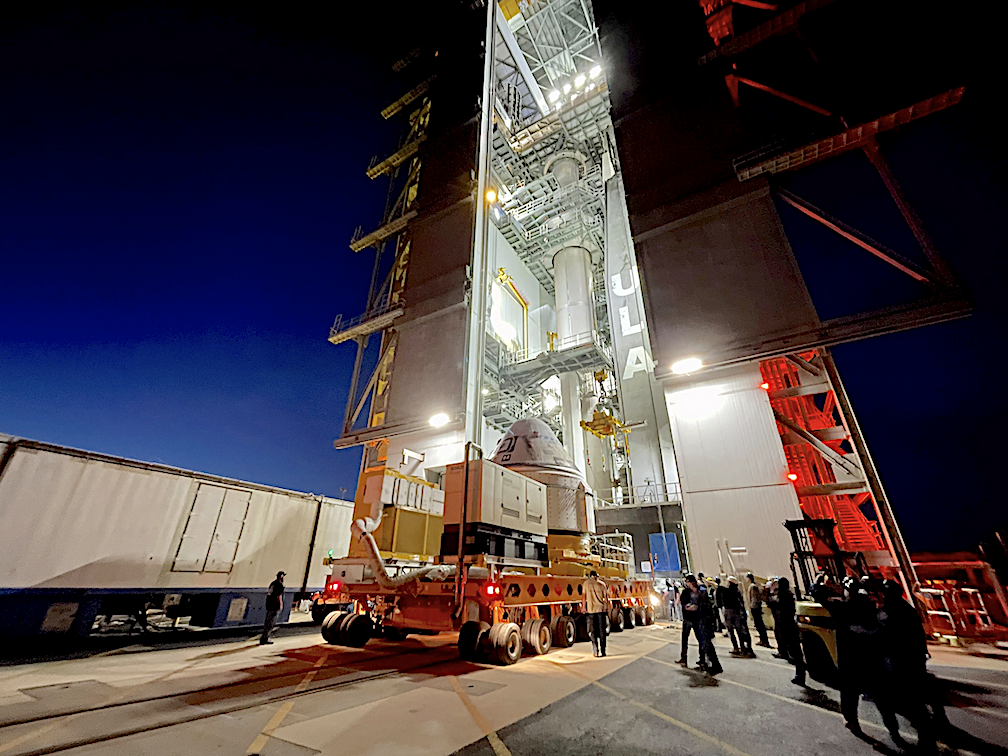
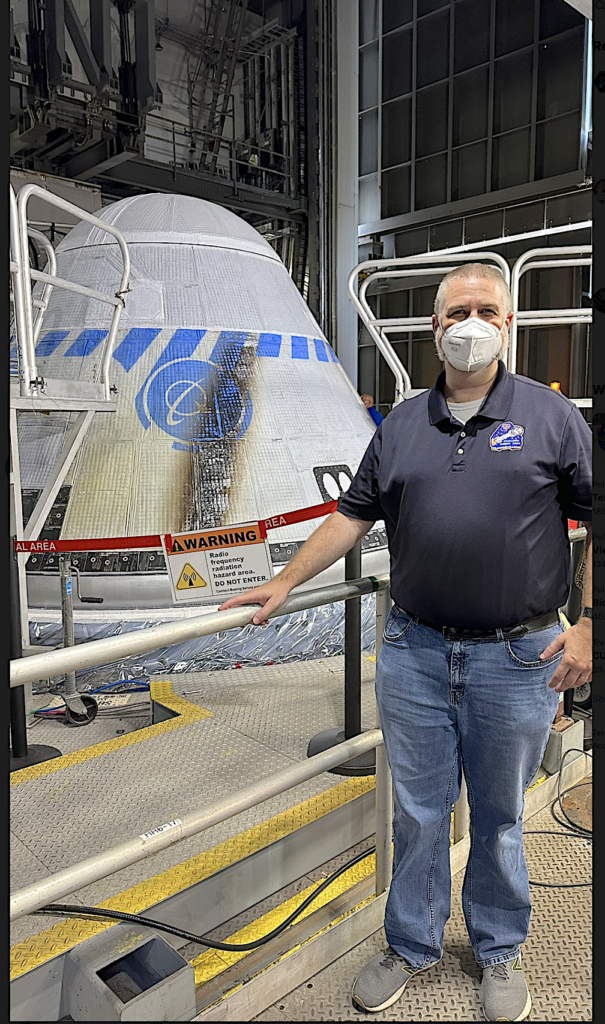
This morning, Starliner traveled from Boeing’s Commercial Crew and Cargo Processing Facility (C3PF) at NASA’s Kennedy Space Center to ULA’s Vertical Integration Facility (VIF) for connection to the Atlas V.
ULA’s motorized payload transporter, adapted to carry Starliner, moved at a top speed of 5 mph, heading from the C3PF, a former space shuttle hangar, eastward to the beach and then southward to the launch site. The transporter deck also provided Starliner with environmental controls to keep its compartments in good health during the transport.
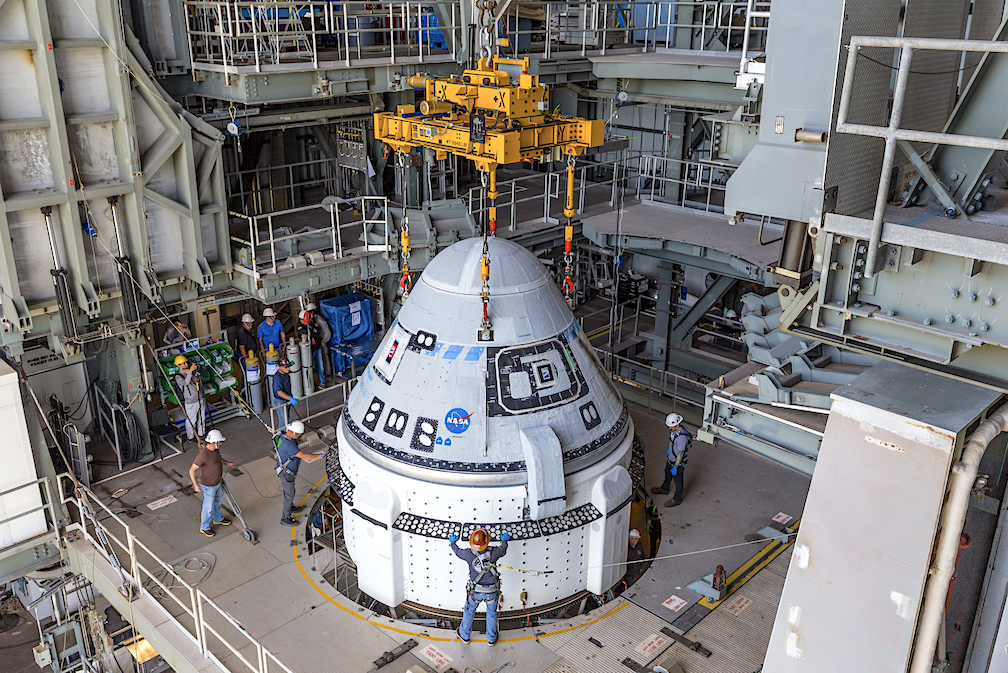
Approaching the VIF, the transporter maneuvered up to the 30-story-tall building’s doorway and parked. A four-point lifting sling, called the Handling Fixture Hoist Tool, was connected to the Starliner, for the overhead crane to carefully raise the spacecraft onto the Atlas V waiting inside the VIF aboard its Mobile Launch Platform (MLP).
Starliner was positioned for mating to the Launch Vehicle Adapter (LVA) that serves as the spacecraft’s cradle on the rocket during ascent. The LVA also features the aeroskirt structure that smooths the air over the combined payload and Atlas V for aerodynamic stability.
Next up is the integrated systems test, a tip-to-tail electrical check of the 172-foot-tall (52-meter) Atlas V and Starliner stack.
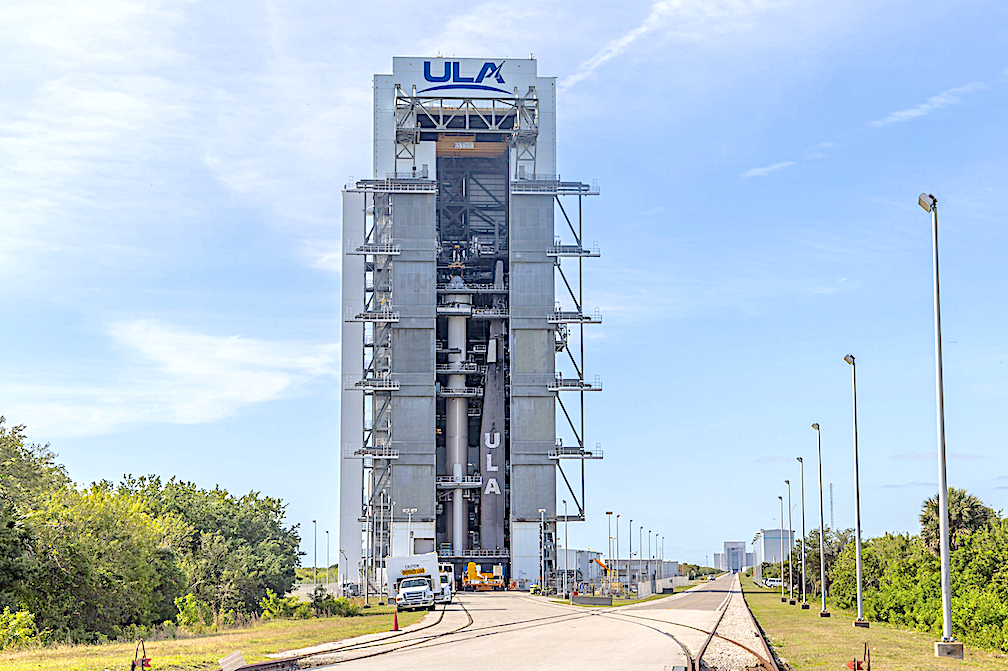
The MLP will move the rocket and spacecraft to the pad approximately two days prior to liftoff for final sequence of activities that include testing, fueling, boarding of the astronaut crew and launch.
Starliner is a next-generation, autonomous spacecraft for safe and reliable crew and cargo transportation to and from low-Earth orbit destinations. For NASA missions to the orbiting laboratory, Starliner will carry up to four NASA-sponsored crew members and about 220 pounds of time-critical scientific research.
CFT will reuse the Starliner crew module that flew the first OFT mission, named Calypso by Williams.
Following a successful CFT mission, NASA will begin the final process of certifying the Starliner spacecraft and systems for crew missions to the space station. Long-duration commercial crew rotation missions enable NASA to continue the important research and technology investigations taking place aboard the orbiting laboratory. Such research benefits people on Earth and lays the groundwork for future space exploration.
Update to ULA’s Starliner’s first human launch of NASA astronauts Wilmore and Williams to ISS
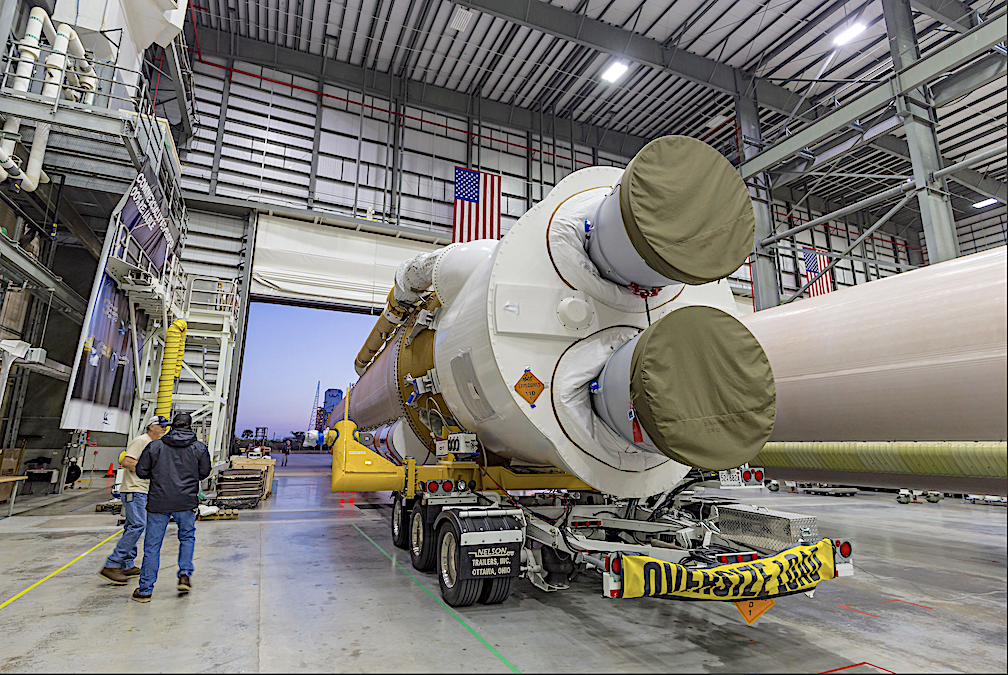
The United Launch Alliance (ULA) Atlas V booster arrives at the Vertical Integration Facility (VIF) adjacent to Space Launch Complex-41 at Cape Canaveral Space Force Station. The rocket will launch Boeing’s Starliner spacecraft on the Crew Flight Test (CFT) with NASA astronauts Butch Wilmore and Suni Williams to the International Space Station. Photo by United Launch Alliance
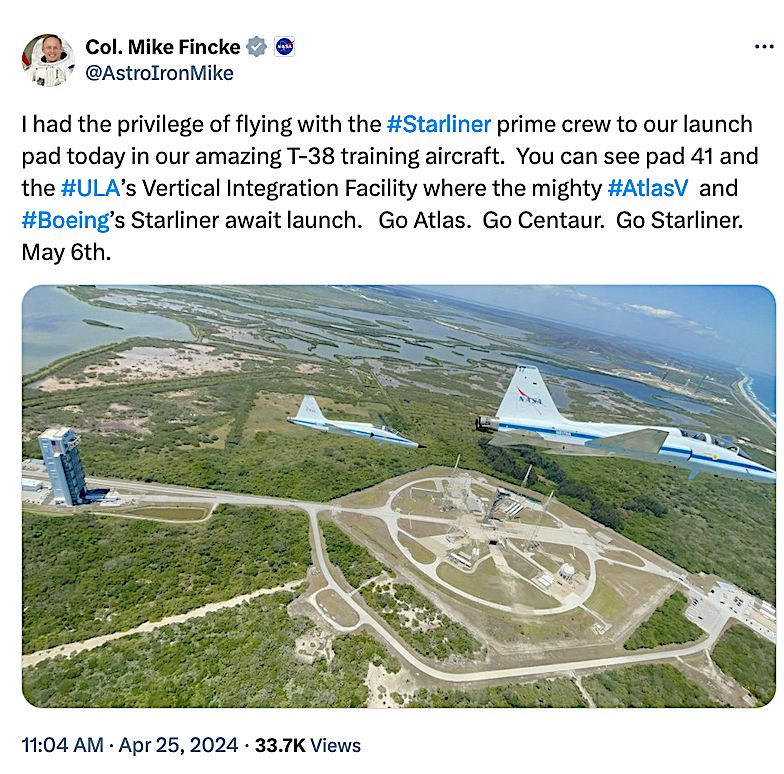
Daily routines and dress rehearsals keep everyone busy in preparation for the first launch of humans in an ULA Atlas V rocket to the ISS. Here’s a peek at some of the proceedings that are taking place in beautiful Florida and the weather is picture perfect.
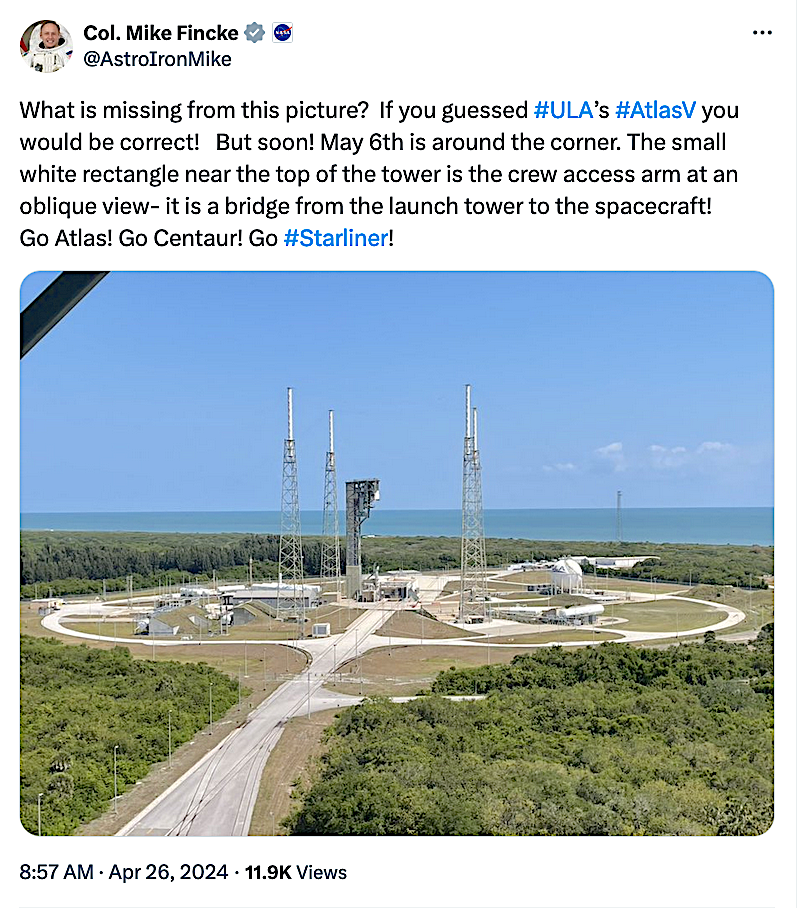
A United Launch Alliance (ULA) Atlas V rocket will launch on May 6, 2024 at 10:34 p.m. EDT Boeing’s Crew Space Transportation (CST)-100 Starliner spacecraft with two NASA astronauts, Barry “Butch” Wilmore and Sunita (Suni) Williams on the Crew Flight Test (CFT).
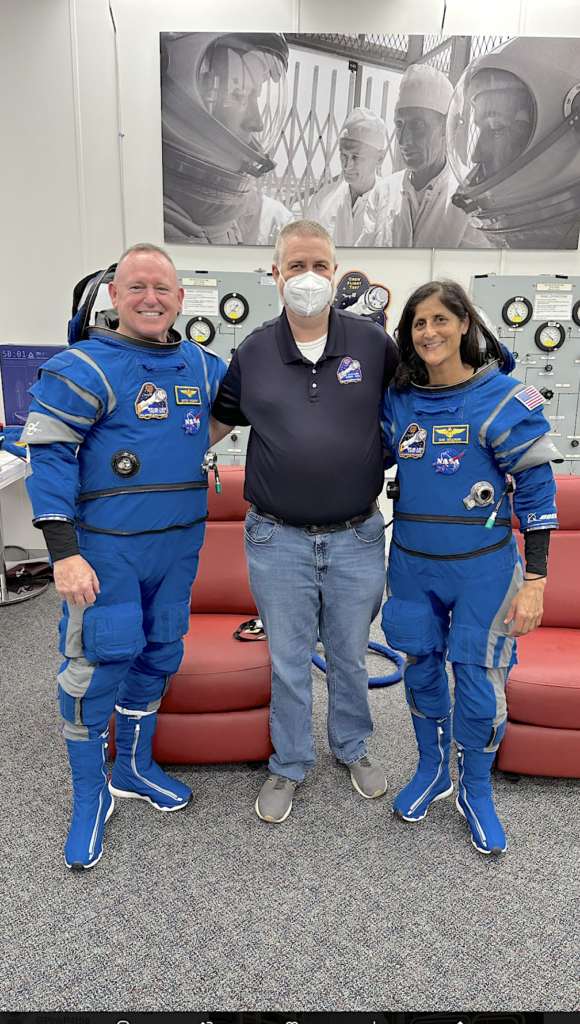
Ed Van Cise @ Carbon_Flight
A very successful mission dress rehearsal is complete! This was the last integrated training event before launch. I was fortunate to be able to observe the crew with @AstroIronMi
while @Saturn_Flight
led the MCC activities. Go #Starliner! Go CFT!
ULA’s Atlas V Starliner’s first human launch of NASA astronauts Wilmore and Williams to ISS
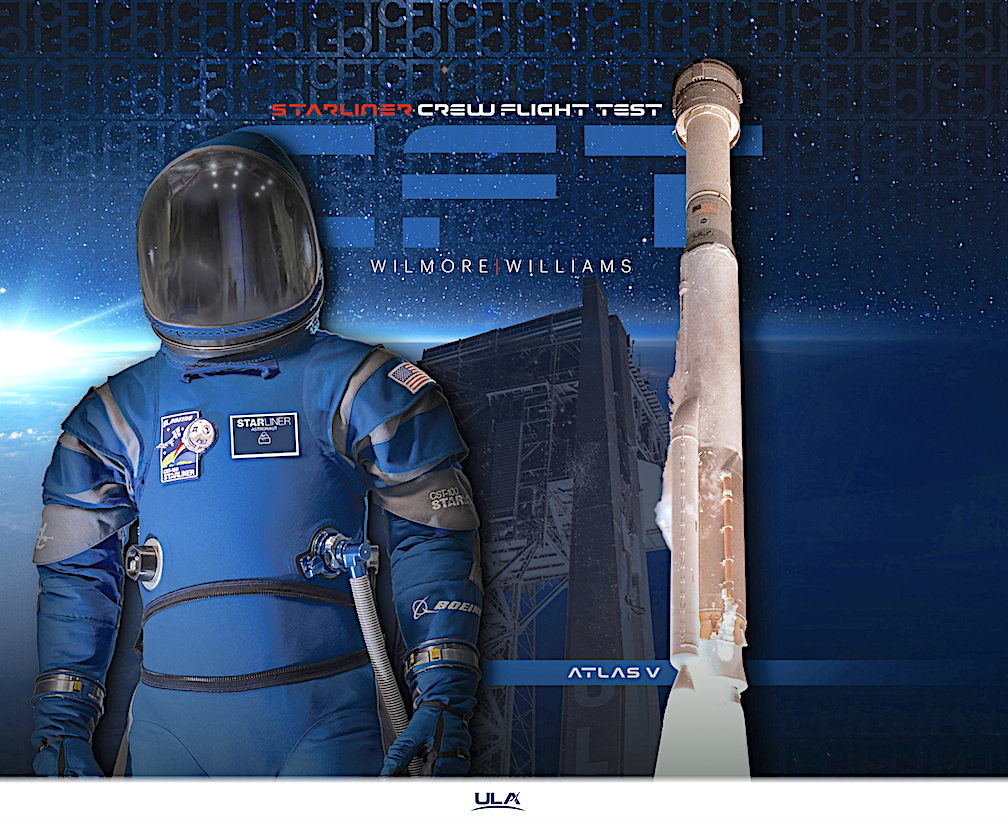
A United Launch Alliance (ULA) Atlas V rocket will launch on May 6, 2024 at 10:34 p.m. EDT Boeing’s Crew Space Transportation (CST)-100 Starliner spacecraft with two NASA astronauts, Barry “Butch” Wilmore and Sunita (Suni) Williams on the Crew Flight Test (CFT).
Following separation from Atlas V, Starliner engines will burn taking it the rest of the way to orbit and on to the International Space Station. CFT is ULA’s first human launch. Liftoff will occur from Space Launch Complex-41 at Cape Canaveral Space Force Station, Florida. Go Atlas! Go Centaur! Go Starliner!
Mission Overview
A United Launch Alliance (ULA) Atlas V rocket will launch Boeing’s Crew Space Transportation (CST)-100 Starliner spacecraft with two NASA astronauts on the Crew Flight Test (CFT). Following separation from Atlas V, Starliner engines will burn taking it the rest of the way to orbit and on to the International Space Station. CFT is ULA’s first human launch. Liftoff will occur from Space Launch Complex-41 at Cape Canaveral Space Force Station, Florida.
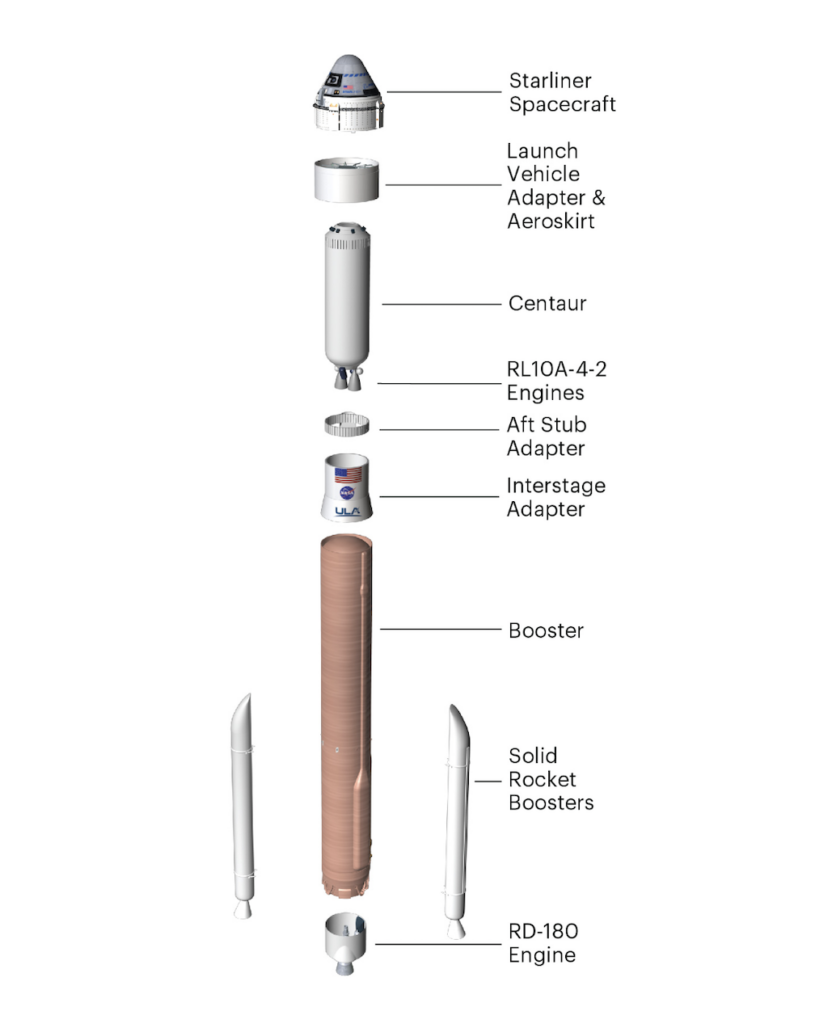
CFT is the final test to demonstrate the full end-of-end capabilities of the Starliner system to deliver crews to and from the space station as part of NASA’s Commercial Crew Program. The unique Atlas configuration for Starliner includes a dual-engine Centaur upper stage to deliver the performance needed to shape the trajectory for crew safety; a launch vehicle adapter that structurally attaches the Starliner to the Atlas V rocket for ascent; a 70-inch-long (1.8-m) aeroskirt to enhance the aerodynamic characteristics, stability and loads of the Atlas V; and an Emergency Detection System that provides an extra layer of safety for astronauts riding the reliable Atlas V. The Atlas V Starliner launch countdown features a four-hour planned, built-in hold at the T-minus 4-minute mark. This allows the rocket to be fueled and placed in a quiescent state before boarding of the astronauts into the spacecraft.
CFT bridges the history of Atlas with today’s rocket. The first orbital spaceflights of American astronauts in the 1960s were launched in Project Mercury by Atlas rockets from Cape Canaveral. That legacy continues with Atlas V launching crews from U.S. soil.
Launch Vehicle
Spacecraft
Modified specifically for the Boeing CST-100 Starliner spacecraft, the Atlas V Starliner configuration does not include a payload fairing. Instead, the Starliner’s insulated surfaces take the place of the fairing to protect the uncrewed spacecraft during ascent. The vehicle’s height with the Boeing CST-100 Starliner is approximately 172 ft (52.4 meters).
The CST-100 Starliner is attached to the Atlas V using a launch vehicle adapter (LVA), which also includes an aeroskirt to reduce the aerodynamic loads on the vehicle. The aeroskirt is jettisoned for improved performance following booster stage separation.
Centaur
The Centaur second stage is 10 ft (3 meters) in diameter and 41.5 ft (12.6 meters) in length. Its propellant tanks are pressure-stabilized and constructed of corrosion-resistant stainless steel. Centaur is a cryogenic vehicle, fueled with liquid hydrogen and liquid oxygen. The Atlas V configuration for this mission is powered by dual RL10A-4-2 engines, each producing 22,600 lbs (100.5 kilo-Newtons) of thrust. The cryogenic tanks are insulated with a combination of helium-purged blankets, radiation shields and spray-on foam insulation (SOFI). The Centaur forward adapter (CFA) provides structural mountings for the fault-tolerant avionics system and electrical interfaces with the spacecraft. The Centaur also includes an Emergency Detection System (EDS) that monitors for critical hazards to detect an imminent or occurring failure. The EDS also provides critical in-flight data which supports jettison of the ascent cover and initiates CST-100 Starliner spacecraft separation.
Booster
The booster is 12.5 ft (3.81 meters) in diameter and 106.5 ft (32.4 meters) in length. The booster’s tanks are structurally rigid and constructed of isogrid aluminum barrels, spun-formed aluminum domes and intertank skirts. Booster propulsion is provided by the RD-180 engine system (a single engine with two thrust chambers). The RD-180 burns RP-1 (Rocket Propellant-1 or highly purified kerosene) and liquid oxygen and delivers 860,200 lbs (3.83 mega-Newtons) of thrust at sea level. Two solid rocket boosters (SRBs) generate the additional power required at liftoff, with each SRB providing 348,500 lbs (1.55 mega-Newtons) of thrust. The Centaur avionics system provides guidance, flight control and vehicle sequencing functions during the booster and Centaur phases of flight.
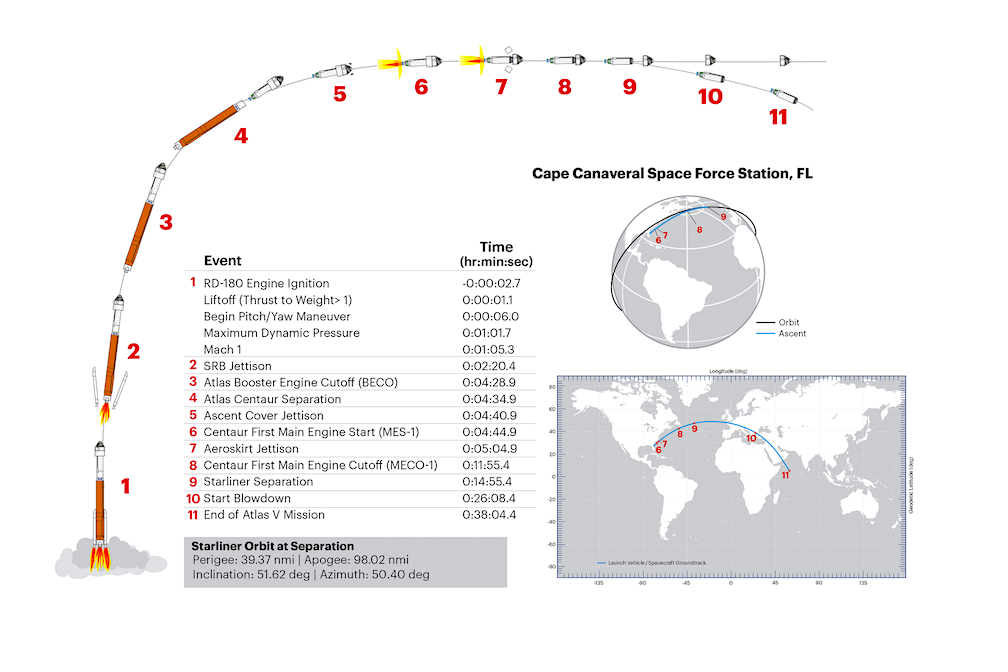
Flight Profile
Space Launch Complex-41 // Processing
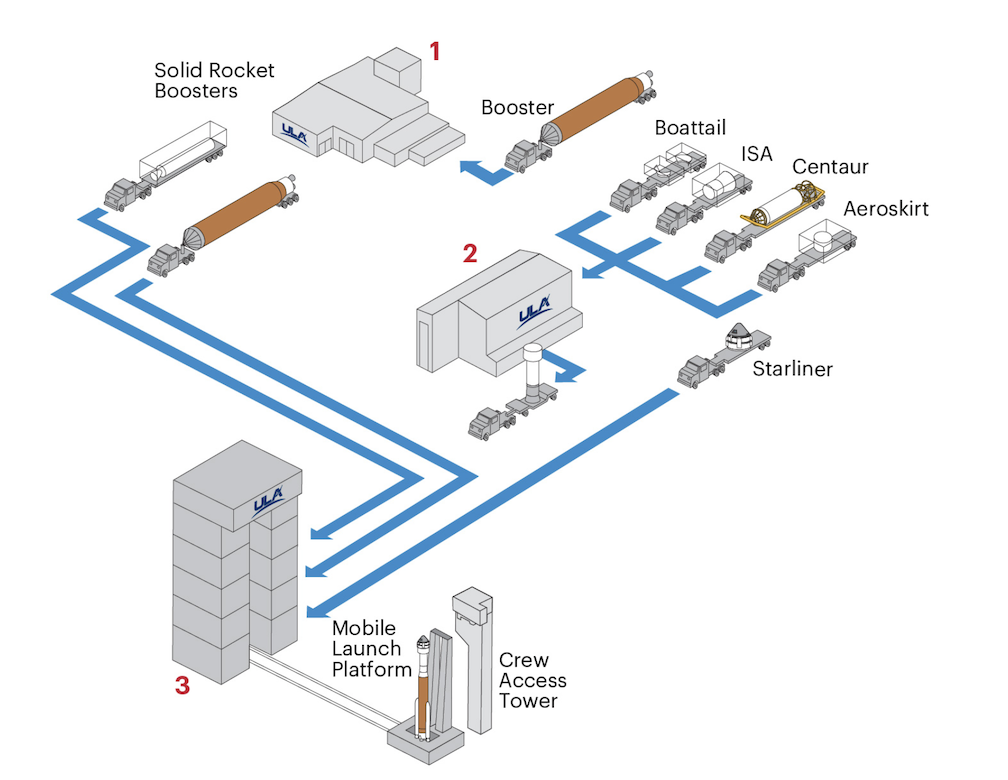
Space Launch Complex-41 (SLC-41), the East Coast home of the Atlas V rocket at Cape Canaveral Space Force Station in Florida, employs a “clean pad” concept of operations to ready launch vehicles and payloads for ascent into space. The rocket elements are assembled atop a Mobile Launch Platform inside the Vertical Integration Facility (VIF) located adjacent to the launch pad. The platform and fully stacked Atlas V then travel by rail approximately 1,800 feet northward from the VIF to the pad for the final countdown, fueling and liftoff. Complex 41 was constructed by the U.S. Air Force in the 1960s for the Titan rocket program. The site was rejuvenated in support of the Atlas V starting in the late 1990s.
1. Advanced Spaceflight Operations Center (ASOC)
Launch Control Center
Mission Director’s Center,
Mission Support Teams,
Launch Vehicle Horizontal Processing &
Ordnance Installation
2. Delta Operations Center (DOC)
ISA, Centaur, Boattail & Aeroskirt Vertical Integration
3. Vertical Integration Facility
Launch Vehicle Integration &
Testing, Spacecraft Mate &
Integrated Operations
Production
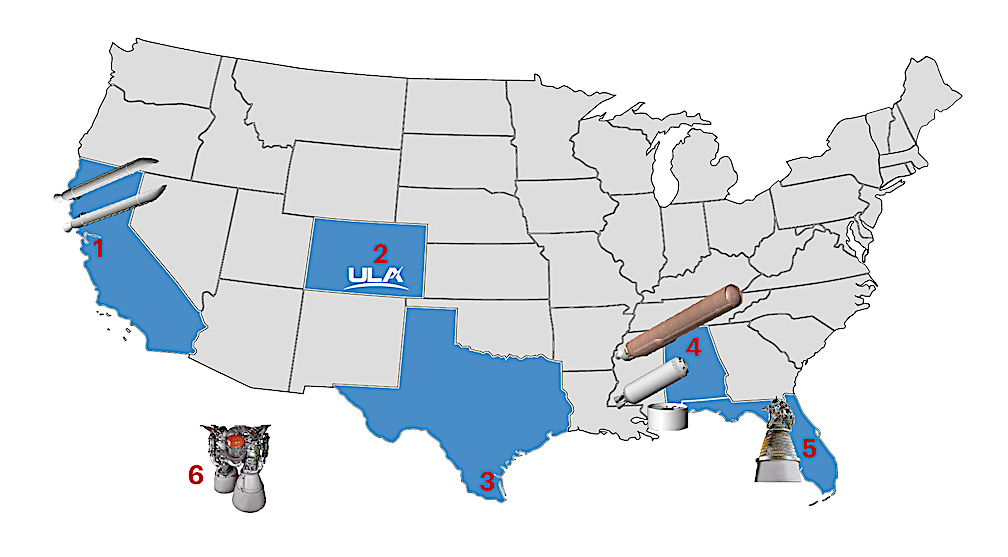
1. Sacramento, CA
Solid Rocket Booster Fabrication
at Aerojet Rocketdyne
2. Denver, CO
ULA Headquarters &
Design Center Engineering
3. Harlingen, TX
Booster Adapter &
Centaur Adapter Fabrication
4. Decatur, AL
Booster Fabrication & Final Assembly,
Centaur Tank Fabrication & Final Assembly
5. West Palm Beach, FL
RL10A-4-2 Engine Fabrication at
Aerojet Rocketdyne
6. Khimki, Russia
RD-180 Engine Fabrication at
NPO Energomash