• Skip to primary navigation
  • Skip to main content
  • Skip to primary sidebar
  • Skip to secondary sidebar
  • Skip to footer
  • NEWS:
  • SatNews
  • SatMagazine
  • MilSatMagazine
  • SmallSat News
  • |     EVENTS:
  • SmallSat Symposium
  • Satellite Innovation
  • MilSat Symposium
  • SmallSat Europe

SatNews

Satellite Industry Intelligence Since 1983

Subscribe
  • LATEST
  • Missions & Constellations
    • Exploration & Science Missions
    • In-Orbit Servicing & Orbital Operations
    • LEO Constellations
    • Mission Autonomy & Onboard Systems
    • Mission Deployments & Manifests
    • Navigation & PNT
    • SmallSat
    • Spacecraft & Payload Technology
    View All in Missions & Constellations →
    SmallSat Europe Speaker Focus: Chiara Manfletti, NeuraspaceSmallSat Europe Speaker Focus: Chiara Manfletti, Neuraspace
    SmallSat Europe Speaker Focus: Daniel Bock, Morpheus SpaceSmallSat Europe Speaker Focus: Daniel Bock, Morpheus Space
    Firefly Aerospace Prepares for Blue Ghost Mission 2 Following Historic Lunar SuccessFirefly Aerospace Prepares for Blue Ghost Mission 2 Following Historic Lunar Success
    New Boeing Satellite Spacecraft Delivered.New Boeing Satellite Spacecraft Delivered.
  • Business
    • Contracts & Commercial Deals
    • Earnings & Financial Reporting
    • Events & Conferences
    • Funding & Venture Capital
    • Market Forecasts
    • Mergers & Acquisitions
    • Personnel Moves & Appointments
    View All in Business & Finance →
    Lockheed Martin Outlines Strategic Space Technology Roadmap for 2026Lockheed Martin Outlines Strategic Space Technology Roadmap for 2026
    Industry Sentiment Shifts as Quilty Space Reveals Top 5 Takeaways from Satellite 2026Industry Sentiment Shifts as Quilty Space Reveals Top 5 Takeaways from Satellite 2026
    e-GEOS and VENG Strengthen Global Partnership for SAOCOM Satellite Data Distributione-GEOS and VENG Strengthen Global Partnership for SAOCOM Satellite Data Distribution
    What the SpaceX IPO Changes for Every Satellite OperatorWhat the SpaceX IPO Changes for Every Satellite Operator
  • Defense
    • Counterspace & ASAT
    • Defense Budgets & Procurement
    • ISR & Reconnaissance
    • MILSATCOM
    • Missile Warning & Defense
    • National Security Programs
    • Space Domain Awareness
    View All in Military & Defense →
    The End of the VSAT Parts BinThe End of the VSAT Parts Bin
    Procurement Lag vs. Conflict Speed: Can Defense Buying Cycles Keep Up with Space Innovation?Procurement Lag vs. Conflict Speed: Can Defense Buying Cycles Keep Up with Space Innovation?
    ParaZero Technologies Expands Israeli Defense Contract with New Order for Anti-Drone SystemsParaZero Technologies Expands Israeli Defense Contract with New Order for Anti-Drone Systems
    Russia Replaces Starlink With European-Built SatellitesRussia Replaces Starlink With European-Built Satellites
  • Gov
    • Export Controls & Compliance
    • International Space Agreements
    • National Space Policy
    • Space Law & Treaties
    • Space Sustainability & Debris Policy
    • Space Traffic Management / Debris Removal
    View All in Government & Regulation →
    FCC Modernizes Satellite Spectrum Rules to Unleash Next-Generation BroadbandFCC Modernizes Satellite Spectrum Rules to Unleash Next-Generation Broadband
    SmallSat Europe Speaker Focus: Dr. Ane Aanesland, ThrustMeSmallSat Europe Speaker Focus: Dr. Ane Aanesland, ThrustMe
    Isaacman’s Budget Math: How NASA Plans to Reach the Moon With a Quarter Less MoneyIsaacman’s Budget Math: How NASA Plans to Reach the Moon With a Quarter Less Money
    FCC Seeks Comment on Expanding Spectrum Access for “Weird Space Stuff”FCC Seeks Comment on Expanding Spectrum Access for “Weird Space Stuff”
  • Launch
    • Launch Providers
    • Launch Schedule & Calendars
    • Launch Sites & Infrastructure
    • Rocket Technology & Vehicles
    View All in Launch →
    €30 million Financing for PLD Space’s Small Satellite Launcher€30 million Financing for PLD Space’s Small Satellite Launcher
    Satellite Deployers to be Used on JAXA Small Satellite Mission by ExolaunchSatellite Deployers to be Used on JAXA Small Satellite Mission by Exolaunch
    CAS Space Successfully Launches Kinetica-2, Aiming for Global Cost LeadershipCAS Space Successfully Launches Kinetica-2, Aiming for Global Cost Leadership
    Liftoff: NASA Successfully Launches Artemis II to the MoonLiftoff: NASA Successfully Launches Artemis II to the Moon
  • Software
    • Autonomous Ground Operations
    • Data Processing & AI/ML
    • Digital Twins & Modeling
    • Ground Segment & Teleports
    • Mission Planning & Simulation
    • Space Systems Software Engineering
    • Spectrum & Licensing
    View All in Software Automation & Ground Systems →
    Keysight and Sateliot Win ESA and GSMA Foundry Challenge for 6G InnovationKeysight and Sateliot Win ESA and GSMA Foundry Challenge for 6G Innovation
    Automation and Agility: How SSC Space Go is Designed for the New Age of GroundAutomation and Agility: How SSC Space Go is Designed for the New Age of Ground
    Intellian Unveils Future Military and Aerospace Antenna Technologies at Satellite 2026Intellian Unveils Future Military and Aerospace Antenna Technologies at Satellite 2026
    The Downlink Deficit: The Pentagon’s Optical Mesh Network and the Terrestrial BottleneckThe Downlink Deficit: The Pentagon’s Optical Mesh Network and the Terrestrial Bottleneck
  • Services & Apps
    • Climate & Environmental Monitoring
    • Disaster Response & Security Mapping
    • Earth Observation & Imaging
    • Maritime & Aviation Satcom
    • Satellite Communications
    View All in Services & Applications →
    Kraken Robotics Integrates KATFISH Sonar on SEFINE RD-22 USV Following Multi-Naval DemonstrationsKraken Robotics Integrates KATFISH Sonar on SEFINE RD-22 USV Following Multi-Naval Demonstrations
    Astroscale Plans World-First Multi-Orbit Satellite Inspection MissionAstroscale Plans World-First Multi-Orbit Satellite Inspection Mission
    Cinemo Reimagines the Vehicle as a Software-Defined Entertainment HubCinemo Reimagines the Vehicle as a Software-Defined Entertainment Hub
    IEC Telecom Wins CSR Initiative of the Year at the Oil & Gas Middle East Awards 2026IEC Telecom Wins CSR Initiative of the Year at the Oil & Gas Middle East Awards 2026
  • SatNews Events
  • Magazines
  • Calendar

Rocket Lab’s ‘Beginning Of The Swarm’ mission launch window is open and ready for business

April 22, 2024

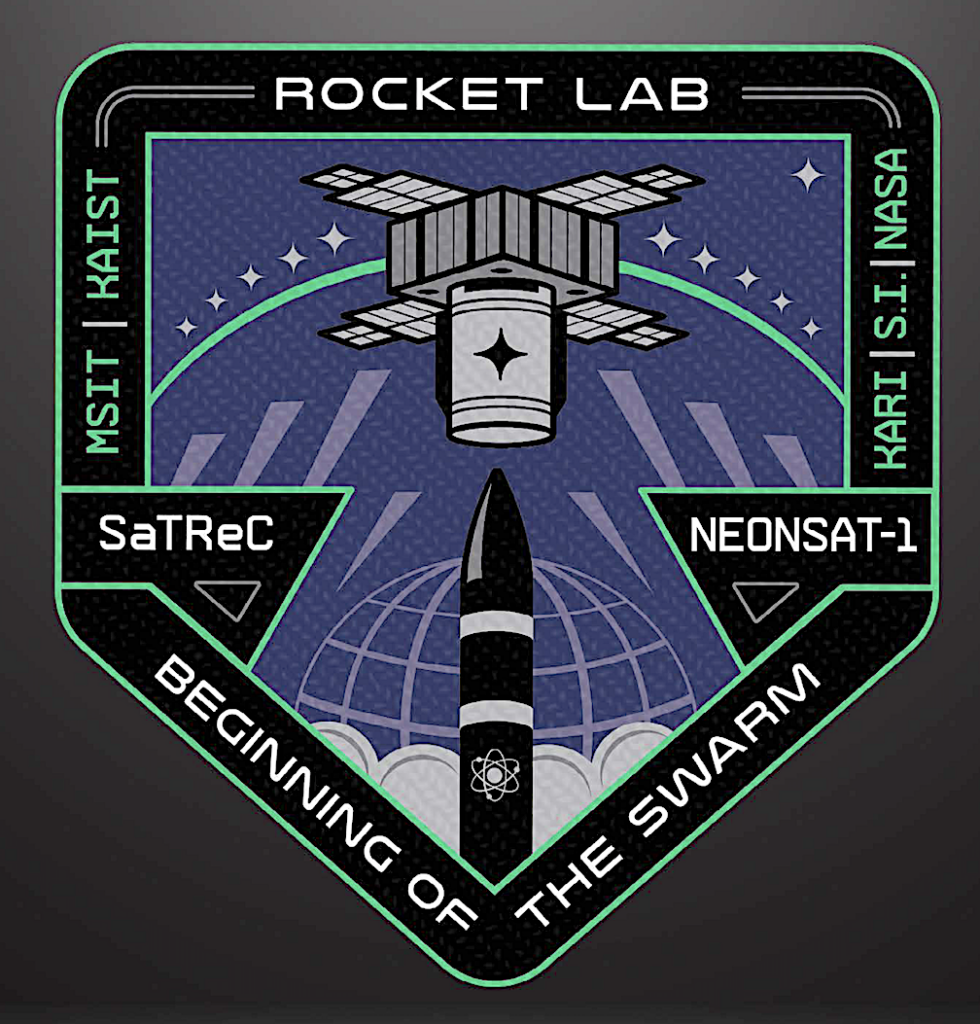
All is ready for the window of opportunity to occur during a 14-day launch window that opens on April 24th in order to launch Rocket Lab’s Beginning of the Swarm mission for South Korea and NASA. Rocket Lab Launch Complex 1 in Mahia, New Zealand is the site in which the Electron will carry two satellites for two separate customers: NEONSAT-1, an Earth observation satellite for the Satellite Technology Research Center (SaTReC) at the Korea Advanced Institute of Science and Technology (KAIST), and NASA’s Advanced Composite Solar Sail System (ACS3).

Rocket Lab updates ‘Beginning Of The Swarm’ mission for Korea’s KAIST and NASA’s ACS 3
This image has an empty alt attribute; its file name is Screen-Shot-2024-04-21-at-10.53.07-PM-1024x566.png
This latest mission will see Rocket Lab perform multiple in-space engine burns to deploy two payloads to separate orbits several hundred kilometers apart.

Rocket Lab USA, Inc. (Nasdaq: RKLB) has set the launch window for its next Electron launch.

The ‘Beginning Of The Swarm’ mission is scheduled to launch from Rocket Lab Launch Complex 1 in Mahia, New Zealand during a 14-day launch window that opens on April 24th. Electron will carry two satellites for two separate customers: NEONSAT-1, an Earth observation satellite for the Satellite Technology Research Center (SaTReC) at the Korea Advanced Institute of Science and Technology (KAIST), and NASA’s Advanced Composite Solar Sail System (ACS3).

The primary payload for this mission, NEONSAT-1, is an Earth observation satellite with a high-resolution optical camera designed to monitor for natural disasters along the Korean Peninsula by pairing its images with artificial intelligence. NEONSAT-1 is the first satellite developed under the NEONSAT program by SaTReC and KAIST, Korea’s leading university in science and technology, which developed and operated Korea’s very first satellite KITSAT-1 more than 30 years ago. Other NEONSAT satellites are planned to be launched in 2026 and 2027 to build out the NEONSAT constellation. The program is a collaboration across multiple Korean academic, industry, and research institutions including SaTReC in KAIST, which is leading the program’s system design and engineering; the Satrec Initiative, a Korean satellite manufacturer that has successfully developed seven previous remote sensing satellites for low Earth orbit; and the Korea Aerospace Research Institute (KARI), which is managing the mission’s ground segments and technology supervision for the NEONSAT program. NEONSAT is funded by the Koren government’s Ministry of Science and ICT (MSIT).

NASA’s ACS3 is a technology demonstration of new materials and deployable structures for solar sail propulsion systems that use sunlight to propel the spacecraft. Much like a sailboat is powered by wind pushing against a sail, solar sails employ the pressure of sunlight for propulsion, eliminating the need for conventional rocket propellant. The mission plans to test the deployment of new composite booms that will unfurl the solar sail to measure approximately 30 feet per side, or about the size of a small apartment in total. Flight data obtained during the demonstration will be used for designing future larger-scale composite solar sail systems for space weather early warning satellites, asteroid and other small body reconnaissance missions, and missions to observe the polar regions of the sun. The ACS3 was designed and built at NASA’s Langley Research Center in Hampton, Virginia, and the technology demonstration is managed and funded by the Small Spacecraft Technology program at and with NASA’s Ames Research Center in Silicon Valley. NASA’s Science Mission Directorate, interested in larger solar sail missions in the future, is funding an extended operations component to execute a series of maneuvers to raise and lower the spacecraft’s orbit, demonstrating the practicality of solar sailing.

The capability of Electron’s Kick Stage to perform multiple engine burns in space and deploy individual satellites to unique orbits is critical to this mission. The Kick Stage will first ignite its Curie engine to deploy NEONSAT-1 to its target 520km circular Earth orbit. After the payload’s separation, it will ignite its Curie engine again to perform an apogee raise to 1,000km. Once in this phasing orbit, the Curie will ignite a third time to circularise before deploying the solar sail demonstration spacecraft. The Kick Stage will then ignite Curie a fourth and final time to perform a deorbit burn that returns the Kick Stage closer to Earth, speeding up its eventual deorbit and removal from space to support a more sustainable space environment. Rocket Lab has demonstrated similar orbit raises, inclination changes, and deorbit maneuvers across previous Electron missions and most recently with its successful spacecraft re-entry for Varda on February 21, 2024.

‘Beginning Of The Swarm’ will be Rocket Lab’s fifth mission of 2024 and the 47th Electron launch overall.

‘Beginning Of The Swarm’ details:

  • Launch window: opens no-earlier-than April 24, 2024.
  • Customers: The Korea Advanced Institute of Science and Technology (KAIST) and NASA.
  • Satellites: NEONSAT-1 for SaTReC/KAIST and the Advanced Composite Solar Sail System (ACS3) for NASA.
  • Target orbits: NEONSAT-1 to 520km circular Earth orbit, ACS3 to 1,000km circular Earth orbit.
  • Launch broadcast: The launch will broadcast live at www.rocketlabusa.com/live-stream

Rocket Lab schedules Electron launch Beginning Of The Swarm with NASA’s ACS3 and NEONSAT-1
This image has an empty alt attribute; its file name is Screen-Shot-2024-04-18-at-6.50.36-PM.png
This image has an empty alt attribute; its file name is Screen-Shot-2024-04-18-at-6.48.49-PM-980x1024.png

The ‘Beginning Of The Swarm’ mission is scheduled to launch from Rocket Lab Launch Complex 1 in Mahia, New Zealand during a 14-day launch window that opens on April 24th. Electron will carry two satellites for two separate customers: NEONSAT-1, an Earth observation satellite for the Satellite Technology Research Center (SaTReC) at the Korea Advanced Institute of Science and Technology (KAIST), and NASA’s Advanced Composite Solar Sail System (ACS3).

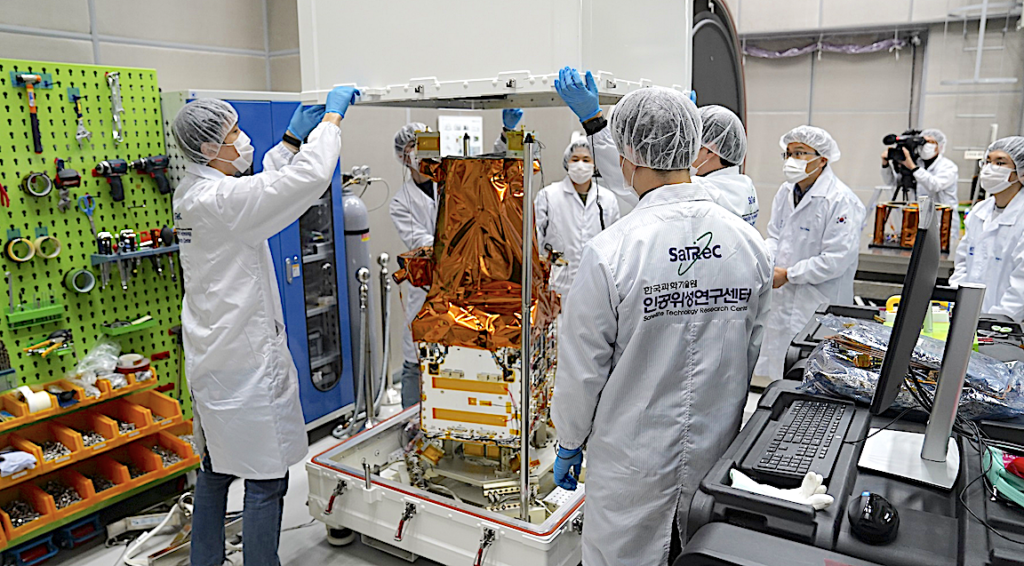
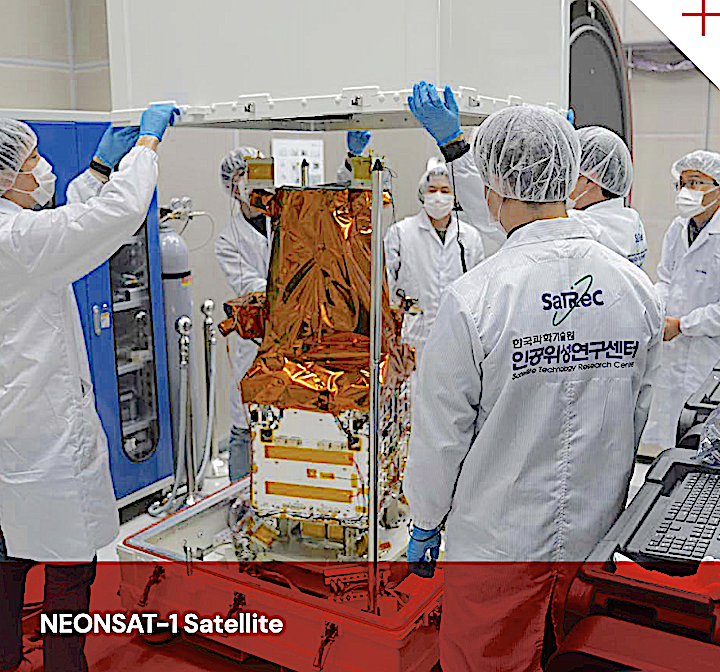
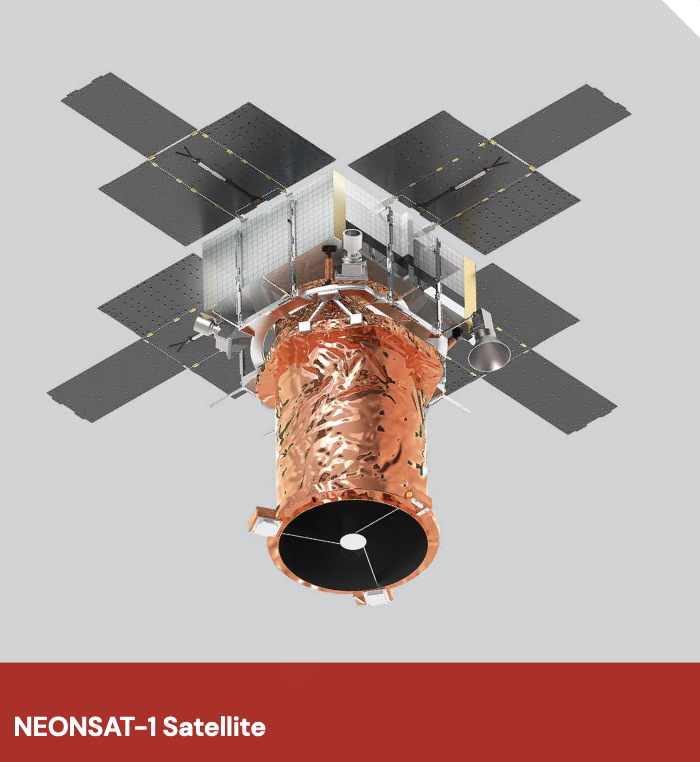
The primary payload for this mission, NEONSAT-1, is an Earth observation satellite with a high-resolution optical camera designed to monitor for natural disasters along the Korean Peninsula by pairing its images with artificial intelligence. 
This image has an empty alt attribute; its file name is Screen-Shot-2024-04-18-at-6.52.32-PM.png

NEONSAT-1 is the first satellite developed under the NEONSAT program by SaTReC and KAIST, Korea’s leading university in science and technology, which developed and operated Korea’s very first satellite KITSAT-1 more than 30 years ago. Other NEONSAT satellites are planned to be launched in 2026 and 2027 to build out the NEONSAT constellation. 
This image has an empty alt attribute; its file name is Screen-Shot-2024-04-18-at-7.04.14-PM.png

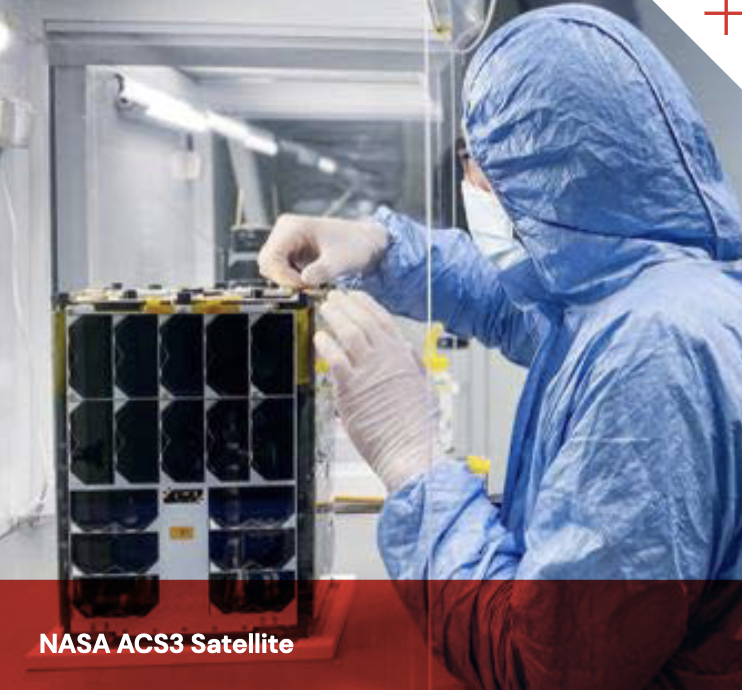
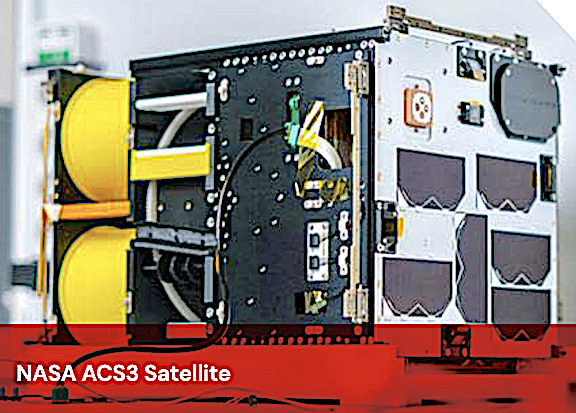
The secondary payload is NASA’s ACS3, a technology demonstration of new materials and deployable structures for solar sail propulsion systems that use sunlight to propel the spacecraft. Much like a sailboat is powered by wind pushing against a sail, solar sails employ the pressure of sunlight for propulsion, eliminating the need for conventional rocket propellant.

The mission plans to test the deployment of new composite booms that will unfurl the solar sail to measure approximately 30 feet per side, or about the size of a small apartment in total. Flight data obtained during the demonstration will be used for designing future larger-scale composite solar sail systems for space weather early warning satellites, asteroid and other small body reconnaissance missions, and missions to observe the polar regions of the sun.
This image has an empty alt attribute; its file name is Screen-Shot-2024-04-18-at-7.04.23-PM.png

NASA’s Advanced Composite Solar Sail System (ACS3) is a technology demonstration mission tasked with deploying a composite boom solar sail.

NeonSat-1 is a high-resolution optical satellite by South Korea’s KAIST that will be deployed as a technology demonstration for a planned future Earth observation constellation.

Filed Under: Data Processing & AI/ML, Earth Observation & Imaging

Primary Sidebar

Coverage

  • Missions & Constellations
  • Business & Finance
  • Military & Defense
  • Launch
  • Software Automation & Ground Systems
  • Government & Regulation
  • Services & Applications

Most Read Stories

  • L3Harris Unveils XL-300P: The First P25 Handheld with 5G and Satellite Direct-to-Device Connectivity
  • Rheinmetall Walked Away. Germany Should Take the Hint.
  • Rocket Lab Emerging as Potential Bus Provider for 2,800-Satellite Equatys Constellation
  • SpaceX Loses Contact With Starlink Satellite
  • FAA Rescinds Proposed Orbital Debris Rule Amid Industry Pressure and Regulatory Reassessment

Secondary Sidebar

Footer


Satnews is a leading provider of satellite news, events, publications, research and other satellite industry information in both commercial and military enterprises worldwide.

Stories By Category

  • Business & Finance
  • Government & Regulation
  • Launch
  • Military & Defense
  • Missions & Constellations
  • Services & Applications
  • Software Automation & Ground Systems
  • Spectrum & Licensing
  • Startups & NewSpace Business

About Us

  • Leadership & Editorial Team
  • SatNews History
  • Free Satnews Subscription
  • SatNews Events
  • Magazines

Navigation

  • Latest Stories
  • Magazines
  • Events
  • Contact
  • Cookie & Privacy Policy for Satnews

We use cookies to ensure that we give you the best experience on our website. If you continue to use this site we will assume that you are happy with it.
x
Sign up Now (For Free)
Access daily or weekly satellite news updates covering all aspects of the commercial and military satellite industry.
Invalid email address
Notify Me Regarding ( At least one ):
We value your privacy and will not sell or share your email or other information with any other company. You may also unsubscribe at anytime.

Click Here to see our full privacy policy.
Thanks for subscribing!