


• Skip to primary navigation
  • Skip to main content
  • Skip to primary sidebar
  • Skip to secondary sidebar
  • Skip to footer
  • NEWS:
  • SatNews
  • SatMagazine
  • MilSatMagazine
  • SmallSat News
  • |     EVENTS:
  • SmallSat Symposium
  • Satellite Innovation
  • MilSat Symposium
  • SmallSat Europe

SatNews

Satellite Industry Intelligence Since 1983

Subscribe
  • LATEST
  • Missions & Constellations
    • Exploration & Science Missions
    • In-Orbit Servicing & Orbital Operations
    • LEO Constellations
    • Mission Autonomy & Onboard Systems
    • Mission Deployments & Manifests
    • Navigation & PNT
    • SmallSat
    • Spacecraft & Payload Technology
    View All in Missions & Constellations →
    SmallSat Europe Speaker Focus: Chiara Manfletti, NeuraspaceSmallSat Europe Speaker Focus: Chiara Manfletti, Neuraspace
    SmallSat Europe Speaker Focus: Daniel Bock, Morpheus SpaceSmallSat Europe Speaker Focus: Daniel Bock, Morpheus Space
    Firefly Aerospace Prepares for Blue Ghost Mission 2 Following Historic Lunar SuccessFirefly Aerospace Prepares for Blue Ghost Mission 2 Following Historic Lunar Success
    New Boeing Satellite Spacecraft Delivered.New Boeing Satellite Spacecraft Delivered.
  • Business
    • Contracts & Commercial Deals
    • Earnings & Financial Reporting
    • Events & Conferences
    • Funding & Venture Capital
    • Market Forecasts
    • Mergers & Acquisitions
    • Personnel Moves & Appointments
    View All in Business & Finance →
    Lockheed Martin Outlines Strategic Space Technology Roadmap for 2026Lockheed Martin Outlines Strategic Space Technology Roadmap for 2026
    Industry Sentiment Shifts as Quilty Space Reveals Top 5 Takeaways from Satellite 2026Industry Sentiment Shifts as Quilty Space Reveals Top 5 Takeaways from Satellite 2026
    e-GEOS and VENG Strengthen Global Partnership for SAOCOM Satellite Data Distributione-GEOS and VENG Strengthen Global Partnership for SAOCOM Satellite Data Distribution
    What the SpaceX IPO Changes for Every Satellite OperatorWhat the SpaceX IPO Changes for Every Satellite Operator
  • Defense
    • Counterspace & ASAT
    • Defense Budgets & Procurement
    • ISR & Reconnaissance
    • MILSATCOM
    • Missile Warning & Defense
    • National Security Programs
    • Space Domain Awareness
    View All in Military & Defense →
    The End of the VSAT Parts BinThe End of the VSAT Parts Bin
    Procurement Lag vs. Conflict Speed: Can Defense Buying Cycles Keep Up with Space Innovation?Procurement Lag vs. Conflict Speed: Can Defense Buying Cycles Keep Up with Space Innovation?
    ParaZero Technologies Expands Israeli Defense Contract with New Order for Anti-Drone SystemsParaZero Technologies Expands Israeli Defense Contract with New Order for Anti-Drone Systems
    Russia Replaces Starlink With European-Built SatellitesRussia Replaces Starlink With European-Built Satellites
  • Gov
    • Export Controls & Compliance
    • International Space Agreements
    • National Space Policy
    • Space Law & Treaties
    • Space Sustainability & Debris Policy
    • Space Traffic Management / Debris Removal
    View All in Government & Regulation →
    FCC Modernizes Satellite Spectrum Rules to Unleash Next-Generation BroadbandFCC Modernizes Satellite Spectrum Rules to Unleash Next-Generation Broadband
    SmallSat Europe Speaker Focus: Dr. Ane Aanesland, ThrustMeSmallSat Europe Speaker Focus: Dr. Ane Aanesland, ThrustMe
    Isaacman’s Budget Math: How NASA Plans to Reach the Moon With a Quarter Less MoneyIsaacman’s Budget Math: How NASA Plans to Reach the Moon With a Quarter Less Money
    FCC Seeks Comment on Expanding Spectrum Access for “Weird Space Stuff”FCC Seeks Comment on Expanding Spectrum Access for “Weird Space Stuff”
  • Launch
    • Launch Providers
    • Launch Schedule & Calendars
    • Launch Sites & Infrastructure
    • Rocket Technology & Vehicles
    View All in Launch →
    €30 million Financing for PLD Space’s Small Satellite Launcher€30 million Financing for PLD Space’s Small Satellite Launcher
    Satellite Deployers to be Used on JAXA Small Satellite Mission by ExolaunchSatellite Deployers to be Used on JAXA Small Satellite Mission by Exolaunch
    CAS Space Successfully Launches Kinetica-2, Aiming for Global Cost LeadershipCAS Space Successfully Launches Kinetica-2, Aiming for Global Cost Leadership
    Liftoff: NASA Successfully Launches Artemis II to the MoonLiftoff: NASA Successfully Launches Artemis II to the Moon
  • Software
    • Autonomous Ground Operations
    • Data Processing & AI/ML
    • Digital Twins & Modeling
    • Ground Segment & Teleports
    • Mission Planning & Simulation
    • Space Systems Software Engineering
    • Spectrum & Licensing
    View All in Software Automation & Ground Systems →
    Keysight and Sateliot Win ESA and GSMA Foundry Challenge for 6G InnovationKeysight and Sateliot Win ESA and GSMA Foundry Challenge for 6G Innovation
    Automation and Agility: How SSC Space Go is Designed for the New Age of GroundAutomation and Agility: How SSC Space Go is Designed for the New Age of Ground
    Intellian Unveils Future Military and Aerospace Antenna Technologies at Satellite 2026Intellian Unveils Future Military and Aerospace Antenna Technologies at Satellite 2026
    The Downlink Deficit: The Pentagon’s Optical Mesh Network and the Terrestrial BottleneckThe Downlink Deficit: The Pentagon’s Optical Mesh Network and the Terrestrial Bottleneck
  • Services & Apps
    • Climate & Environmental Monitoring
    • Disaster Response & Security Mapping
    • Earth Observation & Imaging
    • Maritime & Aviation Satcom
    • Satellite Communications
    View All in Services & Applications →
    Kraken Robotics Integrates KATFISH Sonar on SEFINE RD-22 USV Following Multi-Naval DemonstrationsKraken Robotics Integrates KATFISH Sonar on SEFINE RD-22 USV Following Multi-Naval Demonstrations
    Astroscale Plans World-First Multi-Orbit Satellite Inspection MissionAstroscale Plans World-First Multi-Orbit Satellite Inspection Mission
    Cinemo Reimagines the Vehicle as a Software-Defined Entertainment HubCinemo Reimagines the Vehicle as a Software-Defined Entertainment Hub
    IEC Telecom Wins CSR Initiative of the Year at the Oil & Gas Middle East Awards 2026IEC Telecom Wins CSR Initiative of the Year at the Oil & Gas Middle East Awards 2026
  • SatNews Events
  • Magazines
  • Calendar

UPDATE 3: Rocket Lab successfully launches Astroscale’s satellite to study the removal of space junk

February 19, 2024

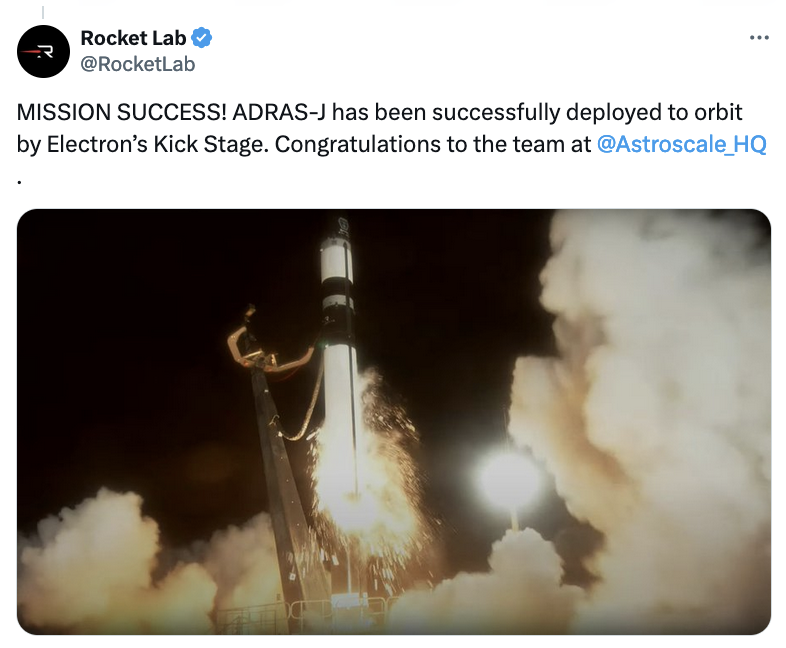
UPDATE 3: Astroscale Japan Inc. (“Astroscale Japan”), a subsidiary of Astroscale Holdings Inc. (“Astroscale”), provider of satellite servicing and long-term orbital sustainability across all orbits, confirmed the successful launch of its commercial debris inspection demonstration satellite, Active Debris Removal by Astroscale-Japan (ADRAS-J), from Rocket Lab’s Launch Complex 1 in Mahia, New Zealand on Sunday, February 18, at 2:52 pm UTC.

“The Astroscale Japan Mission Operations team in Tokyo has successfully made contact with ADRAS-J and is ready to start operations,” said Eijiro Atarashi, ADRAS-J Project Manager. “This milestone signals the start of our mission, and we are excited to survey and characterize a real piece of debris through our innovative Rendezvous and Proximity Operations (RPO) capabilities.”

The ADRAS-J spacecraft was selected by the Japan Aerospace Exploration Agency (“JAXA”) for Phase I of its Commercial Removal of Debris Demonstration program. Astroscale Japan is responsible for the design, manufacture, test, launch and operations of ADRAS-J.
ADRAS-J is now in orbit, ready to start its mission of rendezvousing with an aging piece of space debris and observing it closely to determine whether it can be deorbited in future. Proud to be part of this innovative @astroscale_HQ mission studying ways to clean up space.

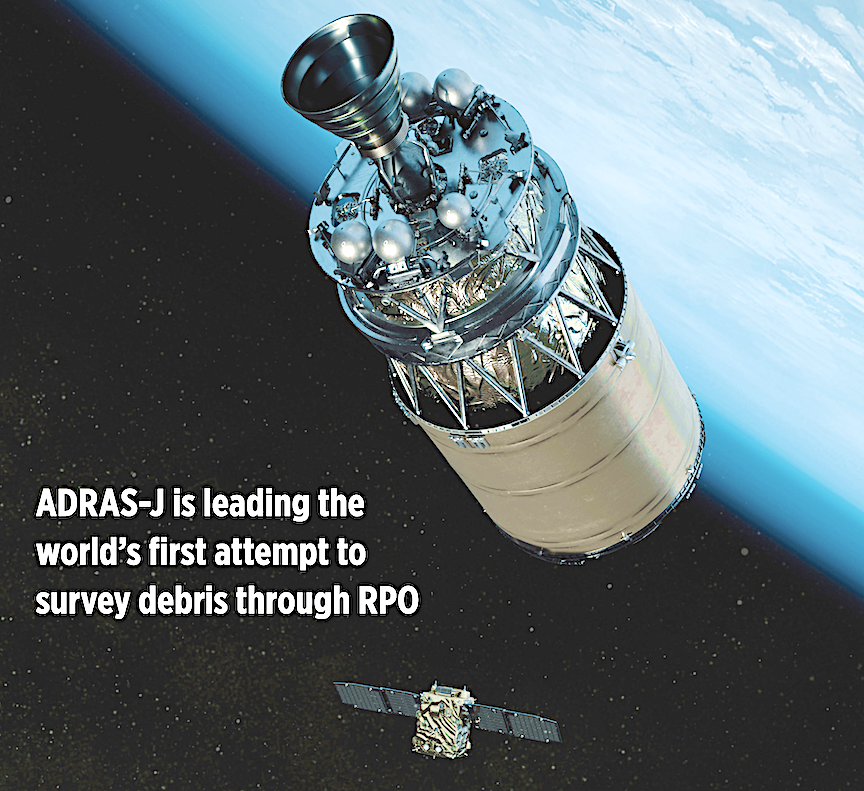
The ADRAS-J mission is the world’s first attempt to safely approach, characterize and survey the state of an existing piece of large debris through RPO. ADRAS-J is designed to rendezvous with a Japanese H2A upper stage rocket body, demonstrate proximity operations, and gather images to assess the rocket body’s movement and condition of the structure. The mission will demonstrate the most challenging RPO capabilities necessary for on-orbit services.

“The launch of ADRAS-J is a new chapter in Astroscale’s history as the first mission we have contracted for a space agency to successfully reach orbit,” said Eddie Kato, President and Managing Director of Astroscale Japan. “ADRAS-J is monumental for us as a company and for the entire sector as the mission will demonstrate the essential RPO capabilities for future on-orbit services. Thank you to all the Astroscale team, JAXA, our partners and supporters for their commitment and dedication to getting us to this point.”

In the coming days, the ADRAS-J team will continue in orbit tests and checkouts, before commencing rendezvous operations. The H2A rocket body, which was launched in 2009, is an unprepared object that does not provide any GPS data on its own, meaning the precise location and orbital position needed for an RPO mission is not available. ADRAS-J will use ground-based observation data of the client’s approximate orbital position to initially approach the client from a safe distance based on this limited information. The following stages of the mission include rendezvous, proximity approach, proximity operations and departure, and are expected to be completed over the next several months.

The Active Debris Removal by Astroscale-Japan (ADRAS-J) mission consists of a spacecraft developed and operated by Astroscale aiming to rendezvous with and characterize a large piece of debris. Its target is the H-2A upper stage left in Low Earth Orbit after the launch of the GOSAT Earth observation satellite in 2009. The total cost for this launch is $6,000,000.

UPDATE 2: Rocket Lab readies for Sunday launch of Astroscale’s study to remove space junk
UPDATE 2:UPDATE 2: Rocket Lab readies for Sunday launch of Astroscale’s study to remove space junk The next Electron mission is scheduled for lift-off on February 19 NZDT (February 18th UTC). The ‘On Closer Inspection’ mission is Rocket Lab’s second launch in 2024 and 44th Electron launch overall that is scheduled to launch during a 14-day window that opens on February 19th NZDT with back up opportunities through February should the need be to stand down for any reason.

Rocket Lab will not be attempting to recover Electron’s first stage during this mission. 

The mission will lift-off from Rocket Lab Launch Complex 1 in New Zealand and will deploy the Active Debris Removal by Astroscale-Japan (ADRAS-J) satellite for Astroscale Japan Inc. It will gather data on the condition and spin rate of a large piece of space debris for a possible future removal mission. The mission is the first phase of an orbital debris removal program, and during this phase ADRAS-J is designed to test technologies and operations for approaching and monitoring debris objects, also known as space junk, and delivering data that will assist in removing it, to ensure the sustainable use of space for future generations.
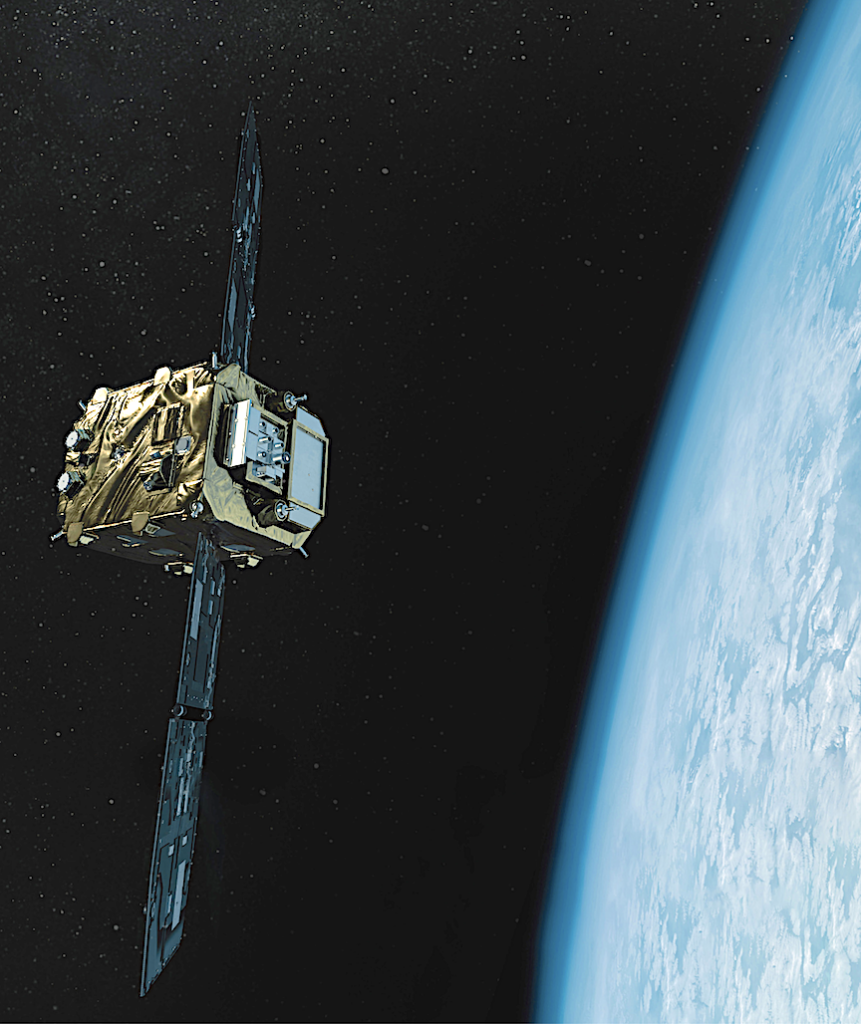
Since the launch of the first satellite in 1957, the creation of debris in Earth’s orbits has been steadily increasing. This growth of debris is a threat to current and future space programs and has been the motivation for the development of various mitigation measures by the international space community. However, more recent analysis have shown that the commonly adopted mitigation measures will not be sufficient to stabilize the orbital environment and that active debris removal (ADR) must also be employed to secure a sustainable future in space.

However, before space debris can be removed, it must first be safely approached and characterized. What condition is it in? Is it tumbling, and if so, how quickly?

Creating a sustainable space environment by better understanding debris risks ADRAS-J, or Active Debris Removal by Astroscale-Japan, will answer these questions and offer unprecedented insight on thebehavior of debris objects in space.

 A live webcast will be available approximately 20 minutes prior lift-off on launch day here: https://www.youtube.com/live/dcuZMP1m_g8?si=XERNEHlRv-d97aHL

Rocket Lab schedules Astroscale’s launch for ‘space junk’ inspection mission
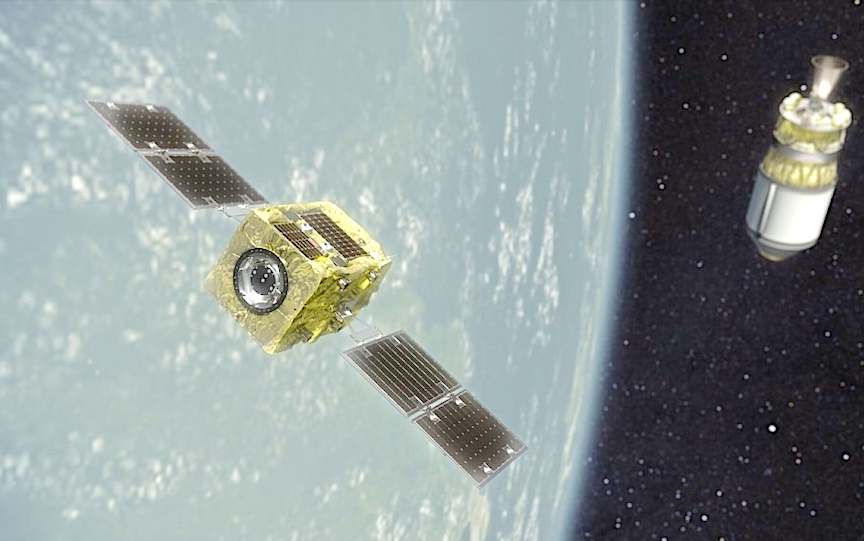
The ADRAS-J satellite is designed to rendezvous with a piece of space junk or orbital debris, a long abandoned upper stage rocket body.

Rocket Lab USA, Inc. (Nasdaq: RKLB), a provider of launch services and space systems, announced it has set the launch window for Astroscale’s orbital debris inspection demonstration mission.

The ‘On Closer Inspection’ mission is Rocket Lab’s second launch in 2024 that is scheduled to launch during a 14-day window that opens on February 19th NZDT. The mission will lift-off from Rocket Lab Launch Complex 1 in New Zealand and will deploy the Active Debris Removal by Astroscale-Japan (ADRAS-J) satellite for Astroscale Japan Inc. The mission is the first phase of an orbital debris removal program, and during this phase ADRAS-J is designed to test technologies and operations for approaching and monitoring debris objects, also known as space junk, and delivering data that will assist in removing it, to ensure the sustainable use of space for future generations.
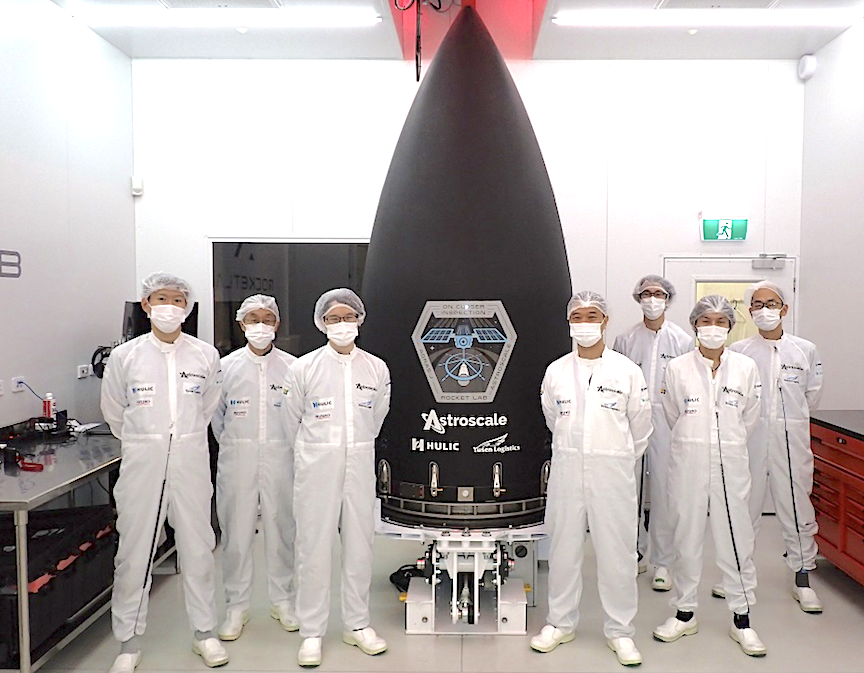
The highly responsive mission aims to demonstrate new orbital debris inspection technologies for space sustainability

After launching on Electron’s 44th mission to date, the 150-kilogram ADRAS-J satellite will approach an aged, derelict rocket stage in orbit to observe it closely, understand how it behaves and determine potential methods for its assisted deorbiting in future. The rocket stage it will be observing is the Japanese H-2A upper stage left in low Earth orbit after the launch of the GOSAT Earth observation satellite in 2009. ADRAS-J will fly around the stage, 11 meters long and four meters in diameter, inspecting it with cameras. After deployment from Electron, Astroscale’s full mission will take between three and six months to complete.

To enable the rendezvous with a non-cooperative space object requires a dedicated launch, highly responsive mission planning and extremely tight margins on orbital parameters. Rocket Lab only received the final perigee, apogee, and inclination from Astroscale 20 days before launch. Only then could argument of perigee targets for different days within the 14-day window be selected, essentially determining the timing of Electron Kick Stage burns to facilitate the unique elliptical orbit required depending on the launch date. The mission also demands highly accurate orbital insertion with tighter margins than required on most standard missions. In addition, the exact T-0 will only be defined the day prior to launch and the required LTAN accuracy only allows for +/- 15 seconds.

“Electron is really the only vehicle capable of delivering such a complex mission on an expedited timeline,” said Rocket Lab Founder and CEO Peter Beck. “With a dedicated launch on Electron the Astroscale team have a high degree of control over launch time and deployment parameters, and the Kick Stage delivers critical maneuvrability for precise orbital deployment. We’re immensely proud to be working with the Astroscale team in support of a pivotal mission that could have real, positive benefits for managing space sustainability for future generations.”

“We are proud to join forces with Rocket Lab to launch the world’s first attempt to safely approach a piece of large debris,” added Astroscale Founder & CEO, Nobu Okada. “ADRAS-J is a testament to our commitment to technological innovation and to fostering the growth of the on-orbit servicing sector. This mission holds immense significance, not just for the future of space sustainability, but for pioneering advancements in Rendezvous and Proximity Operations, which are essential technologies to deliver any on-orbit servicing such as debris removal.”

Filed Under: Data Processing & AI/ML, Earth Observation & Imaging Tagged With: Featured

Primary Sidebar

Coverage

  • Missions & Constellations
  • Business & Finance
  • Military & Defense
  • Launch
  • Software Automation & Ground Systems
  • Government & Regulation
  • Services & Applications

Most Read Stories

  • L3Harris Unveils XL-300P: The First P25 Handheld with 5G and Satellite Direct-to-Device Connectivity
  • Rheinmetall Walked Away. Germany Should Take the Hint.
  • Rocket Lab Emerging as Potential Bus Provider for 2,800-Satellite Equatys Constellation
  • SpaceX Loses Contact With Starlink Satellite
  • FAA Rescinds Proposed Orbital Debris Rule Amid Industry Pressure and Regulatory Reassessment

Secondary Sidebar

Footer


Satnews is a leading provider of satellite news, events, publications, research and other satellite industry information in both commercial and military enterprises worldwide.

Stories By Category

  • Business & Finance
  • Government & Regulation
  • Launch
  • Military & Defense
  • Missions & Constellations
  • Services & Applications
  • Software Automation & Ground Systems
  • Spectrum & Licensing
  • Startups & NewSpace Business

About Us

  • Leadership & Editorial Team
  • SatNews History
  • Free Satnews Subscription
  • SatNews Events
  • Magazines

Navigation

  • Latest Stories
  • Magazines
  • Events
  • Contact
  • Cookie & Privacy Policy for Satnews

We use cookies to ensure that we give you the best experience on our website. If you continue to use this site we will assume that you are happy with it.
x
Sign up Now (For Free)
Access daily or weekly satellite news updates covering all aspects of the commercial and military satellite industry.
Invalid email address
Notify Me Regarding ( At least one ):
We value your privacy and will not sell or share your email or other information with any other company. You may also unsubscribe at anytime.

Click Here to see our full privacy policy.
Thanks for subscribing!