

 Serious Software is another possible name for the award winning computer programs designed to; define safety margins for fiery spacecraft re-entries; and help detect planets outside our solar system.
The co-winners of NASA’s 2007 Software of the Year Award went to software engineers at NASA’s Ames Research Center at Moffett Field, California. They developed the Data-Parallel Line Relaxation, or DPLR, which is used to analyze and predict the extreme environments human and robotic spacecraft experience during super high-speed entries into planetary atmospheres. The DPLR simulates the intense heating, shear stresses, and pressures a spacecraft endures as it travels through atmospheres to land on Earth or other planets. It is capable of creating a highly accurate, simulated entry environment that exceeds the capability of any test facility on Earth, allowing engineers to design and apply thermal protection materials suited to withstand such intense heating environments.
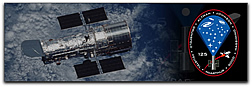
Then the other winner is NASA’s Jet Propulsion Laboratory in Pasadena, California. There software engineers developed the Adaptive Modified Gerchberg-Saxton Phase Retrieval program. The software uses a telescope’s science camera with innovative and robust algorithms to characterize possible errors that limit its imaging performance. The software has been integrated into calibration control loops to correct those errors, and can achieve orders of magnitude improvement in sensitivity and resolution. JPL’s Adaptive Modified Gerchberg-Saxton Phase Retrieval software already is in use at the California Institute of Technology’s Palomar Observatory, in northern San Diego County. The software played a significant role in designing such next-generation telescopes as NASA’s James Webb Space Telescope, scheduled to launch in 2013. Early work for the software was based on efforts to correct the vision of NASA’s Hubble Space Telescope. After initial images came back blurry, engineers worked for months to determine the problem. Eventually, astronauts traveled to the telescope to install a corrective lens based on telescope-imaging errors.
