ST. LOUIS, MISSOURI: August 18, 2007—Satnews Daily—One always feels so accomplished when completing a project, no matter how big or small in size, especially a project that’s challenging and potentially rewarding. The Boeing Company now is able to celebrate the completion of the first phase of their nano-satellite research and experimentation of the CubeSat TestBed 1 (CSTB1) mission. Launched from the Baikonur Cosmosdrome in Kazakhstan last April 17th, 100 percent of the spacecraft’s primary mission objectives have now been accomplished.
Under evaluation by Boeing are a variety of technologies, design elements, and attitude determination and control approaches for future operational non-satellites. Most CubeSats, or NanoSats, or PicoSats, whatever name your prefer, are small spacecraft and weigh under 22 pounds. In the case of CSTB1, the craft weighs less than 3 pounds (1 kg). The tiny spacecraft features multi-functional side panels packed with a variety of embedded sensors, with such being a key design element for these highly integrated nano-satellites.
The test bed provided Boeing with more than 500K sensor data points over the 3-1/2 month mission. This little piece of work has already completed more than 1,650 orbits to date. And CSTB1 remains operations and has now entered an optional test phase for additional experiments. These include photography using the CubeSat’s ultra-lower power imager as well as the evaluation of non-traditional attitude control algorithms.
"The extremely low cost and risk of CTSB1 allowed us to experiment with a range of more radical design elements that wouldn’t occur with a more traditional program. Leveraging the experience gained from this mission and its flight-validated design elements will enable us to explore new, more capable designs to support emerging nano-satellite missions," said Scott MacGillivray, manager of Boeing Nano-Satellite Programs and CSTB1 program manager.
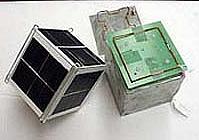
CubeSat satellite examples
In a somewhat related story, Sandia National Labs is going to work with universities and industries around the country to establish the National Institute for Nano-Engineering. According to Richard Stulen, Sandia Vice President of Science and Technology, “This group came together based on a sense of urgency and recognition that academia, American industry, and government need to work together to develop a new partnering model that will lay the foundation for the nation’s future in science and engineering.”
- Skip to primary navigation
- Skip to main content
- Skip to primary sidebar
- Skip to secondary sidebar
- Skip to footer


Satellite Industry Intelligence Since 1983
Footer

Satnews is a leading provider of satellite news, events, publications, research and other satellite industry information in both commercial and military enterprises worldwide.