

CLEVELAND — NASA has awarded contracts totaling up to $1.07 billion to Viasat, SES, and Astranis Space Technologies to develop commercial Ka-band space relay capability concepts, as reported on Wednesday, Nov. 4, 2026.
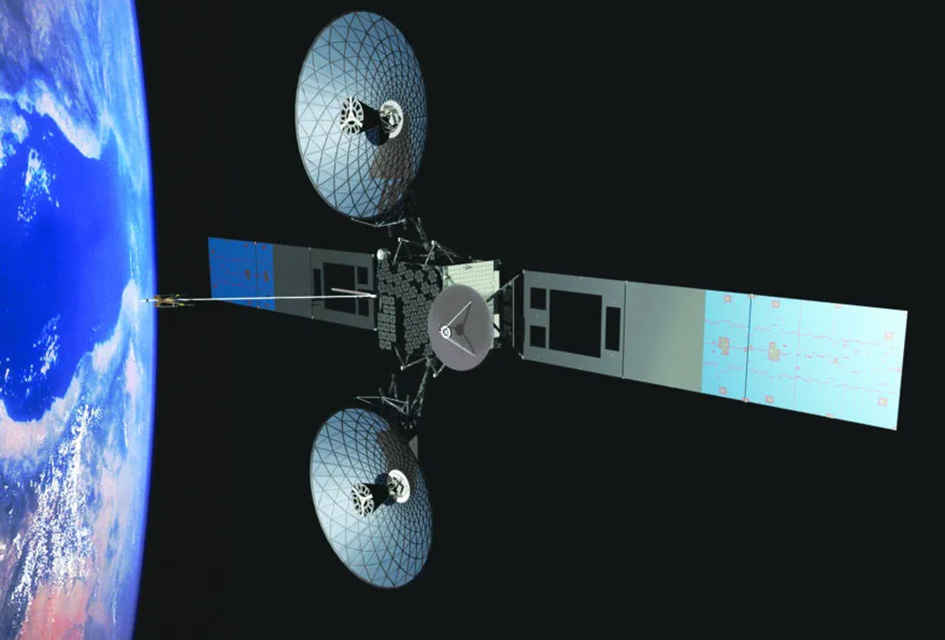
Administered under the Space Communications and Navigation (SCaN) program’s Communications Services Project (CSP), the firm-fixed-price awards expand the space agency’s operational path to transition low Earth orbit (LEO) mission communications from the aging government-owned Tracking and Data Relay Satellite (TDRS) fleet to private multi-orbit networks.
Transition Away from Legacy TDRS Infrastructure
The procurement represents a critical phase in NASA’s multi-year effort to retire its government-operated constellation, an operational pivot detailed in earlier assessments of how NASA seeks commercial relays to replace aging TDRSS infrastructure. With legacy TDRS spacecraft approaching end-of-life, the agency is procuring commercial relay capacity to support science satellites, orbital observatories, and human spaceflight missions without requiring major redesigns of existing flight transceivers.
The initiative builds on foundational demonstrations funded under CSP, including SES Government Solutions’ initial CSP demonstration award and a recent milestone in which Viasat launched the Maxwell satellite to validate high-capacity space-to-space links.
Contract Ceilings and Orbital Architecture Diversity
Awarded under NextSTEP-3 Broad Agency Announcement Appendix E, the contracts span three distinct orbital regimes:
- Viasat Inc. ($460.9 Million): Captures the largest individual allocation, designing high-capacity geostationary Earth orbit (GEO) relay architecture leveraging its high-throughput satellite fleet.
- Global Enterprise Solutions Inc. / SES Space & Defense ($340.4 Million): Establishes medium Earth orbit (MEO) relay capability concepts utilizing its software-defined O3b mPOWER constellation.
- Astranis Space Technologies Corp. ($264.3 Million): Introduces its proprietary dedicated MicroGEO satellite architecture to provide targeted, low-cost geostationary relay services.
Concept Maturation and Flight Demonstration Schedule
Under the contract structure, all three contractors begin an initial six-month concept maturation phase extending from Nov. 4, 2026, through May 3, 2027. NASA holds priced options that can fund subsequent hardware fabrication and on-orbit flight demonstrations through 2029, establishing validated commercial space relays ahead of formal TDRS fleet retirement.
