

Targeting a solution for a critical hardware deadline, NASA has detailed its strategy for Project NEXUS (Network Extension for User Continuity and Sustainability). This pivotal program is designed to prevent a total communications blackout for legacy missions like the Hubble Space Telescope and the International Space Station (ISS).
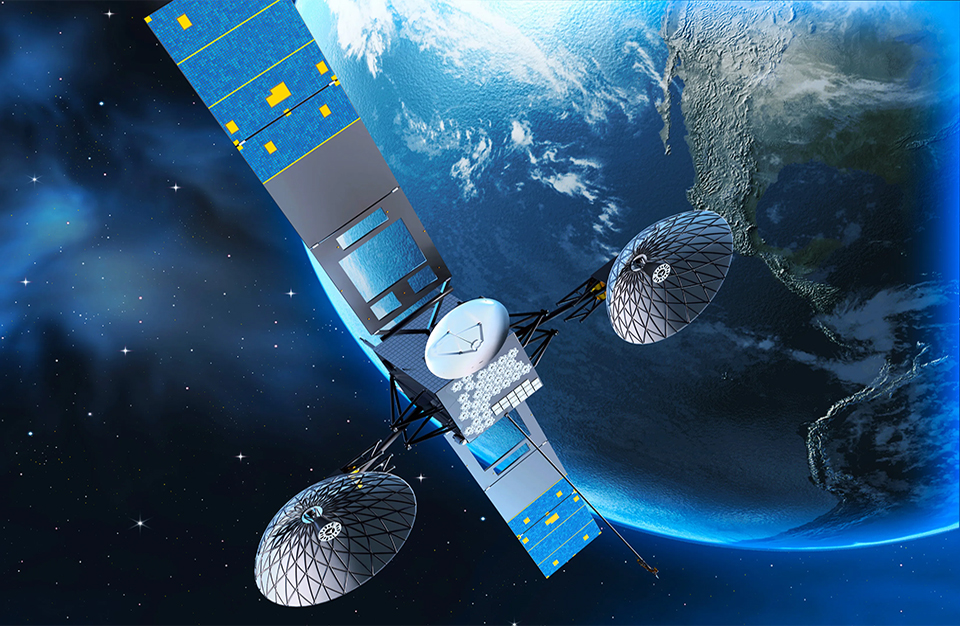
As the aging Tracking and Data Relay Satellite System (TDRSS) constellation nears its end-of-life, NASA is betting on private industry to deliver backward-compatible Ka-band relay services.
The draft solicitation for Project NEXUS was released earlier this month, marking a shift from government-owned hardware to a service-based architecture. NASA intends to release the final Broad Agency Announcement (BAA) on May 11, 2026, under the NextSTEP-3 framework to secure these critical links for a minimum of 15 years.
The Problem: Legacy Hardware Without Modern Radios
The Tracking and Data Relay Satellite System has been the backbone of near-Earth space communications since the 1980s. However, the current fleet faces a significant risk of failure in the 2029–2031 timeframe. The primary challenge is that legacy missions like Hubble and the ISS are equipped with fixed Ka-band transponders designed specifically for TDRSS.
Unlike modern satellites, these platforms cannot be retrofitted with new radios in orbit. If TDRSS fails without a commercial replacement that can mimic its signal protocols, NASA will lose the ability to command these spacecraft or receive high-rate scientific data. The agency’s assessment is that this poses a direct threat to mission safety and the continuity of scientific research.
Rationale: Transitioning to the Communications Services Project
The transition is being managed by NASA’s Communications Services Project (CSP), which is already partnering with six commercial satellite firms to demonstrate relay capabilities. These partners include Viasat, SES Space & Defense, Telesat, Amazon, SpaceX, and Inmarsat.
By leveraging commercial infrastructure, NASA aims to:
- Reduce Costs: Moving from an owner-operator model to a service-based acquisition.
- Increase Data Rates: Utilizing advanced commercial optical and wideband technologies that exceed legacy TDRSS capacity.
- Enable Multi-User Access: Allowing NASA to be one of many customers on a commercial network, increasing buying power and resilience.
Strategic Shift in Procurement
Project NEXUS is structured as a phased Research and Development (R&D) acquisition. NASA anticipates multiple firm-fixed-price awards in Phase 1 (September 2026) to mature concepts, followed by a down-select in early 2027 to build out the space and ground segments. This model mirrors the successful Commercial Crew and Cargo programs, where NASA acts as a customer rather than a primary developer.
The agency is also mandating that proposed solutions be supported by a broader commercial business case beyond NASA. This ensures that the relay infrastructure is sustainable in the long term and not solely dependent on government funding.
Next Steps and Solicitation Timeline
The procurement process is moving on an accelerated timeline to address the hardware risk expected by the end of the decade. Key upcoming milestones for Project NEXUS include:
- May 11, 2026: Anticipated release of the Final BAA solicitation.
- June 2, 2026: Expected deadline for industrial proposals.
- September 2026: Anticipated Phase 1 contract awards for concept maturation.
- June 2028: Deadline for on-orbit demonstrations and end-to-end verification.
NASA’s Science Mission Directorate is working closely with the Space Communications and Navigation (SCaN) program to ensure that the eventual commercial service remains fully interoperable with existing scientific instruments. For a telescope like Hubble, the successful transition to NEXUS is essential for maintaining operations through the 2030s.
