

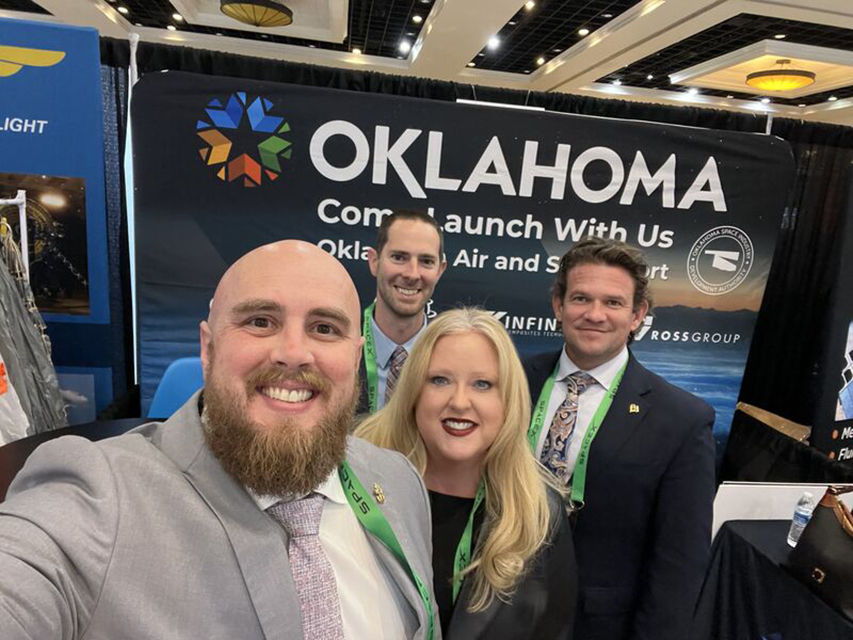
On Tuesday morning, April 14, 2026, during the 41st Space Symposium in Colorado Springs, the Oklahoma Department of Commerce hosted a targeted briefing to pitch the state as the primary manufacturing engine for the burgeoning commercial space economy.
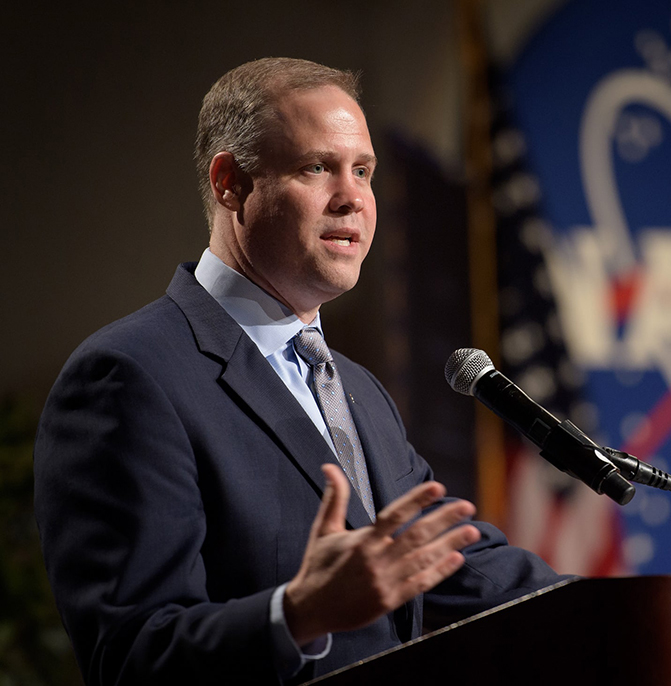
Emceed by former NASA Administrator Jim Bridenstine, the event highlighted the state’s transition from a legacy aviation hub to a specialized node for space hardware production and rapid propulsion testing.
Aerospace currently stands as Oklahoma’s second-largest economic sector, supporting more than 120,000 jobs and generating a total annual economic impact of $44 billion. State leaders emphasized that this infrastructure is now being pivoted to address the critical manufacturing bottlenecks facing the global satellite and launch sectors.
Strategic Shift Toward Space Hardware Execution
The morning’s discussions centered on the practicalities of scaling production rather than high-level vision. Nick Archer, representing the state’s manufacturing interests, noted that Oklahoma’s existing industrial base provides a unique “frictionless” environment for turning theoretical designs into flight-ready hardware. This posture has already yielded results, with Oklahoma-based firms providing mission-critical navigation components and advanced composite structures for the Artemis II mission, which successfully concluded on April 10, 2026.
Agile Space Industries and the Tulsa Expansion
Chris Pearson, CEO of Agile Space Industries, provided a case study for the state’s appeal. Agile, which specializes in chemical propulsion systems for in-space maneuvers and lunar landers, recently expanded its operations with a new advanced manufacturing facility in Tulsa.
Pearson attributed the move to the state’s regulatory climate and workforce readiness. For startups focused on rapid iteration—particularly those serving national security requirements—operating in a jurisdiction that offers streamlined permitting and specialized testing facilities provides a significant competitive advantage in the race to deploy next-generation constellations.
Leveraging National Security Requirements
The state is increasingly positioning its “frictionless business environment” as a solution for the Department of Defense’s push toward disaggregated space architectures. By maintaining a regulatory posture that prioritizes rapid scaling, Oklahoma aims to capture the supply chain requirements of prime contractors involved in the Space Development Agency’s Proliferated Warfighter Space Architecture.
Outlook for the Regional Space Supply Chain
Looking ahead, Oklahoma is investing in dedicated aerospace education pipelines to sustain its workforce of 120,000. The state’s pitch at the Space Symposium signals a coordinated effort to move beyond sub-tier component manufacturing and into the assembly of full satellite buses and integrated propulsion modules. As the industry moves toward mass production of satellites, the Oklahoma Department of Commerce expects to announce further private capital investments in the Tulsa and Oklahoma City corridors by the end of 2026.
