

Addressing the chronic “chicken-and-egg” dilemma of satellite servicing, Dawn Aerospace CEO Stefan Powell announced Monday the formalization of the Loop on-orbit refueling network. The initiative aims to shift satellite propellant from a mission-ending constraint to a manageable operational expense (OpEx) by pre-installing docking hardware on current-generation spacecraft.
Overcoming the Service-Readiness Chasm
Historically, the refueling market has been paralyzed by a lack of standardized interfaces on active satellites. To bridge this gap, Dawn Aerospace has transitioned its standard propellant loading interface into a dual-purpose Docking and Fluid Transfer (DFT) port.
By making the DFT port a standard feature on all SatDrive systems with capacities exceeding 10 kNs, Dawn intends to “seed the market” with refuelable assets years before their tanks run dry. The company estimates that if current delivery trends hold, over 100 compatible satellites will be in orbit within five years, representing billions of dollars in potentially recoverable hardware.
Technical Specifications: The DFT Port
The DFT interface is designed to minimize the “integration tax” typically associated with experimental servicing hardware:
- Mass Impact: 600 grams.
- Propellant Type: Nitrous oxide-based green bipropellants (self-pressurizing).
- Interface: Passive docking system replacing conventional fill-and-drain valves.
- Heritage: Built upon Dawn’s existing propulsion architecture, which has successfully flown on 44 satellites as of April 2026.
The Loop Architecture: SUV and OPD
The Loop network utilizes a two-tiered vehicle strategy to separate high-value robotics from bulk propellant storage:
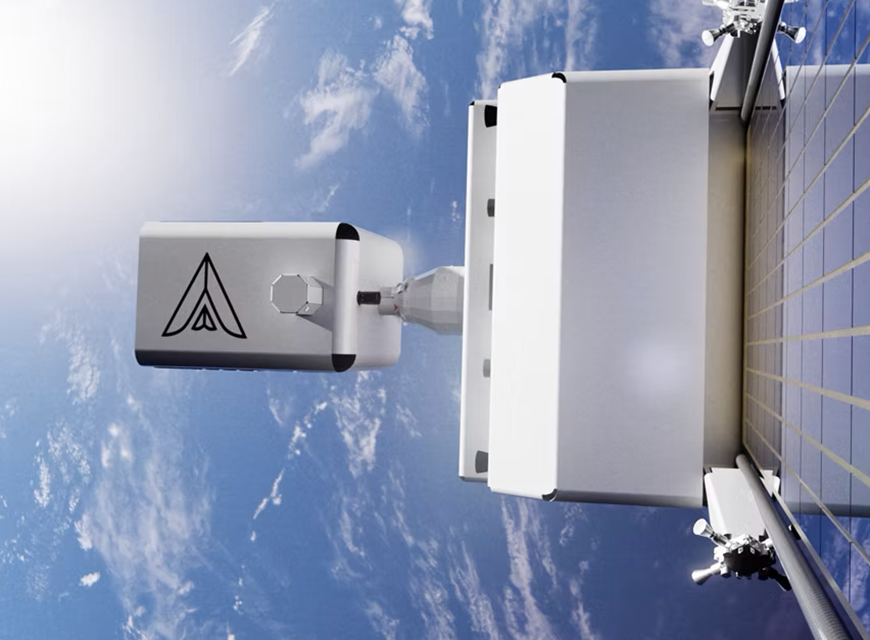
- Space Utility Vehicle (SUV): A reusable, high-maneuverability spacecraft responsible for rendezvous, proximity operations, and docking.
- Orbital Propellant Depot (OPD): “Dumb tanks” launched as secondary payloads on excess rocket capacity. These expendable modules serve as the SUV’s fuel source.
This modularity allows Dawn to avoid the “loitering costs” associated with heavy, single-mission life extension vehicles. The strategy has already gained traction with sovereign and commercial partners, including the Royal Netherlands Air Force for the PAMI-1 mission and a strategic R&T study with the French Space Agency (CNES).
Timeline to Operational Servicing
Dawn Aerospace has confirmed that the Loop program is now fully funded through its 2028 demonstration phase.
- 2026: Launch of the first DFT-equipped systems under commercial contract.
- 2027: Launch of the PAMI-1 mission featuring sovereign refueling capability.
- 2028: Orbital demonstration of docking and fluid transfer between a dedicated SUV and an OPD mini.
- 2029: Commencement of full-scale commercial refueling services for the established fleet of DFT-compatible satellites.
