
NASA and the Department of Energy signed a memorandum of understanding on October 8 titled “Accelerating American Leadership in Space Nuclear Power and Propulsion,” covering research, fuel production, testing, launch integration and operations. It carries no new funding and takes effect November 1. The agreement follows the executive order President Trump signed in December 2025, which directed a lunar surface reactor ready for launch by 2030 and gave the assistant to the president for science and technology sixty days to issue a national initiative for space nuclear power. A Miami company flew a nuclear-powered payload in July. Its co-founder takes the MilSat Symposium stage at Silicon Valley Space Week in October.
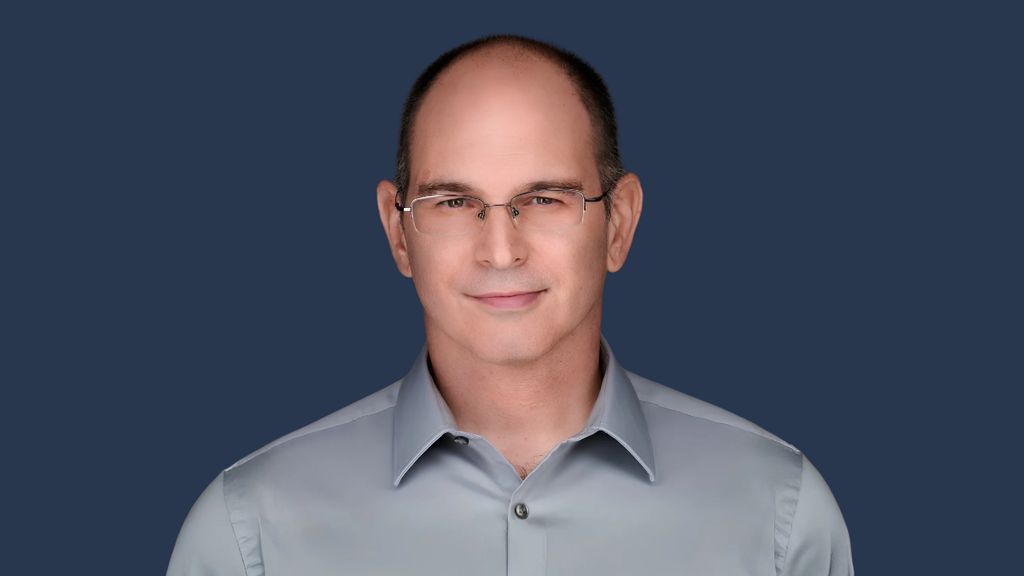
Peter Cabauy is Co-founder and Chief Executive Officer of City Labs, a Miami manufacturer of tritium-powered betavoltaic batteries founded in 2005. He earned a doctorate in applied physics from the University of Michigan in 2002, with doctoral work on quantum information physics at Argonne National Laboratory under Paul Benioff. He founded Florida International University’s Office of Entrepreneurial Science in 2003 and sat on the university’s research foundation board from 2013 to 2016. At City Labs he has helped build the patent portfolio and is developing betavoltaic products for medical implants, wireless sensors and satellites. The company has held Small Business Innovation Research contracts with the Air Force Research Laboratory, AFWERX, NASA and SpaceWERX.
The program gives the brief a title and no description: nuclear power for satellites. Two very different classes of hardware answer to it. City Labs flew the smaller one on July 7, one of 81 payloads on SpaceX’s Transporter-17 rideshare out of Vandenberg Space Force Base. The spacecraft, a CubeSat under six kilograms called BOHR, for Betavoltaic Orbital High-Reliability, runs its bus on solar panels and uses a tritium betavoltaic cell, not a reactor, to power and validate the payload demonstration. City Labs says it is the first commercial nuclear mission cleared through the Federal Aviation Administration pathway set out in a 2019 presidential memorandum on spacecraft containing space nuclear systems. The company prepared the launch safety analysis, Sandia National Laboratories independently reviewed and validated it, and the FAA issued the authorization on September 30, 2025. Writing in the Bulletin of the Atomic Scientists in July, Isobel Porteous and Mallory Stewart called the mission a precedent and argued commercial nuclear launches will need transparency and independent verification. City Labs rates its available P100 cells in nanowatts, at 50 to 350 nanoamps and $5,250 apiece, with a microwatt P200 in development. The reactors in the federal program are rated in kilowatts. NASA’s SR-1 Freedom is scheduled to launch in 2028 to demonstrate nuclear electric propulsion, and a fission surface power system called LR-1 is intended for a future Moon base. NASA’s administrator laid out a pivot toward a permanent lunar base and nuclear propulsion in April. In May, DARPA awarded City Labs $1.5 million under Rads to Watts, one of seven selections, for watt-class cells aimed at 10 watts per kilogram. Tabitha Dodson, the program manager, has said the work could provide kilowatts of nuclear power in a transportable form factor. A PwC assessment in March named energy infrastructure the lunar economy’s primary bottleneck.
Cabauy gives “Tech Brief – Nuclear Power for Satellites” on Thursday, October 29, from 11:30 a.m. to 11:45 a.m. in the Hahn Auditorium at the Computer History Museum in Mountain View. He is the only speaker on it. It follows the panel on commercial geospatial intelligence for the battlefield, and at 11:45 the room turns to space control as a market and the limits of commercial combat support.
Silicon Valley Space Week runs Tuesday, October 27 through Thursday, October 29 at the Computer History Museum, with Satellite Innovation across the first two days and the MilSat Symposium across the last two. Cabauy has fifteen minutes on the final morning. City Labs has published no results from the orbital demonstration since the July launch.