

On Sept. 22, 2026, in-space transportation services provider Impulse Space secured a $28 million contract from the U.S. Space Force to deliver an orbital Space Domain Awareness (SDA) demonstration mission.
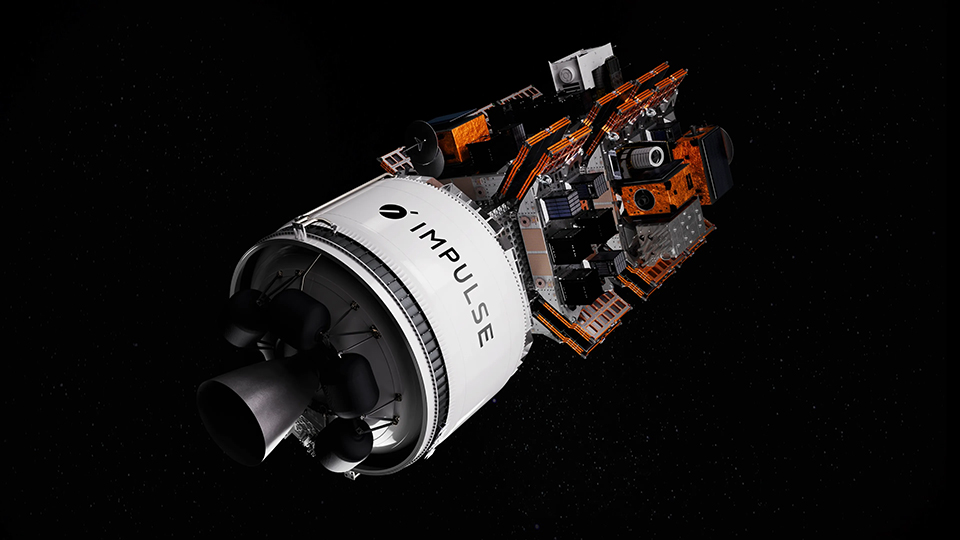
Under the agreement, Impulse Space will integrate a government-furnished optical sensor payload aboard its Mira orbital service vehicle to track and characterize spacecraft operating in geostationary Earth orbit (GEO).
APFIT Program Funding Framework
The contract is supported through a $19.75 million award from the Department of Defense’s Accelerate the Procurement and Fielding of Innovative Technologies (APFIT) program for fiscal year 2026. Sponsored by U.S. Space Command, the APFIT initiative funds the transition of mature commercial technologies into operational military supply chains to accelerate force enhancement capabilities.
By utilizing commercial orbital transfer vehicles to carry military sensing payloads, the U.S. Space Force reduces the cost and acquisition timeline associated with deploying dedicated space situational awareness satellites.
Spacecraft Architecture and Optical Payload Specs
The mission will deploy Impulse Space’s Mira spacecraft into low Earth orbit (LEO) using a government-provided launch vehicle.
- Host Platform: Impulse Space Mira orbital service vehicle featuring high-thrust chemical propulsion
- Primary Optical Sensor: Government-furnished optical payload developed by the Massachusetts Institute of Technology (MIT) Lincoln Laboratory
- Target Observation Regime: High-altitude tracking and characterization of space objects in geostationary orbit (GEO)
- Orbital Altitude: Low Earth orbit operational platform observing GEO targets from below
- Funding Allocation: Supported by a $19.75 million FY26 APFIT award sponsored by U.S. Space Command
Operating from low Earth orbit, the Mira platform will maneuver into optimal viewing geometries, directing its optical sensors upward toward the geostationary belt located 35,786 kilometers above the equator. The configuration allows military space controllers to monitor rendezvous operations, identify unannounced orbital maneuvers, and track space debris across congested orbital planes.
