

On August 13, 2026, space infrastructure provider Intuitive Machines disclosed during its second-quarter 2026 financial report that it secured a commercial contract valued at over $600 million to build three geostationary orbit (GEO) communications satellites.
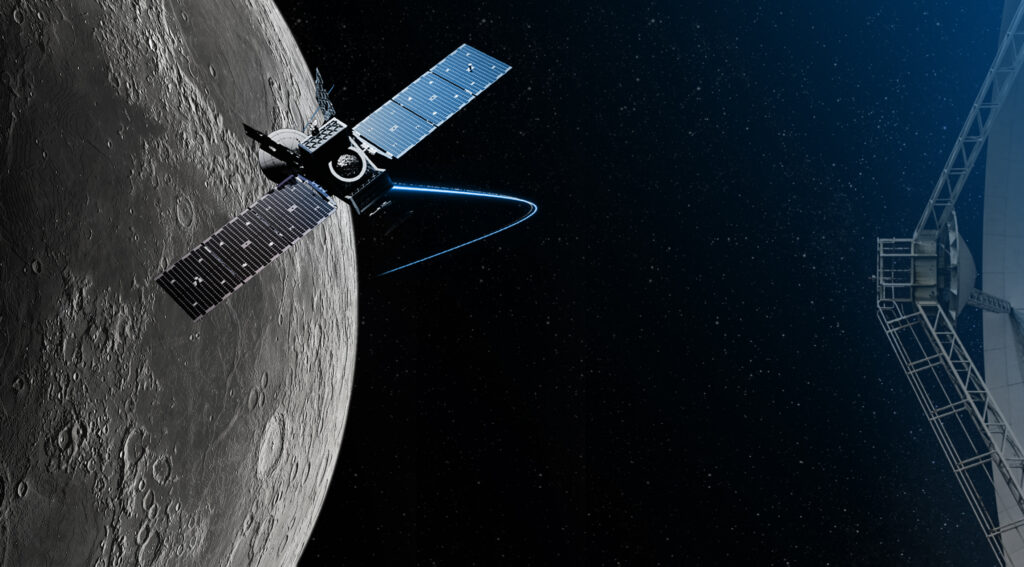
Under the 30-month agreement, the company will manufacture and deliver the three spacecraft platforms for an undisclosed commercial operator.
Integration of Maxar Space Systems Infrastructure
The award validates the company’s January 2026 acquisition of Lanteris Space Systems, formerly Maxar Space Systems. The $800 million transaction integrated Maxar’s 1300-series GEO satellite bus manufacturing line, cleanroom facilities, and high-power satellite engineering capabilities into Houston-based Intuitive Machines.
The commercial GEO contract marks the company’s largest non-lunar manufacturing win to date, shifting its operational baseline from robotic lunar landers to high-rate, multi-domain satellite production across low Earth orbit (LEO), GEO, and cislunar space.
Portfolio Diversification and Backlog Metrics
The $600 million award formed the centerpiece of $920 million in second-quarter bookings, pushing Intuitive Machines’ total backlog to a record $1.8 billion. The combined backlog reflects a deliberate diversification across sectors:
- Commercial: 49 percent ($882 million), anchored by the 3-GEO satellite order and ground station services.
- Civil Space: 37 percent ($666 million), driven by NASA’s Commercial Lunar Payload Services (CLPS) lander flights and the Near Space Network Services (NSNS) infrastructure contract.
- National Security: 14 percent ($252 million), supported by spacecraft bus production for the Space Development Agency’s (SDA) Proliferated Warfighter Space Architecture.
Growth Outlook for Orbital Data Centers
Building on its 1300-series GEO satellite platform and $175 million capital infusion, Intuitive Machines is positioning its heavy GEO buses for the emerging commercial orbital data center market. Management confirmed ongoing discussions with institutional customers to deploy high-power, radiation-hardened compute nodes in GEO and cislunar orbits, leveraging high-efficiency thermal management and power architectures inherited from Maxar Space Systems.
