

On Wednesday, July 8, 2026, aerospace manufacturer Blue Origin announced its first-ever foray into external capital markets, initiating a private financing round to raise up to 10 billion dollars.
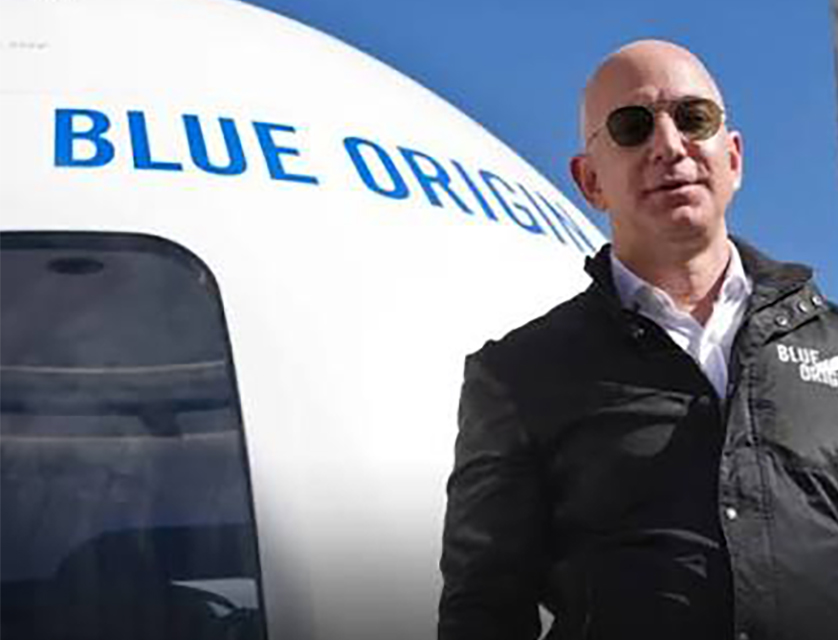
The historic capital injection sets the company’s pre-money valuation at approximately 130 billion dollars, breaking founder Jeff Bezos’s 26-year streak of financing the commercial space venture exclusively through personal capital and the liquid liquidation of Amazon equities.
Core Investment Tranches and Capital Allocations
The capital restructuring is anchored by major institutional commitments designed to secure high-rate production stability:
- Lead Institutional Placement: Technology-focused investment manager Coatue Management is slated to lead the funding private placement with a dedicated 4 billion dollar commitment.
- Founder Reinvestment: Jeff Bezos will personally backstop the round, contributing an additional 2 billion dollars to maintain his core equity position.
- Institutional Demand: The remaining 4 billion dollars is being filled via a syndicated pool of global institutional investors, with allocation demands mirroring recent primary market tech block offerings.
The massive private placement follows weeks after Blue Origin’s primary commercial competitor, SpaceX, completed a record-breaking 85.7 billion dollar public market debut in June 2026. The surge in private aerospace valuations has dramatically shifted capital market appetite toward heavily contracted, heavy-lift transport providers.
Strategic Pivot to TeraWave and Orbital AI Frameworks
Prospective institutional investors are reportedly focusing their capital allocations on Blue Origin’s long-term commercial constellation pipelines. While the company remains a central prime contractor for high-profile government programs—including NASA’s human landing system under the Artemis lunar initiative and Space Systems Command’s national security launch mandates—its commercial growth strategy has expanded into megaconstellations.
Funding will directly accelerate the rollout of “TeraWave,” an enterprise-focused low and medium Earth orbit communications network comprising 5,408 planned satellites slated to begin deployment in late 2027. Unlike consumer-facing satellite services, TeraWave targets secure data center backhaul, large enterprise networks, and sovereign cloud infrastructure.
Furthermore, the company is using this commercial tier to fund “Project Sunrise,” a long-term architecture consisting of up to 51,600 specialized satellites designed to act as zero-gravity edge-computing data centers running active artificial intelligence workloads entirely powered by in-orbit solar harvesting arrays.
Executive Insight on Commercial Visibility
In an internal company memo distributed to employees following the financial filings, leadership framed the funding round as a maturity baseline rather than a corporate restructuring:
“We are entering a period where opportunities in space are expanding rapidly,” stated Blue Origin CEO Dave Limp. “Securing this investment will be a clear vote of confidence from investors and validates the ambition and credibility of what we’re building for the long term. While the headlines will naturally focus on the dollars, I’d encourage all of us to think about today’s announcement differently. A valuation is not our mission. It’s not a finish line. It’s an assessment of what investors believe we can do together.”
Operational Outlook and Launch Facility Recovery
The 10 billion dollar infusion lands at a critical operational point as the company continues launch pad reconstruction efforts. In May 2026, a New Glenn heavy-lift rocket experienced an anomaly during an integrated static-fire hot-fire test at Cape Canaveral, causing structural damage to the pad’s primary transporter-erector gantry.
While the hardware manufacturing facilities in Huntsville, Alabama, and Kent, Washington, remain unaffected and fully funded, the incoming private capital will help insulate the company’s multi-year development timelines from the immediate operational constraints of pad repairs. Blue Origin continues to project a return to active launch operations before the end of 2026, using its solidified capital layer to aggressively transition from a venture-backed pathfinder into a diversified commercial and institutional prime contractor.
