

A fleet of innovative autonomous vessels has significantly shortened its global transport and deployment timelines by replacing traditional maritime fastening methods with a specialized, pivot-pin locking system.
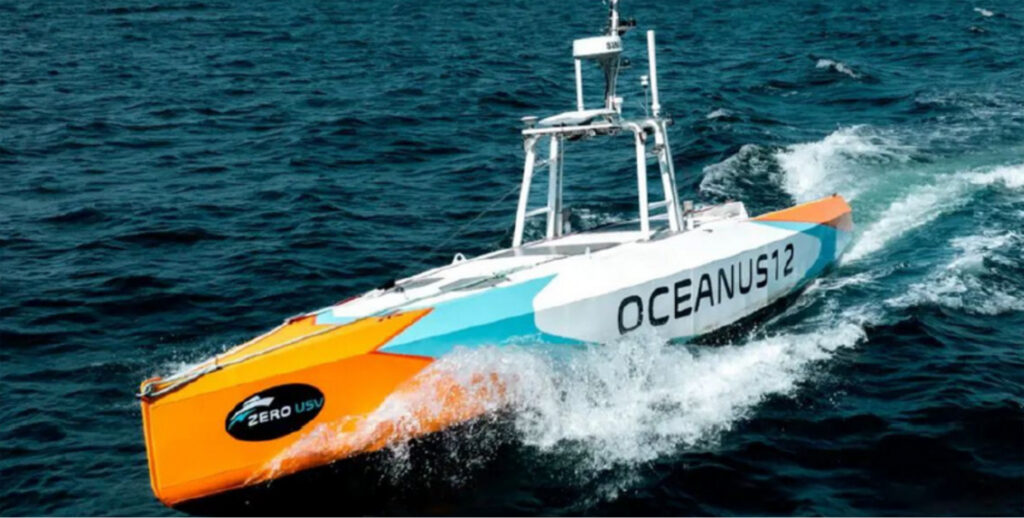
Designed for critical applications ranging from seabed surveys to supporting NATO navies, ZeroUSV’s uncrewed surface vessel, the Oceanus12, leverages the Expander System to minimize operational downtime and maximize portability.
Based in Plymouth, United Kingdom, ZeroUSV designs and builds fully autonomous uncrewed surface vessels (USVs) optimized for mission-critical defense and intelligence operations. In an industry where rapid response is essential, the Oceanus12 operates entirely without an onboard crew. This allows the vessel to maintain a compact footprint of just 12 meters in length, making it exceptionally easy to transport and deploy efficiently anywhere in the world.
A central feature of the vessel’s portable design is its retractable aluminum keel. To prepare the craft for shipping or maintenance, operators must withdraw the keel using a heavy-duty pivot pin. Because the USV is built to withstand harsh defense environments, this specific connection point requires exceptional, military-grade structural reliability.
Traditional stainless steel pivot pins introduce severe long-term complications in maritime applications. When stainless steel and aluminum come into contact in a saltwater environment, a galvanic reaction occurs over time, effectively fusing the pin into the housing. Removing a seized pin traditionally requires destructive drilling, which dramatically drives up maintenance hours, delays vessel redeployment, and inflates the total cost of ownership.
By incorporating the Expander System, the development team has completely bypassed these mechanical bottlenecks. The system’s unique expansion sleeve design allows the Oceanus12’s keel pin to be removed easily by loosening its fasteners and applying a sharp tap, completely eliminating the need for drilling or excessive physical force.
The installation process is similarly streamlined and can be completed using basic hand tools. This simplicity is highly advantageous when technicians are working within the tightly confined spaces characteristic of compact, unmanned vessel hulls.
By dramatically reducing the time required to raise, lower, or service the aluminum keel, the autonomous vessels achieve superior operational flexibility and deployment speed—two vital differentiators for tactical defense missions.
According to Henry Pearson, Engineering Lead at ZeroUSV, collaborating with Nord-Lock Group to implement the system provided critical advantages for the vessel’s most demanding assemblies. The engineering partnership allowed the team to specify high-strength, corrosion-resistant materials tailored for the marine environment, ultimately improving build efficiency and creating a highly robust product as the company scales its presence in the orbital and maritime logistics sectors.
