

HONG KONG — As Elon Musk’s SpaceX prepares to debut on the Nasdaq exchange in what is tracking to be the largest and most anticipated initial public offering (IPO) in global history, a ripple effect is surging through mainland China.
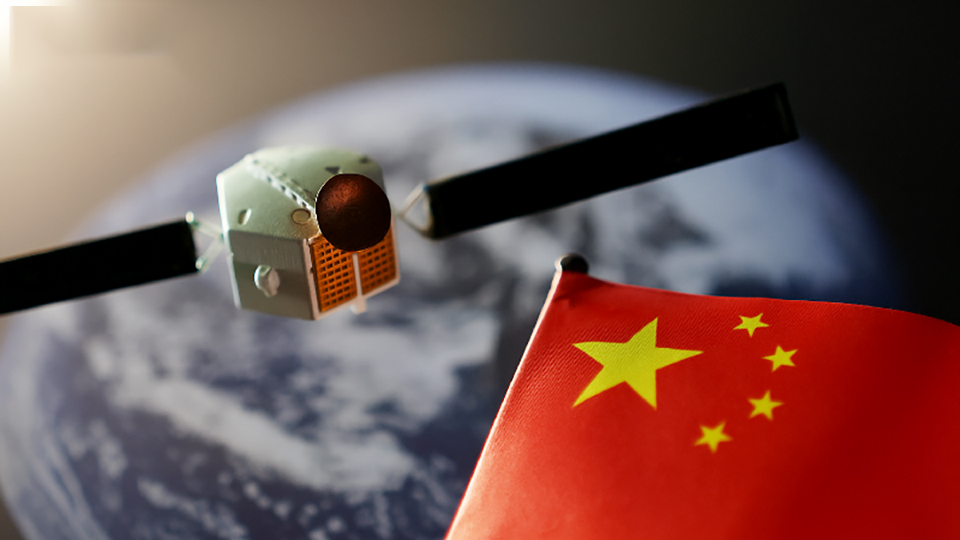
Capitalizing on the intense global investor spotlight now shining on the orbital economy, a wave of private Chinese aerospace startups are fast-tracking plans for their own public listings.
According to reporting from the South China Morning Post, domestic space enterprises—including satellite network operator Emposat—are actively positioning themselves for public listings on mainland and Hong Kong exchanges. The rush to market highlights a deepening, capital-fueled strategic competition between the U.S. and Chinese commercial space sectors.
The Spark: A Trillion-Dollar Catalyst
The sudden urgency among Chinese space firms is being driven by the sheer scale of SpaceX’s impending blockbuster flotation under the ticker “SPCX.”
According to recent amended SEC filings, SpaceX is aiming to raise up to $86 billion at a staggering valuation of $1.78 trillion—a monumental sum that would eclipse Saudi Aramco’s 2019 record of $25.6 billion to become the biggest stock market debut of all time.
With SpaceX rewriting the financial rules of the space industry, international venture capital is scrambling to find an entry point into the sector. Because U.S. ITAR regulations and geopolitical restrictions effectively lock Chinese and Hong Kong investors out of participating directly in the SpaceX offering, Beijing is looking to route that pent-up domestic capital directly into its own sovereign commercial space ecosystem.
Scaling China’s “Thousand Sails” Constellation
For years, the commercial space sector was viewed by public markets as an expensive, highly speculative sandbox. However, the operational maturity of mega-constellations like Starlink has turned the sector into an indispensable layer of national security and economic infrastructure.
To bridge the gap with the West, China’s private space companies are shifting out of the R&D phase and entering high-cadence production. Beijing is heavily backing private entities to build out its own low-Earth orbit (LEO) internet networks, most notably the Qianfan (Thousand Sails) and Guowang satellite constellations.
To fund this capital-intensive manufacturing scale-up, Chinese startups are shifting their focus to the public markets:
- Emposat: The satellite tracking, telemetry, and command (TT&C) provider is among the prominent firms eyeing an IPO to build out global ground station networks.
- Launch and Hardware Providers: Private rocket builders specializing in reusable liquid-propellant vehicles are preparing listings to transition from suborbital tests to heavy-lift commercial manifests.
A New Front in the Tech War
The race to go public is a symptom of a broader structural shift. No longer just a contest between NASA and the China National Space Administration (CNSA), the modern space race is increasingly being fought by private entities backed by massive capital markets.
Recognizing the strategic risks of a private launch failure, Chinese state-backed institutions are stepping in to underwrite the market in ways Western equivalents do not. A wave of domestic Chinese insurance companies has recently rushed into the sector to insure SpaceX’s rivals, absorbing the financial volatility of experimental rocket launches to keep the country’s commercial cadence moving forward uninterrupted.
As the Nasdaq prepares for the influx of capital into SpaceX, the coming IPO boom in Asia signals that Beijing intends to match Washington dollar-for-dollar, satellite-for-satellite, ensuring that the future of low-Earth orbit connectivity remains fiercely contested.
