

On Friday, May 22, 2026, Viasat, Inc. announced the successful completion of the first satellite-enabled smartphone text and push-to-talk messaging demonstration in the Republic of Uzbekistan.
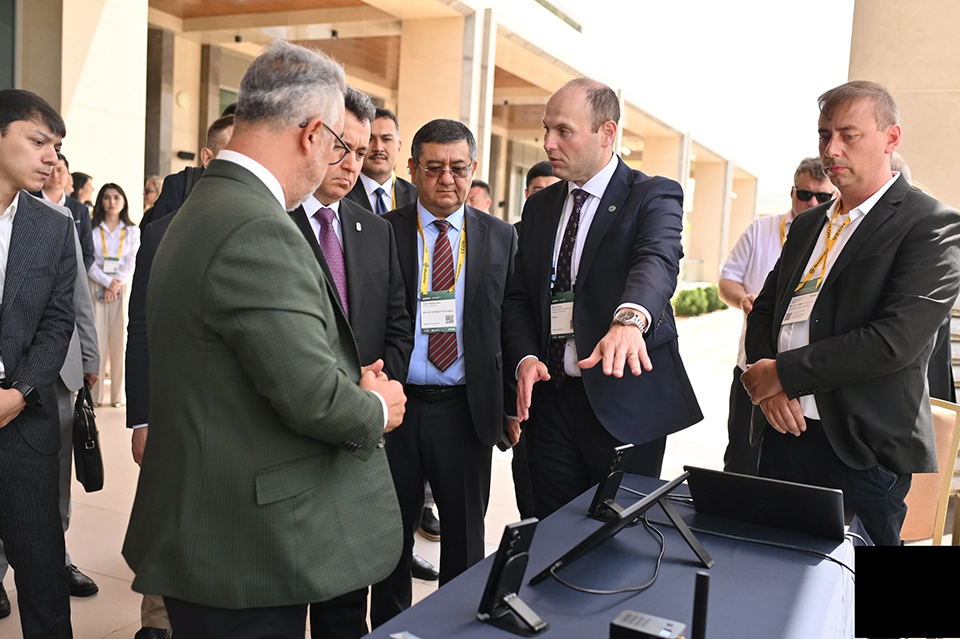
The live showcase occurred during the GSMA M360 Eurasia event in Samarkand. It was conducted in partnership with Uzbekistan’s Ministry of Digital Technologies, national broadband satellite service provider UZ-SAT, and national telecom operator Uztelecom.
Technical Specifications and Demonstration Parameters
The technical demonstration established two-way connectivity using unmodified mass-market Android smartphones. One device utilized a companion hardware interface to transmit application-based data over Viasat’s existing geostationary L-band satellite network. The recipient device operated natively on a traditional terrestrial cellular network.
The demonstration utilized the 3GPP Non-Terrestrial Network (NTN) Release standards, which allow commercial hardware to access space-based infrastructure without specialized, high-gain satellite terminals. By operating within its designated Mobile Satellite Services (MSS) spectrum allocations, Viasat can layer direct-to-device (D2D) capability over local cellular architectures without modifying or depleting terrestrial radio frequencies.
Standard Direct-to-Device Integration Path
This national-first test reflects an ongoing effort by global satellite operators, cellular carriers, and original equipment manufacturers (OEMs) to extend standard mobile connectivity into unserved geographies. This approach is intended to provide secondary emergency and commercial coverage for consumer, automotive, and industrial Internet of Things (IoT) hardware without requiring significant modifications to terrestrial network architecture.
The deployment relies heavily on historical infrastructure developments. Viasat significantly altered its network topology following the Viasat’s Official Statement regarding acquisition of Inmarsat in May 2023, which consolidated substantial L-band and Ka-band infrastructure under a unified operational control.
Executive Perspective
“Countries emerging as technology leaders like the Republic of Uzbekistan are rightly excited about the potential for Non-Terrestrial Networks,” said Sandeep Moorthy, Senior Vice President, Advanced Non-Terrestrial Solutions at Viasat. “Through standards-based satellite connectivity, we can bring connectivity to millions more devices in areas currently underserved by cellular networks, with benefits for safety, sustainability and efficiency. We are delighted to be showcasing this potential with the Ministry and UZ-SAT, and would like to thank them for their continued collaboration.“
Direct-to-Device Fleet Expansion Timeline
Following consumer mobile trials across multiple regional markets, Viasat is expanding its technical framework to support high-density commercial service. The company is currently advancing its Forrester’s Digest: Space42, Viasat launch Equatys D2D venture initiative, a joint enterprise with UAE-based Space42.
The Equatys venture is currently standardizing an open-architecture 5G multi-tenant system designed to merge legacy MSS spectrum blocks. The partnership is formalizing spacecraft bus contracts to begin launching a planned 2,800-satellite low Earth orbit (LEO) constellation designed to achieve global commercial D2D operational status by late 2029.
