

Updated September 7, 2026: Dr. Diana Gamzina of Elve has since been added to this panel and is now named in the roster below. The sponsorship disclosure has been expanded.
Blue Origin has three ground stations running and six more to build before the end of the year. The company disclosed the buildout of its Quartz communications network, built to support its own missions in low Earth orbit and beyond, on August 13, with stations operating in Bermuda, New Zealand and Australia and nine sites planned by December. The partner doing the site surveys, antenna procurement, deployment and hosting is RBC Signals, and GeekWire reported that capacity Quartz does not use will be folded into RBC Signals’ own commercial network. “Ground communications infrastructure has historically been one of the most fragmented and costly elements of space operations,” said Tory Bruno, Blue Origin’s president of national security. The chief executive of the company building it takes the Satellite Innovation stage at Silicon Valley Space Week in October.
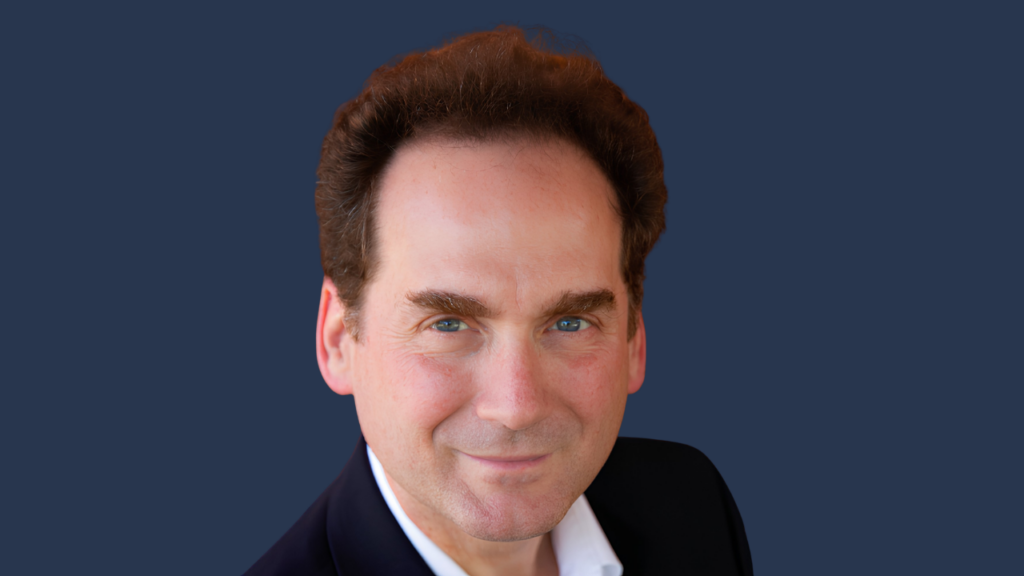
Ron Faith is President and Chief Executive Officer of RBC Signals, the Redmond, Washington company he joined in October 2018 as President and Chief Operating Officer. RBC Signals was founded in 2015 and operates from more than 50 company-owned and partner sites across multiple frequency bands. Faith came to it from outside the industry: he was chief executive of Datacastle, a cloud endpoint data protection company acquired by Carbonite, and before that worked at Apple, where he launched the company’s first standalone internet product in the mid-1990s. He is a published author and a patent holder. He holds a master of science in electrical engineering from the University of Washington, where he researched frequency selective surfaces for Boeing’s Aerospace and Defense Group, and a bachelor’s degree from Dartmouth College, where he double-majored in engineering sciences and philosophy.
The program calls ground the under-programmed bottleneck. SatNews reported in February that ground station startup Northwood Space had raised a $100 million Series B and won a $50 million Space Force contract. RBC Signals had been building ahead of that: it bought ten six-meter S- and X-band tracking antennas from Microsoft back in March 2025. And SatNews reported from the SmallSat Symposium in February that rockets and satellite production are working while the data still gets stuck on the way down. For scale, Leaf Space, whose co-founder SatNews profiled in April, runs a network of more than 40 stations supporting more than 170 satellites and more than 22,000 passes a month. The session title names its three subjects: ground-station-as-a-service, the Satellite Control Network, and the capital squeeze.
Faith joins “The Ground Bottleneck: GSaaS, the SCN, and the Capital Squeeze” on Tuesday, October 27, from 2:00 p.m. to 2:45 p.m. in the Hahn Auditorium at the Computer History Museum in Mountain View. Steven Kaufman, Partner at Hogan Lovells US LLP, moderates. The other panelists are Dan Adams, Chief Executive Officer of KSAT; Chris Faletra, President and Chief Executive Officer of COMSAT; Dr. Diana Gamzina, Founder and Chief Executive Officer of Elve; and Dr. Yonatan Winetraub, Founder of Aptos Orbital. The session follows lunch in the Grand Hall and precedes a market brief on what Starlink’s dominance in broadband and direct-to-device means for everyone else, with Dr. Tim Farrar of TMF Associates. COMSAT, whose chief executive is among the panelists, sponsors that lunch.
Silicon Valley Space Week runs Tuesday, October 27 through Thursday, October 29 at the Computer History Museum, with Satellite Innovation across the first two days and the MilSat Symposium across the last two. Faith’s panel comes on the opening afternoon. Quartz is due to reach nine sites two months after the conference closes.
COMSAT and Elve, both represented on this panel, and Hogan Lovells, whose partner moderates it, are sponsors of Silicon Valley Space Week, which SatNews produces.
