

On March 23, 2026, CubeSpace (CS) announced a major production surge, positioning its specialized Attitude Determination and Control Systems (ADCS) as a viable industrial alternative to the “build-everything-yourself” model.

The South Africa-based company reported that during January and February 2026 alone, it manufactured and shipped 2,118 standalone products and 71 mission-tailored systems.
The announcement directly challenges the industry trend toward vertical integration. CubeSpace argues that while satellite manufacturers often bring component production in-house to mitigate supply chain gaps, the resulting operational complexity often leads to slower development and higher costs. By commoditizing ADCS—historically one of the most complex satellite subsystems—CubeSpace claims it can reduce costs by 50% without requiring volume commitments.
Industrial Scaling and Rapid Delivery
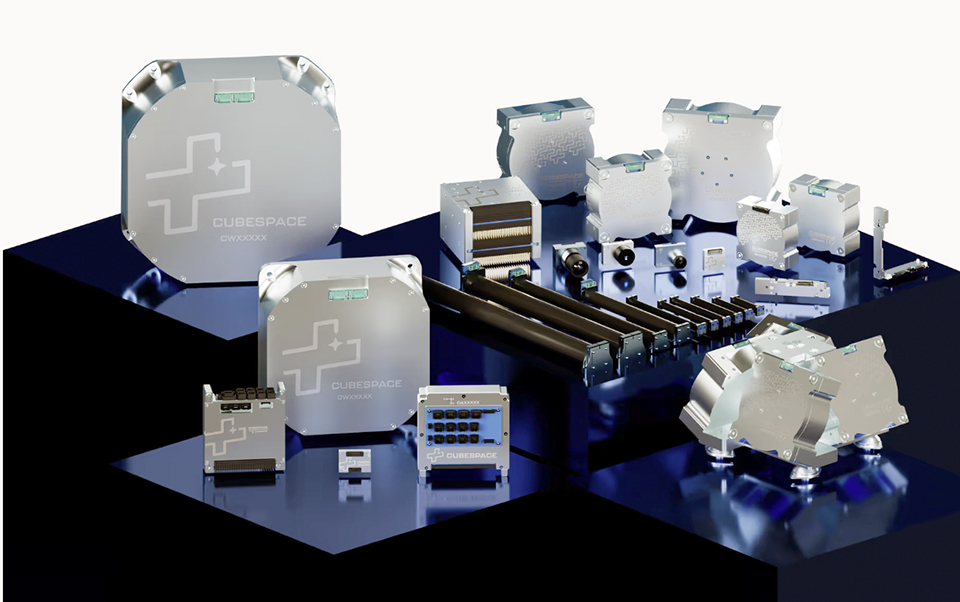
The company’s ability to scale was recently tested by a requirement for 36 fully mission-tailored ADCS systems, involving hundreds of individual components, to be delivered within a 12-week window. Despite the request falling during a scheduled annual shutdown, the company met all delivery targets ahead of schedule.
CubeSpace currently operates out of a 1,350-square-meter facility in Stellenbosch, which includes an 80-square-meter ISO 7 certified cleanroom. The infrastructure is designed for high-cadence production, with the capacity to support up to 10 times the company’s current output.
ADCS Technical Capabilities and Heritage
CubeSpace provides control solutions for spacecraft ranging from CubeSats to 1-ton microsatellites. Its modular architecture allows for the integration of third-party hardware or the use of CubeSpace’s own suite of space-proven sensors and actuators.
- Flight Heritage: 10+ years in orbit across 300+ satellites.
- Lead Times: Standardized at 8–12 weeks.
- Product Suite: Reaction wheels, magnetorquers, star trackers, and sun sensors.
- Simulation Support: Provides free mission simulations and access to proprietary D2S2 simulation software for hardware-in-the-loop (HIL) testing.
Executive Perspective
“The space industry is following a familiar path—much like the computer industry did—toward standardization, commoditization, and true industrial-scale manufacturing,” said Mike-Alec Kearney, CEO of CubeSpace. “Satellite integrators who continue to rely on fully vertically integrated approaches risk becoming uncompetitive. The future belongs to those who embrace specialist suppliers and leverage standardized components to move faster.”
Outlook: The Shift to Specialized Supply Chains
As the SmallSat and mega-constellation markets mature, the CubeSpace model reflects a broader industry shift toward specialized collaboration. By transforming ADCS into a “plug-and-play” commodity, the company aims to become a global standard for satellite control.
The company is currently expanding its global footprint, having opened a European headquarters in late 2025, with plans to offer U.S.-made products through partnerships by late 2026. This regionalized manufacturing strategy is intended to reduce procurement risks and align with national sourcing requirements for defense and government customers.
