

On January 30, 2026, the NASA Earth Science Technology Office (ESTO) officially opened the Space to Soil Challenge, an initiative inviting the global SmallSat community to propose mission concepts that leverage adaptive sensing and onboard artificial intelligence (AI).
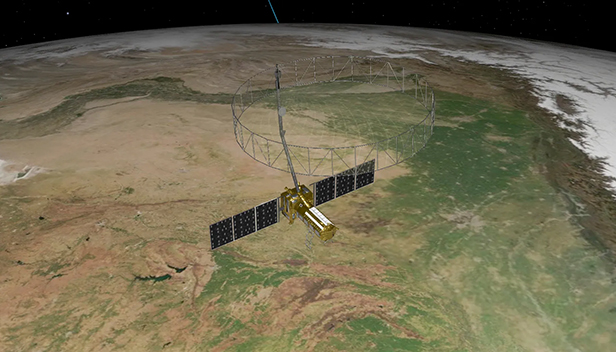
The challenge focuses on transforming how we monitor terrestrial resources—specifically regenerative agriculture and forestry—by shifting from traditional data collection to real-time, in-orbit insight generation.
Shifting from “Images” to “Answers”
Historically, Earth observation satellites have operated as passive collectors, downlinking massive raw data files to be processed by ground-based supercomputers days or weeks later. The Space to Soil Challenge seeks to break this bottleneck by fostering Orbital Edge AI—technologies that allow a satellite to analyze its own sensor data as it is captured.
This “onboard processing” allows a SmallSat to autonomously detect critical environmental changes, such as:
- Soil Health Anomalies: Identifying early signs of degradation or nutrient loss in regenerative farming plots.
- Forest Disturbance: Real-time detection of disturbances like illegal logging or the first sparks of a wildfire before they become visible in low-resolution imagery.
- Adaptive Sensing: Instructing the satellite’s sensors to automatically increase resolution or capture specific spectral bands when a high-interest event is detected on the ground.
Challenge Structure and Objectives
Managed through NASA’s Center of Excellence for Collaborative Innovation (CoECI), the challenge is designed to attract unconventional ideas from academia, startups, and established aerospace firms.
| Milestone | Date |
| Challenge Open Date | January 30, 2026 |
| Submission Deadline | May 4, 2026 |
| Total Prize Purse | $400,000 |
Participants are required to submit a 5-page paper, a 3-minute video, and technical documentation such as software code or hardware schematics. Selected concepts must work within the rigid power, compute, and bandwidth constraints characteristic of SmallSat missions.
The Sovereign-Commercial Nexus in Climate Tech
The challenge highlights a growing trend where civil space agencies like NASA act as catalysts for commercial “Space-as-a-Service” models. By pushing more intelligence onboard, missions can move from passively collecting data to actively interpreting and responding to dynamic environmental signals. NASA’s goal is not to develop new science but to improve the systems approach for how SmallSats deliver actionable information to enable regenerative agriculture and land resilience.
“Rapid advances in commercial space, artificial intelligence, and edge computing are transforming what is possible for Earth observation,” NASA stated in the challenge announcement. “The goal is to improve how SmallSats sense, process, and deliver information”.
