

On February 2, 2026, SpaceX officially announced the acquisition of xAI, merging Elon Musk’s aerospace empire with his artificial intelligence venture in a deal that values the combined entity at approximately $1.25 trillion.
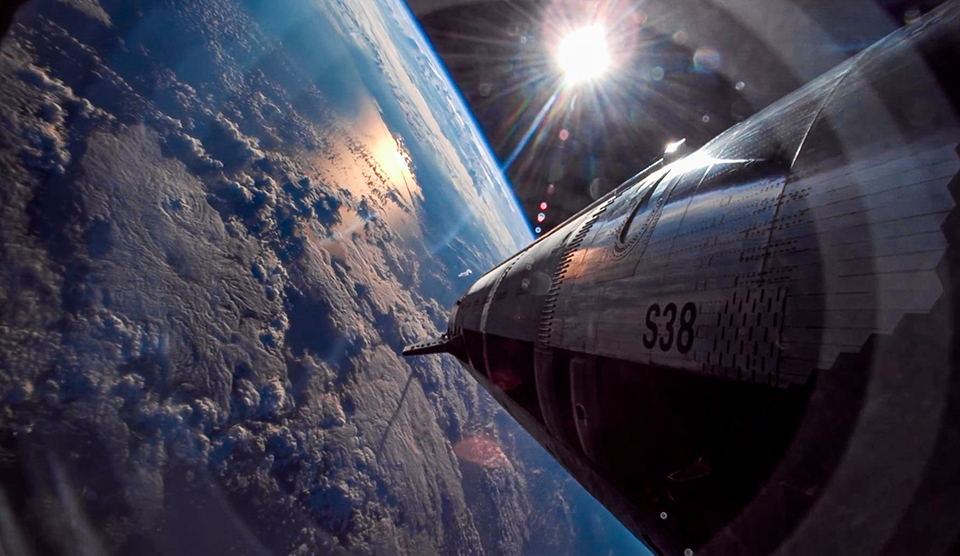
The move creates a vertically integrated “innovation engine” designed to leverage orbital infrastructure to bypass the energy and cooling constraints currently bottlenecking AI development on Earth.
The “Orbital Data Center” Strategy
The merger follows a massive regulatory filing with the Federal Communications Commission (FCC) last Friday, where SpaceX requested authorization to launch a constellation of up to one million satellites. These satellites are intended to function as solar-powered orbital data centers, tapping into near-constant sunlight to run high-performance AI compute tasks.
- Solving the Energy Crunch: Musk argues that terrestrial grids cannot sustain the exponential growth of AI power demands. By moving compute to space, the system utilizes radiative cooling and unfiltered solar irradiance.
- The “Sentient Sun” Goal: Musk stated that the merger is a critical step toward becoming a Kardashev II-level civilization—one capable of harnessing the full power of its star to “extend the light cone of consciousness”.
- Cost Efficiency: Internal estimates project that within 2 to 3 years, space-based AI will become the lowest-cost method for generating compute, driven by the massive payload capacity of the Starship launch system.
Starship as the Forcing Function
The success of this 1.25 trillion-dollar venture depends entirely on the flight rate of Starship, which is expected to begin delivering V3 Starlink and dedicated AI satellites later this year.
- Mass to Orbit: SpaceX targets a launch cadence of nearly one flight per hour, with each Starship carrying 200 tons of payload.
- Capacity Expansion: Each Starship launch will provide more than 20 times the capacity of current Falcon 9 missions, supporting both broadband internet and the new “Direct-to-Mobile” cellular satellites.
Lunar Manufacturing and Beyond
The vision extends beyond Earth’s orbit. Leveraging Starship’s in-space propellant transfer, SpaceX plans to establish permanent bases on the Moon.
- Mass Drivers: The plan includes utilizing lunar resources to manufacture satellites on-site, using electromagnetic mass drivers to deploy up to 1,000 TW per year of AI compute into deep space.
- Funding Multi-Planetary Life: Revenue from Grok AI, Starlink, and orbital data centers is expected to fund the first human colonies on Mars.
Market Impact and IPO Speculation
The acquisition is seen as a strategic “bailout” for xAI, which has been burning billions to compete with OpenAI and Google. By merging with the profitable SpaceX, xAI gains a stable balance sheet and an exit strategy for its investors through a SpaceX IPO planned for later in 2026, which could be the largest in history.
