

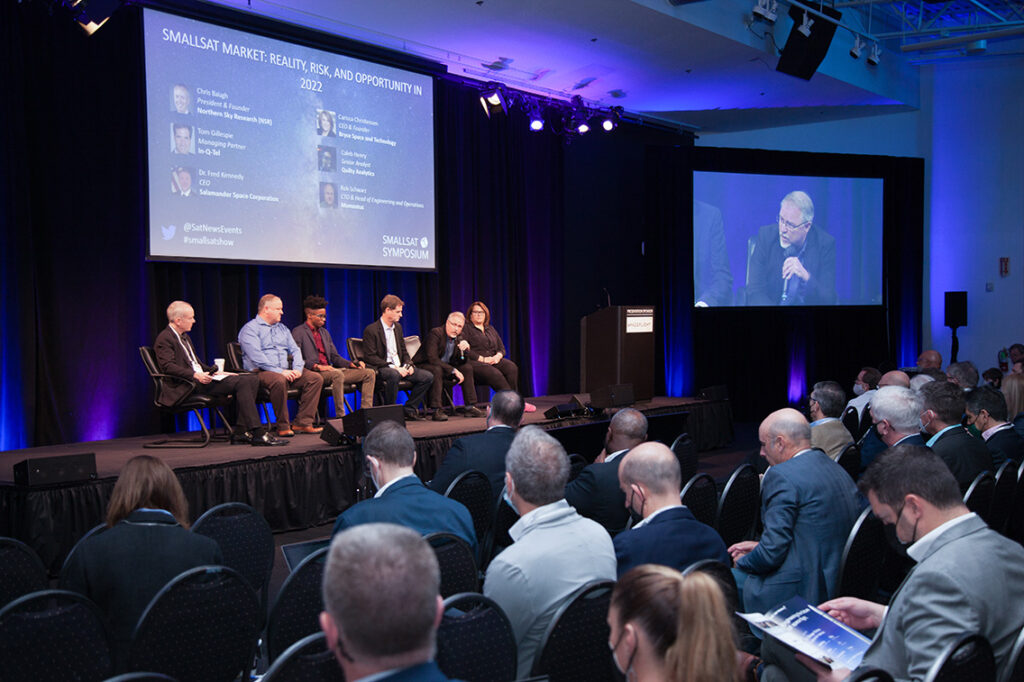
As the industry prepares for the SmallSat Symposium 2026, held February 10–12 at the Computer History Museum in Mountain View, California, the sector is moving beyond experimental R&D into a period of industrial maturity.
The immediate deadline for attendees is the Early Bird registration, which expires tomorrow, Friday, December 19. However, the broader impetus for the event is a fundamental shift in the orbital economy: the transition from “what could be done” to a critical audit of “what must be delivered.”
Market Signals: Validation of the Pivot
The lead-up to the 2026 symposium is punctuated by significant global maneuvers that underscore the urgency of the upcoming sessions:
- Rapid Launch Capabilities: China recently executed a quadruple launch surge within 96 hours, utilizing four separate spaceports to deploy Guowang and remote sensing assets. This demonstrates that rapid, high-volume deployment is now the baseline for national competitiveness.
- Regulatory Milestones: The FCC has granted SpaceX and T-Mobile a landmark license for Supplemental Coverage from Space (SCS). This moves Direct-to-Device (D2D) from a beta novelty to a commercial utility, blurring the line between terrestrial and orbital networks.
- Operational Integration: Viasat is now demonstrating “roaming” capabilities for government users, merging Inmarsat’s legacy fleet with its own to provide seamless multi-orbit integration.
The Industrial Friction: Agility vs. Scale
The 2026 Symposium will address the tension between traditional SmallSat agility and the mega-class scaling required by modern capital. The market is currently bifurcating:
- Standardization: Entities such as Cobham Satcom and GateHouse Satcom are merging to create integrated 5G NTN infrastructure, betting heavily on software-defined payloads.
- Volume Manufacturing: Manufacturers are now chasing production volumes that dwarf previous decades to support massive constellation deployments.
“Space is no longer a distinct vertical; it is an extension of the terrestrial tech stack. The proximity of the Symposium to Google, Apple, and the venture capital giants of Sand Hill Road reflects the industry’s shift from hardware-dominant to software-defined.”
Why Attendance is Critical
By February 2026, the “PowerPoint phase” of constellation deployment will have concluded. The industry is entering a “Year of Reality” where multi-orbit integration and software-defined architectures must prove their operational viability.
The SmallSat Symposium serves as the primary venue for leadership to separate market signals from noise and define the next cycle of orbital infrastructure.
Register Today: https://smallsatshow.com/
