

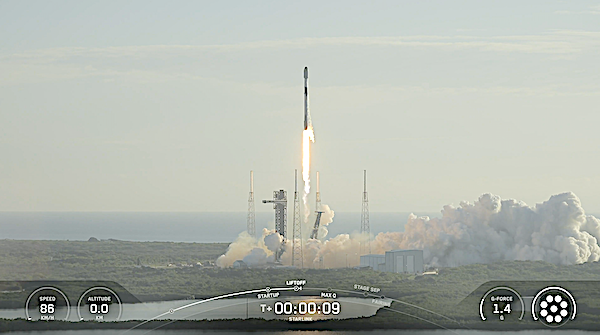
On Sunday, August 31 at 7:49 a.m. ET, Falcon 9 launched 28 Starlink satellites to low-Earth orbit to join the Starlink constellation from Space Launch Complex 40 (SLC-40) at Cape Canaveral Space Force Station in Florida.
Preceding the launch the weather report indicated: an 85% chance of favorable weather conditions at the time of the launch. Officials are monitoring weather conditions with concerns related to Cumulus Cloud Rule, Anvil Rule. The forecast calls for a temperature of 75°F, scattered clouds, 38% cloud cover and a wind speed of 9mph.
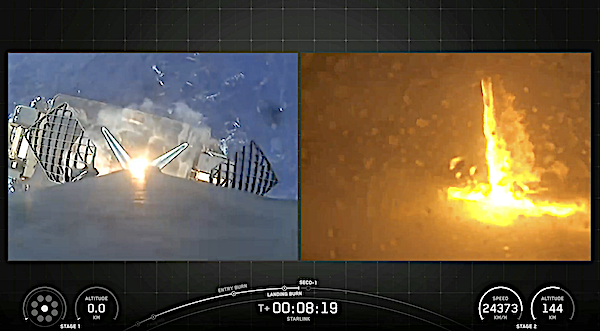
This was the 23rd flight for the Falcon 9 first stage booster supporting this mission, which previously launched Crew-5, GPS III Space Vehicle 06, Inmarsat I6-F2, CRS-28, Intelsat G-37, NG-20, TD7, and now 16 Starlink missions. Following stage separation, the first stage landed on the Just Read the Instructions droneship, which was stationed in the Atlantic Ocean.
The Starlink network now includes more than 8,280 active units out of the over 9,575 satellites launched since 2019, according to tracker Jonathan McDowell.
Sunday’s flight was SpaceX’s 112th mission of 2025, of which 108 were Falcon 9 launches (the other four were suborbital test flights of the company’s Starship).
