

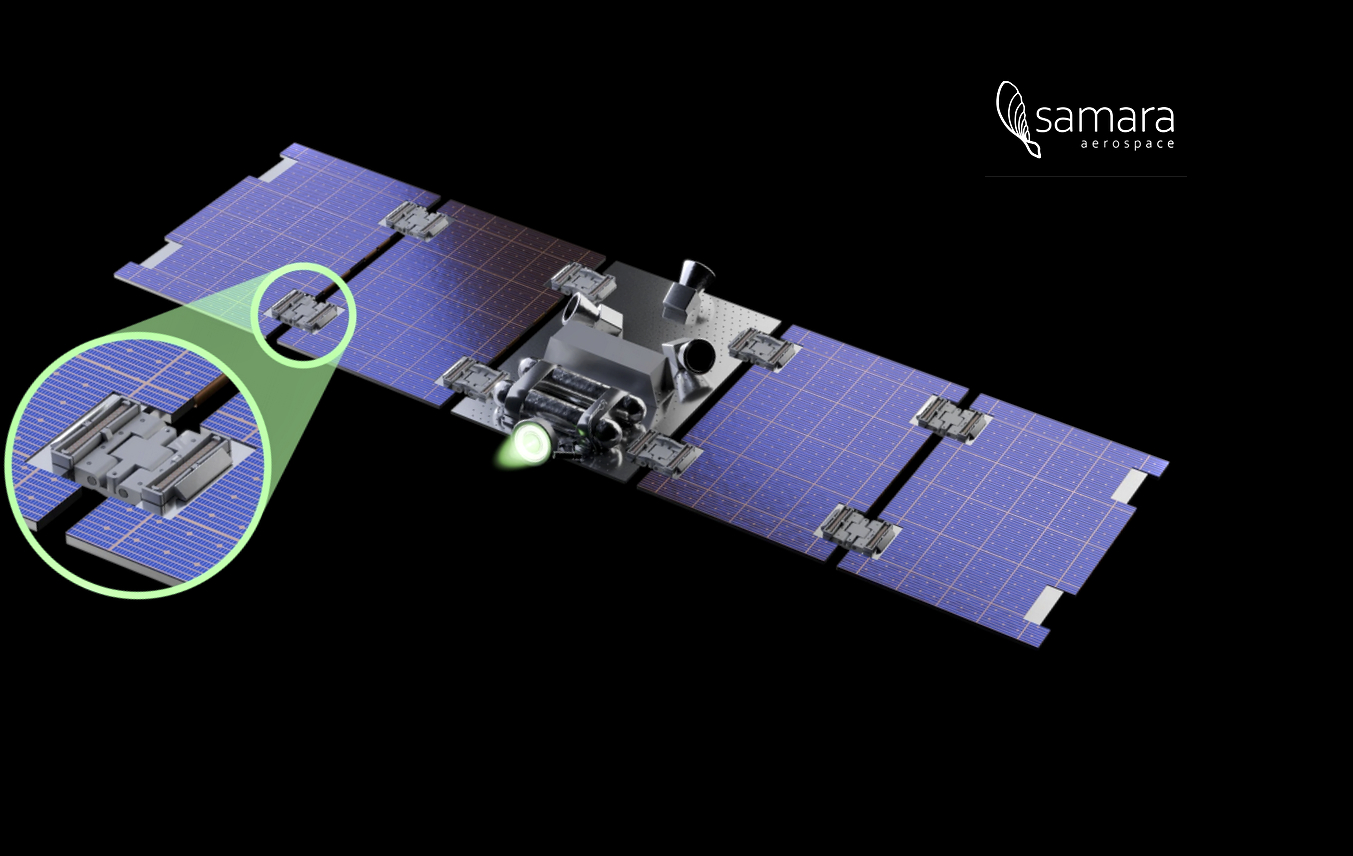
Samara Aerospace has delivered its first flight payload, Cicada, to Impulse Space, marking a significant milestone in the company’s path toward operational spaceflight heritage.
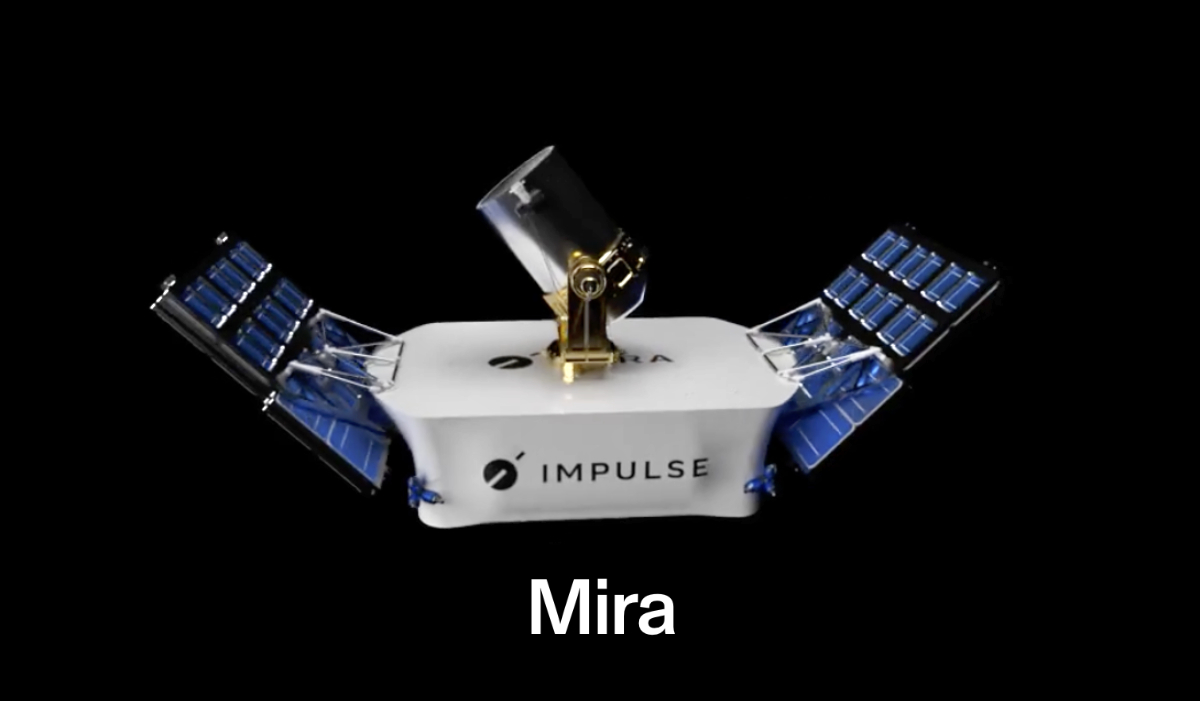
The hardware, comprised of four of Samara’s proprietary flexures mounted to a representative solar panel mass simulator, will be flown on Impulse’s LEO Express 3 mission, scheduled for later this year. Cicada will be evaluated on-orbit on the Impulse Mira spacecraft to demonstrate survivability and performance in extreme space environments.
This mission provides the first in-space validation of Samara’s Multifunctional Structures for Attitude Control (MSAC), a groundbreaking technology enabling active jitter mitigation and precision spacecraft agility using intelligent, structural actuation.
The Cicada hardware will be subjected to on-orbit disturbances, enabling Samara to test MSAC’s active response in real-world thermal, vacuum, and radiation conditions. This demonstration validates the riskiest component of Samara’s spacecraft bus, setting the stage for future missions requiring ultra-precise pointing, low jitter, and agile attitude control.
Samara completed the Cicada hardware delivery in less than four months, far outpacing the industry norm of 12+ months for new flight hardware delivery following a venture round. The milestone was achieved with a lean team, tight budget, and a modest facility, showcasing Samara’s ability to move fast, build precisely, and deliver under pressure.
Now backed by new funding, operating from a larger headquarters, and scaling its team, Samara Aerospace is accelerating its vision of agile, low-jitter spacecraft built for the next generation of science, sensing, and communication missions.
Cicada is more than a test article, it’s a proving ground for the future of high-performance satellites,” said Vedant, Samara CTO. “This flight gives us the confidence to scale MSAC to increasingly complex missions once real spaceflight heritage is accomplished.”
In an industry where long timelines are the norm, we have proven that a focused team can deliver flight hardware at startup velocity,” said Patrick Haddox, CEO.
