

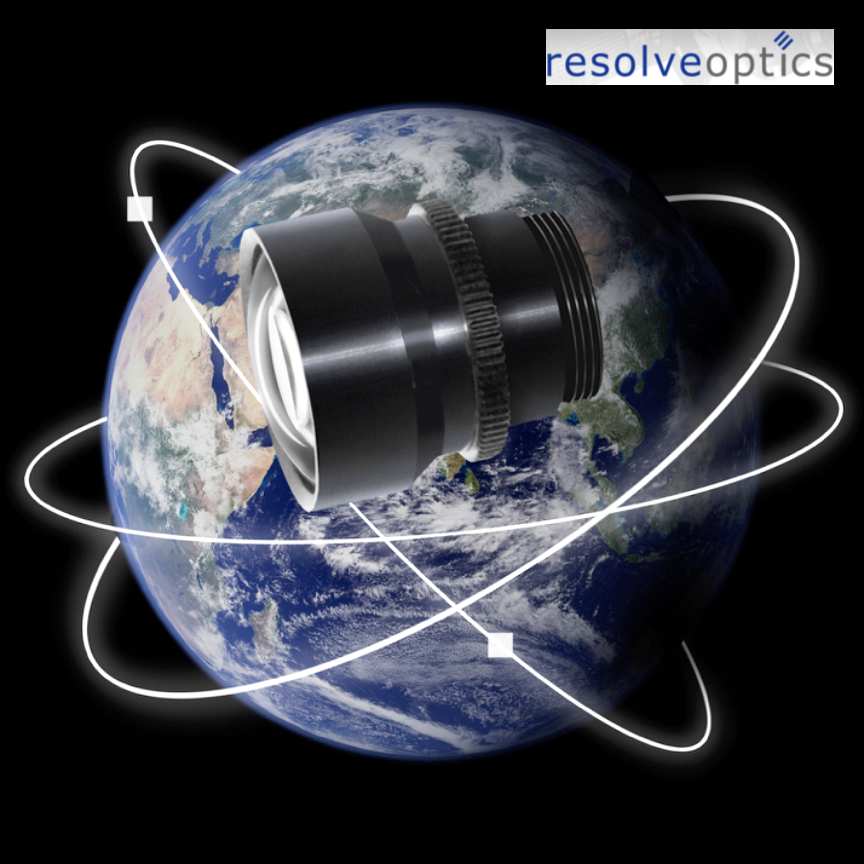
When looking for optical components for your camera, optical instrument, or sensor, the first port of call is often the off-the-shelf market, and quite rightly so.

Off-the-shelf optical components can offer advantages such as shorter delivery times and lower price. However, most spaceborne applications require something more demanding.
For a lens or optical system to be considered suitable to be used in space it must meet some stringent requirements. The key environmental considerations when designing lenses for use in satellites includes how they react to the vibration and shock of launch, extremes of temperature, high vacuum and higher levels of cosmic radiation encountered in space.
To ensure your custom optics are sufficiently robust, all elements in Resolve Optics designs are secured and unable to break loose during launch. In addition, all Resolve Optics satellite lenses and optical systems are athermalized to ensure they maintain focus throughout the wide operating temperature range typically experienced in space.
The impact of cosmic radiation on your lens or optical system is a major consideration when designing for use in space. Standard optical glass types turn brown or grey when exposed to cosmic radiation. As a result, the light transmission of a standard lens will degrade markedly in just days or weeks.
For longer term space missions, Resolve Optics use cerium doped glass elements that prolong the life of the satellite lens or optical system to years rather than days.
