

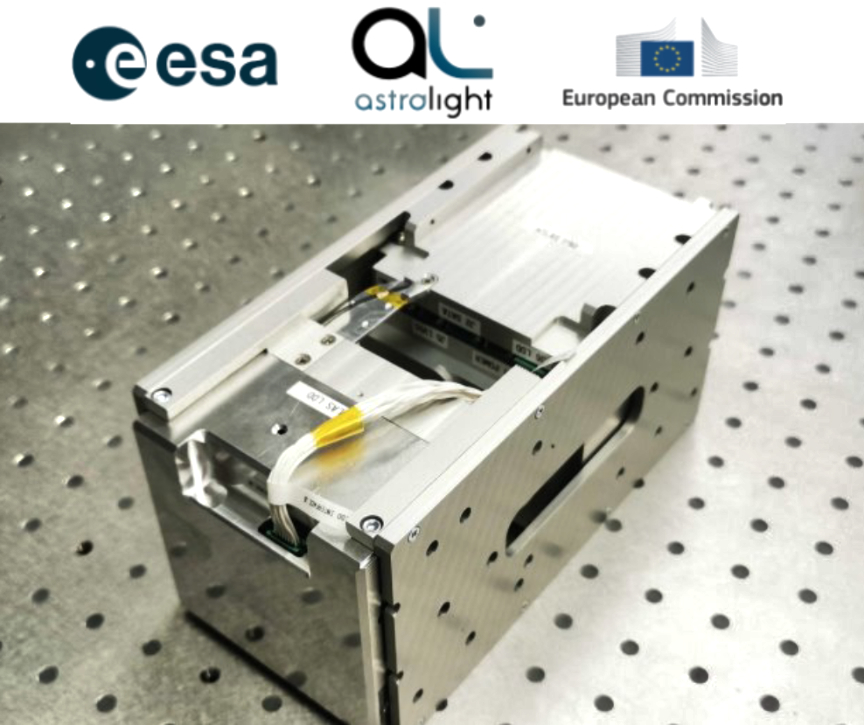
Astrolight has concluded a significant milestone by completing the Critical Design Review (CDR) for the company’s ATLAS-1 Space-to-Earth laser communication on-orbit demonstration mission.
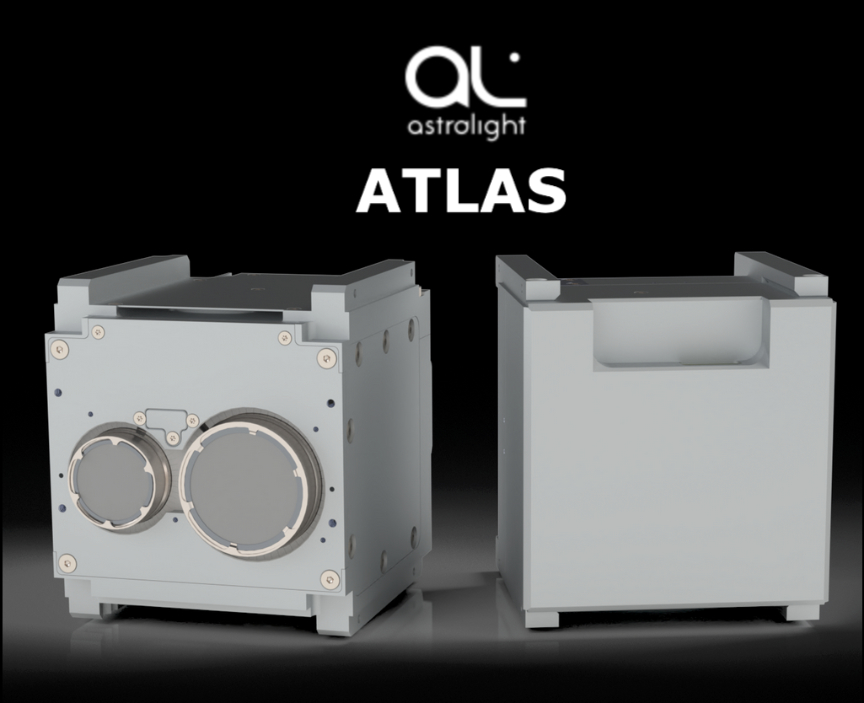
The European Commission (EC) has selected the Astrolight experiment in the frame of the IOD-IOV Call for Expression of Interest to demonstrate on-orbit its Space-to-Earth laser communication system, ATLAS-1. The EC enabled Astrolight to work with ISISPACE, a Dutch space company, which is providing the satellite that will be carrying the ATLAS-1 payload into orbit next year, as overseen by the European Space Agency (ESA).
Passing the CDR stage indicates that the design of Astrolight’s ATLAS-1 has been shown to comply with the mission requirements for launch and operation in space and the risks for further development and implementation are fully mitigated.
Now, the company is ready for the stage of production and testing of a cutting-edge solution that aims to create a high-bandwidth, secure and reliable data downlink from low Earth orbit at speeds exceeding commonplace solutions operating in the radio frequency (RF) spectrum.
ATLAS, the Space-to-Earth laser communication terminal developed by Astrolight, is geared toward efficient downlink of data generated in space. This is especially important in the Earth observation sector, where vast amounts of data, often termed Big Earth Data, are collected.
The CDR stage is a crucial checkpoint in this cycle. It is the point where the project’s design gets thoroughly evaluated to make sure it meets the requirements and is viable for its intended environment.. This milestone ensures that regulatory bodies, investors, and other stakeholders see that the project is ready to move forward.
Communication between space and Earth still heavily relies on RF data transmission systems, which have a limited bandwidth and rely on radio spectrum availability, making them less suitable for widespread mass communication for the new space age. However, the stage is set for more advanced laser-based communication links. ATLAS is much smaller than other optical communication systems currently available in the market, saving costs while still maintaining excellent overall data throughput. The compact design is thanks to the advanced technology in the ATLAS system.
Looking ahead, Astrolight’s focus remains steadfast on pushing the boundaries of space communication technology. With the successful completion of the Critical Design Review for ATLAS-1, the company is now setting its sights on breaking data throughput records.
“By using ATLAS, our customers can download tremendous amounts of Earth observation data, quickly understanding and responding to urgent global issues. These include monitoring climate change, detecting atmospheric pollution, mitigating wildfire risks, or even aiding in the detection of war crimes and military surveillance”, Laurynas Mačiulis, CEO of Astrolight, said. “Twenty years ago, due to increasing data demands, we moved from copper to the now-ubiquitous fiber-optic internet, which enabled new disruptive ventures such as Netflix. Now, a similar shift is happening in space. By harnessing light, which offers a thousand times broader spectrum than radio, we don’t need to be constrained by limited spectrum availability anymore,” Mačiulis added. “This more advanced approach also eliminates the need of frequency licensing, saving satellite operator’s time and money. Driven by curiosity, eagerness, and a desire to explore, our passion lies in what we do: discovering, understanding, and innovating communication between Space and Earth. Our end goal is simple: no matter how far we go into space one day, we need to maintain a connection with Earth.”
Dalius Petrulionis, CTO of Astrolight, said, “Passing the CDR milestone for ATLAS-1 has been neither swift nor simple. The subsystems coming together to make up the ATLAS-1 communication terminal have been in development for the better part of the last four years. The successful external review of ATLAS-1 represents validation for pivotal design decisions made by the founding team upon the company’s inception. I am delighted that the exceptional team of fiber, optics, mechanical, electronic, software, and digital design engineers presently at Astrolight have not only refined these concepts but also translated them into a concrete reality, imbued with their own innovative flair.”
