

• Skip to primary navigation
  • Skip to main content
  • Skip to primary sidebar
  • Skip to secondary sidebar
  • Skip to footer
  • NEWS:
  • SatNews
  • SatMagazine
  • MilSatMagazine
  • SmallSat News
  • |     EVENTS:
  • SmallSat Symposium
  • Satellite Innovation
  • MilSat Symposium
  • SmallSat Europe

SatNews

Satellite Industry Intelligence Since 1983

Subscribe
  • LATEST
  • SatNews Events
  • Magazines
  • Calendar
  • Subscribe
  • Missions & Constellations
    • Exploration & Science Missions
    • In-Orbit Servicing & Orbital Operations
    • LEO Constellations
    • Mission Autonomy & Onboard Systems
    • Mission Deployments & Manifests
    • Navigation & PNT
    • SmallSat
    • Spacecraft & Payload Technology
    View All in Missions & Constellations →
    Viasat Completes ViaSat-3 Constellation with Successful Flight 3 LaunchViasat Completes ViaSat-3 Constellation with Successful Flight 3 Launch
    GMV to Lead Mission Planning for ESA’s Next-Generation Copernicus ExpansionGMV to Lead Mission Planning for ESA’s Next-Generation Copernicus Expansion
    Canada Tightens Re-entry Regulations as SpaceX Starlink Constellations DescendCanada Tightens Re-entry Regulations as SpaceX Starlink Constellations Descend
    The waiver was the policy. Thursday is the paperwork.The waiver was the policy. Thursday is the paperwork.
  • Business
    • Contracts & Commercial Deals
    • Earnings & Financial Reporting
    • Events & Conferences
    • Funding & Venture Capital
    • Market Forecasts
    • Mergers & Acquisitions
    • Personnel Moves & Appointments
    View All in Business & Finance →
    SmallSat Europe Speaker Focus: Jorge Ciccorossi, ITU Radiocommunications BureauSmallSat Europe Speaker Focus: Jorge Ciccorossi, ITU Radiocommunications Bureau
    SmallSat Europe Speaker Focus: Koen Willems, ST Engineering iDirect EuropeSmallSat Europe Speaker Focus: Koen Willems, ST Engineering iDirect Europe
    U.S. Commercial Service to Host “Future in Orbit” Networking Event at SpaceBR 2026U.S. Commercial Service to Host “Future in Orbit” Networking Event at SpaceBR 2026
    SmallSat Europe Speaker Focus: Dr. Jakob Stöber, McKinsey & CompanySmallSat Europe Speaker Focus: Dr. Jakob Stöber, McKinsey & Company
  • Defense
    • Counterspace & ASAT
    • Defense Budgets & Procurement
    • ISR & Reconnaissance
    • MILSATCOM
    • Missile Warning & Defense
    • National Security Programs
    • Space Domain Awareness
    View All in Military & Defense →
    BAE Systems Enters Production for NavGuide M-Code GPS ReceiverBAE Systems Enters Production for NavGuide M-Code GPS Receiver
    Space Force Awards $3.2 Billion in Golden Dome Contracts for Orbital Interceptor ConstellationSpace Force Awards $3.2 Billion in Golden Dome Contracts for Orbital Interceptor Constellation
    USSF Finalizes GPS III Constellation with Successful SV-10 DeploymentUSSF Finalizes GPS III Constellation with Successful SV-10 Deployment
    Meink: Space Force Programs Ready to Execute Once FY27 Budget LandsMeink: Space Force Programs Ready to Execute Once FY27 Budget Lands
  • Gov
    • Export Controls & Compliance
    • International Space Agreements
    • National Space Policy
    • Space Law & Treaties
    • Space Sustainability & Debris Policy
    • Space Traffic Management / Debris Removal
    View All in Government & Regulation →
    SmallSat Europe Speaker Focus: Tanja Masson-Zwaan, Leiden UniversitySmallSat Europe Speaker Focus: Tanja Masson-Zwaan, Leiden University
    How CubeSat Proliferation is Redefining Sovereignty and Diplomatic Leverage at the United NationsHow CubeSat Proliferation is Redefining Sovereignty and Diplomatic Leverage at the United Nations
    FCC Modernization of Spectrum Rules Unlocks Sevenfold Gain in Satellite CapacityFCC Modernization of Spectrum Rules Unlocks Sevenfold Gain in Satellite Capacity
    The Smartest Money in the Room Is Looking UpThe Smartest Money in the Room Is Looking Up
  • Launch
    • Launch Providers
    • Launch Schedule & Calendars
    • Launch Sites & Infrastructure
    • Rocket Technology & Vehicles
    View All in Launch →
    FAA Grounds Blue Origin Following New Glenn Upper Stage Failure and Facility AnomalyFAA Grounds Blue Origin Following New Glenn Upper Stage Failure and Facility Anomaly
    NanoAvionics to Launch Trio of Milestone Payloads on SpaceX CAS500-2 MissionNanoAvionics to Launch Trio of Milestone Payloads on SpaceX CAS500-2 Mission
    Astrobotic Achieves Record 300-Second Burn with New Detonation EngineAstrobotic Achieves Record 300-Second Burn with New Detonation Engine
    Bad news, but good news followedBad news, but good news followed
  • Software
    • Autonomous Ground Operations
    • Data Processing & AI/ML
    • Digital Twins & Modeling
    • Ground Segment & Teleports
    • Mission Planning & Simulation
    • Space Systems Software Engineering
    • Spectrum & Licensing
    View All in Software Automation & Ground Systems →
    Global Invacom Secures Exclusive Worldwide Distribution for Prodelin Antenna RangeGlobal Invacom Secures Exclusive Worldwide Distribution for Prodelin Antenna Range
    SmallSat Europe Speaker Focus: Giovanni Pandolfi Bortoletto, Leaf SpaceSmallSat Europe Speaker Focus: Giovanni Pandolfi Bortoletto, Leaf Space
    SpinLaunch Selects Equinix to Deploy Global Ground Infrastructure for Meridian Space ConstellationSpinLaunch Selects Equinix to Deploy Global Ground Infrastructure for Meridian Space Constellation
    RF-Design Launches FiberLink CompactLine FCLR1811S4 for Ground Segment OptimizationRF-Design Launches FiberLink CompactLine FCLR1811S4 for Ground Segment Optimization
  • Services & Apps
    • Climate & Environmental Monitoring
    • Disaster Response & Security Mapping
    • Earth Observation & Imaging
    • Maritime & Aviation Satcom
    • Satellite Communications
    View All in Services & Applications →
    Solstar Confirms Successful On-Orbit Operation of Deke Space Communicator Following Launch on SpaceX Transporter-16 MissionSolstar Confirms Successful On-Orbit Operation of Deke Space Communicator Following Launch on SpaceX Transporter-16 Mission
    IEC Telecom Unveils Voucher-Based Connectivity Solution at Singapore Maritime Week 2026IEC Telecom Unveils Voucher-Based Connectivity Solution at Singapore Maritime Week 2026
    GomSpace and STETMAN Establish UASAT Joint Venture for Ukrainian Sovereign CommunicationsGomSpace and STETMAN Establish UASAT Joint Venture for Ukrainian Sovereign Communications
    Market Dynamics and Non-Terrestrial Network (NTN) ChipsetsMarket Dynamics and Non-Terrestrial Network (NTN) Chipsets

Mission completed for ESA’s OPS-SAT laboratory

June 4, 2024

A collage of images taken by the camera onboard ESA's former OPS-SAT mission
A collage of images taken by the camera onboard ESA’s former OPS-SAT mission

Launched on December 18, 2019, ESA’s OPS-SAT was tasked with opening up the world of spacecraft operations to the widest possible audience. The smallsat’s founding principle was to provide a fast, no-charge, non-bureaucratic experiment service for European and Canadian industry and academia.
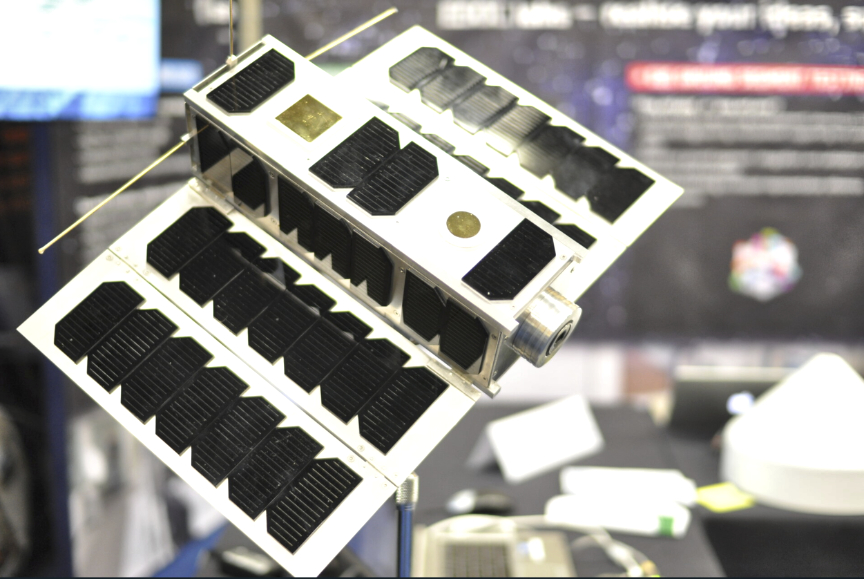
It brought experimenters from companies, universities and public institutions across Europe and beyond into heart of ESA’s ESOC mission control center and helped them prove that their new ideas were up to the challenge of flying in orbit.
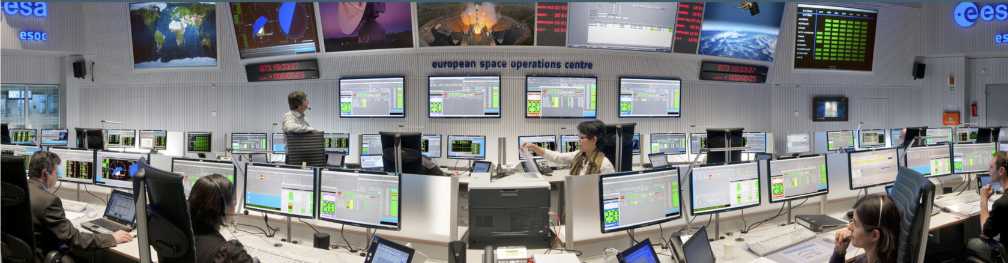
ESA’s ESOC mission control center.

Flying ESA’s most capable and flexible onboard computer, OPS-SAT showed us what future satellites will be capable of as they begin to carry more advanced equipment.

OPS-SAT was the first fully ESA-owned and operated CubeSat. A small, low-cost, innovative and open mission was unusual for ESA mission control, which typically flies Europe’s largest and most complex spacecraft around Earth and across the Solar System.

During OPS-SAT’s four and a half years in orbit, the mission went from strength to strength, allowing 134 teams from 26 different countries to execute over 284 different experiments.

OPS-SAT Mission Team wins SpaceOps Award

“Many experiments built on top of one another, and so the satellite became even more capable as time went on,” said David Evans, OPS-SAT Space Lab Manager at ESA. “OPS-SAT was a research lab: innovations and improvements made by one experiment could often be harnessed by others. If one team worked out a better way to operate the spacecraft’s camera, the next could use that to improve their new artificial intelligence algorithm for image processing, for example.”

OPS-SAT was the first satellite open to use by the public. It hosted experiments on AI and interplanetary internet and tested new software, some of which is now already in use by much larger missions. It was the first to conduct a stock market trade in orbit; the first to demonstrate that CubeSats can provide life-saving support during search and rescue activities; the first to demonstrate an active cybersecurity attack in orbit, and much more.

In 2023, the mission received international recognition when the OPS-SAT team shared the SpaceOps Outstanding Achievement award with the team behind NASA JPL’s Ingenuity Mars helicopter.

OPS-SAT's final image
OPS-SAT’s final image.

OPS-SAT was impacted by the recent unexpectedly strong increase in solar activity that began in early 2024. The resulting increase to the drag experienced by the satellite caused it to begin an early descent into the atmosphere and, on May 22nd, the OPS-SAT chapter in space closed.

Teams from ESA and the organizations running the final experiments on OPS-SAT fought hard to maintain communication with the spacecraft as increasing drag threatened to steal away control at any moment. They worked night and day to wrap up the mission’s final activities, doing their very best to squeeze out the final drops of science and technology return.

The University of Oxford, UK, the University of Stuttgart, Germany, and others successfully completed experiments in the mission’s final few days, with Hellenic Aerospace Industry (HAI) completing the mission’s final experiment just 24 hours before contact with the satellite was lost for good.

“As the satellite descended through the atmosphere, it became much harder to control. The OPS-SAT Mission Control Team and the teams from our experimenters all worked long hours to close out as many of the remaining experiments as possible before the end,” said Evans. “I was particularly happy to see us complete the experiment from Protostar Labs. It involved the in-flight reconfiguration of the on-board Field Programmable Gate Arrays (FPGA), which is normally regarded as a high-risk procedure that can take months. However, they pulled it off within just a few days and with just 48 hours left on the mission clock. It was also a perfect example of an OPS-SAT experiment. OPS-SAT is all about lowering barriers and providing access to space for new entities. Protostar Labs are a NewSpace company from Croatia – a nation with a young space industry – and are exactly the kind of team that OPS-SAT was developed to support.”

Final contact with OPS-SAT

As a CubeSat with a size and a mass comparable to a piece of aircraft carry-on luggage, there were no risks associated with OPS-SAT’s atmospheric reentry and burn up. But the reentry itself offered a rare chance to gather valuable data.

Little information about what exactly happens to spacecraft as they fly through the lower levels of Earth’s atmosphere is known. Understanding how a satellite behaves during its final moments is important for improving how we model and ensure the safety of atmospheric reentries.

With the support of the global radio amateur community, the OPS-SAT team was able to gather and process telemetry from receivers all around the world. These data are now being analyzed, but already promise to provide interesting new insights.

“During the final contact with the satellite as it flew over Australia, we were surprised to see very little internal heating. It must have gone from normal temperatures to burn up in the final few minutes. The impact on the satellite’s attitude was more dramatic. As the drag increased, the satellite started spinning like a top about one axis but then re-stabilized itself. How and why this happened is something we will have to look into.”

During the mission, as the number of experimenters increased, the team at ESOC began to spend the majority of their time providing what became the OPS-SAT Space Lab service, which included providing assistance to the experimenters, performing dry runs on the ground, and of course ensuring the safe execution of the experiments in space.

In addition to opening up the experience of ESA mission control to the wider world, OPS-SAT also opened mission control up to the agility, innovation and new ideas of university and industry teams. The concept proved so successful for all involved that ‘OPS-SAT’ will now give its name to a family of future missions that have all agreed follow the principles of the OPS-SAT Space Lab experiment service.

The OPS-SAT concept has been adopted by the ESA ARTES ScyLight Strategic Program Line for a mission dedicated to testing new optical and quantum communication technologies, called OPS-SAT VOLT. It was designed with in-flight experimentation in mind and 50% of the mission’s time will be allocated to experiments coordinated by the OPS-SAT Space Lab. The UK Space Agency have invested 13 million euros in VOLT, and Craft Prospect will serve as the project’s prime contractor.

Other proposed missions include OPS-SAT ORIOLE, a joint Hungarian-Estonian proposal to ARTES Scylight, and CYBERCUBE, a cybersecurity demonstration mission managed by the ESA Security Office, that will allow OPS-SAT Space Lab experimentation once the principle aims of the mission have been achieved.

The OPS-SAT Space Lab service will continue to provide an important and mutually beneficial bridge between ESA, industry and universities across Europe and beyond, for many years to come.

Filed Under: Exploration & Science Missions, International Space Agreements

Primary Sidebar

Coverage

  • Missions & Constellations
  • Business & Finance
  • Military & Defense
  • Launch
  • Software Automation & Ground Systems
  • Government & Regulation
  • Services & Applications

Most Read Stories

  • Planet Labs Imposes Indefinite Blackout on Iran Satellite Imagery at U.S. Request
  • What the SpaceX IPO Changes for Every Satellite Operator
  • Amazon in Reported Talks to Acquire Globalstar in $9 Billion Move to Challenge Starlink
  • Russia Replaces Starlink With European-Built Satellites
  • The Downlink Deficit: The Pentagon's Optical Mesh Network and the Terrestrial Bottleneck

Secondary Sidebar

Footer


Satnews is a leading provider of satellite news, events, publications, research and other satellite industry information in both commercial and military enterprises worldwide.

Stories By Category

  • Business & Finance
  • Government & Regulation
  • Launch
  • Military & Defense
  • Missions & Constellations
  • Services & Applications
  • Software Automation & Ground Systems
  • Spectrum & Licensing
  • Startups & NewSpace Business

About Us

  • Leadership & Editorial Team
  • SatNews History
  • Free Satnews Subscription
  • SatNews Events
  • Magazines

Navigation

  • Latest Stories
  • Magazines
  • Events
  • Contact
  • Cookie & Privacy Policy for Satnews

We use cookies to ensure that we give you the best experience on our website. If you continue to use this site we will assume that you are happy with it.
x
Sign up Now (For Free)
Access daily or weekly satellite news updates covering all aspects of the commercial and military satellite industry.
Invalid email address
Notify Me Regarding ( At least one ):
We value your privacy and will not sell or share your email or other information with any other company. You may also unsubscribe at anytime.

Click Here to see our full privacy policy.
Thanks for subscribing!