

• Skip to primary navigation
  • Skip to main content
  • Skip to primary sidebar
  • Skip to secondary sidebar
  • Skip to footer
  • NEWS:
  • SatNews
  • SatMagazine
  • MilSatMagazine
  • SmallSat News
  • |     EVENTS:
  • SmallSat Symposium
  • Satellite Innovation
  • MilSat Symposium
  • SmallSat Europe

SatNews

Satellite Industry Intelligence Since 1983

Subscribe
  • LATEST
  • SatNews Events
  • Magazines
  • Calendar
  • Subscribe
  • Missions & Constellations
    • Exploration & Science Missions
    • In-Orbit Servicing & Orbital Operations
    • LEO Constellations
    • Mission Autonomy & Onboard Systems
    • Mission Deployments & Manifests
    • Navigation & PNT
    • SmallSat
    • Spacecraft & Payload Technology
    View All in Missions & Constellations →
    Lowering the Launch Barrier: Starpath Global Expands Multi-Orbital Leasing NetworkLowering the Launch Barrier: Starpath Global Expands Multi-Orbital Leasing Network
    Poland Just Made Sovereign SAR the European DefaultPoland Just Made Sovereign SAR the European Default
    SmallSat Europe Speaker Focus: John Rood, MomentusSmallSat Europe Speaker Focus: John Rood, Momentus
    Varda Space Industries W-6 Capsule Touches Down in South AustraliaVarda Space Industries W-6 Capsule Touches Down in South Australia
  • Business
    • Contracts & Commercial Deals
    • Earnings & Financial Reporting
    • Events & Conferences
    • Funding & Venture Capital
    • Market Forecasts
    • Mergers & Acquisitions
    • Personnel Moves & Appointments
    View All in Business & Finance →
    Public Capital for Multi-Planetary Infrastructure: SpaceX Unveils Record $75 Billion IPOPublic Capital for Multi-Planetary Infrastructure: SpaceX Unveils Record $75 Billion IPO
    Firefly Aerospace Doubles Spacecraft Infrastructure to Build Multi-Vehicle Production LineFirefly Aerospace Doubles Spacecraft Infrastructure to Build Multi-Vehicle Production Line
    Astroscale and SKY Perfect JSAT Alliance Signals Shift to In-Orbit Maintenance EconomyAstroscale and SKY Perfect JSAT Alliance Signals Shift to In-Orbit Maintenance Economy
    York Space Systems to Acquire Solestial to Verticalize Space Solar Supply ChainYork Space Systems to Acquire Solestial to Verticalize Space Solar Supply Chain
  • Defense
    • Counterspace & ASAT
    • Defense Budgets & Procurement
    • ISR & Reconnaissance
    • MILSATCOM
    • Missile Warning & Defense
    • National Security Programs
    • Space Domain Awareness
    View All in Military & Defense →
    Software-Defined Modems and Hardware Bottlenecks Strain Proliferated Defense Space ArchitecturesSoftware-Defined Modems and Hardware Bottlenecks Strain Proliferated Defense Space Architectures
    SPARC AI and Rate Manufacturing Partner to Deliver Software-Defined, GPS-Denied Drone TargetingSPARC AI and Rate Manufacturing Partner to Deliver Software-Defined, GPS-Denied Drone Targeting
    Pentagon Enforces Commercial Satellite Blackout Over Middle East War ZonePentagon Enforces Commercial Satellite Blackout Over Middle East War Zone
    iDirect Government Launches WCore to Virtualize Military Satellite ModemsiDirect Government Launches WCore to Virtualize Military Satellite Modems
  • Gov
    • Export Controls & Compliance
    • International Space Agreements
    • National Space Policy
    • Space Law & Treaties
    • Space Sustainability & Debris Policy
    • Space Traffic Management / Debris Removal
    View All in Government & Regulation →
    ESA and Spain Establish Formal Framework for Sovereign Satellite ConnectivityESA and Spain Establish Formal Framework for Sovereign Satellite Connectivity
    The transatlantic space defense timeline mismatch is now a NATO problemThe transatlantic space defense timeline mismatch is now a NATO problem
    Do Satellite Providers Have a Say in Ground-Level RestrictionsDo Satellite Providers Have a Say in Ground-Level Restrictions
    SES Extends IRIS² Review as Consortium Reaches Initial Project MilestoneSES Extends IRIS² Review as Consortium Reaches Initial Project Milestone
  • Launch
    • Launch Providers
    • Launch Schedule & Calendars
    • Launch Sites & Infrastructure
    • Rocket Technology & Vehicles
    View All in Launch →
    Joint European-Chinese SMILE Mission Launches to Map Earth’s Magnetic ShieldJoint European-Chinese SMILE Mission Launches to Map Earth’s Magnetic Shield
    The Stratospheric Toll of the Megaconstellation EraThe Stratospheric Toll of the Megaconstellation Era
    NASA Outlines Preliminary Artemis III Low Earth Orbit Test Flight ProfileNASA Outlines Preliminary Artemis III Low Earth Orbit Test Flight Profile
    NASA and Eta Space Finalize Integration for LOXSAT Cryogenic Fuel DemonstrationNASA and Eta Space Finalize Integration for LOXSAT Cryogenic Fuel Demonstration
  • Software
    • Autonomous Ground Operations
    • Data Processing & AI/ML
    • Digital Twins & Modeling
    • Ground Segment & Teleports
    • Mission Planning & Simulation
    • Space Systems Software Engineering
    • Spectrum & Licensing
    View All in Software Automation & Ground Systems →
    LEO Constellations and Ground Infrastructure Scaling Position Optical Satcom for Multi-Billion-Dollar SurgeLEO Constellations and Ground Infrastructure Scaling Position Optical Satcom for Multi-Billion-Dollar Surge
    Lightpath Expands Dense Northeast Fiber Infrastructure Across 2,400 Macro Cell TowersLightpath Expands Dense Northeast Fiber Infrastructure Across 2,400 Macro Cell Towers
    Cowboy Raises $275M and Files for 20,000 Orbital Data Centers, Forcing the ODC Thesis Into ViewCowboy Raises $275M and Files for 20,000 Orbital Data Centers, Forcing the ODC Thesis Into View
    Teleste and Polystar Partner to Launch AI Automation for Next Generation Cable InfrastructureTeleste and Polystar Partner to Launch AI Automation for Next Generation Cable Infrastructure
  • Services & Apps
    • Climate & Environmental Monitoring
    • Disaster Response & Security Mapping
    • Earth Observation & Imaging
    • Maritime & Aviation Satcom
    • Satellite Communications
    View All in Services & Applications →
    Astrolight and ESA Unveil Operational Optical Ground Station in Greece for Satellite Laser LinksAstrolight and ESA Unveil Operational Optical Ground Station in Greece for Satellite Laser Links
    Apple Prepares for Pivot at WWDC 2026 MilestoneApple Prepares for Pivot at WWDC 2026 Milestone
    Energy Efficient E-Paper Displays Redefine Professional Digital SignageEnergy Efficient E-Paper Displays Redefine Professional Digital Signage
    Consumer NPU Boom Accelerates Autonomous Satellite ProcessingConsumer NPU Boom Accelerates Autonomous Satellite Processing

UPDATE 2: Space Development Agency contracts for 28 satellite builds for the Tranche 1 Tracking Layer — L3Harris statement — Northrop Grumman statement

July 18, 2022

The Space Development Agency (SDA) has awarded two prototype agreements with a total potential value over $1.3 billion for the establishment of the Tranche 1 (T1) Tracking Layer, providing the initial missile warning/missile tracking warfighting capability of the National Defense Space Architecture (NDSA) — these satellites will start to launch in April of 2025.

The agreements are awarded to teams led by L3Harris Technologies, Inc. of Melbourne, Fla. and Northrop Grumman Strategic Space Systems of Redondo Beach, California, to each build a space segment consisting of two planes with seven space vehicles per plane – 14 satellites from each performer for a total of 28 satellites in four planes – to collect infrared data and provide network communications. Each agreement includes a launch services segment for launch preparation and a ground segment for operations and sustainment.

These prototypes will provide global and persistent indications, detection, warning, tracking, and identification of conventional and advanced missile threats, including hypersonic missile systems.

The Tranche 1 Tracking Layer will build upon the Tranche 0 Tracking Layer capabilities with targeted technology enhancements, expanded coverage, increased integration, established calibration processes, and greater production efficiencies. The Tracking Layer is focused on developing a global constellation of infrared missile warning and missile tracking satellites that integrate with the Transport Layer’s low-latency meshed communication network, enabling conventional and advanced missile tracking from proliferated LEO.

The Tranche 1 Tracking Layer satellites will be flown out of SDA’s Operations and Integration Centers at Grand Forks Air Force Base, North Dakota, and Redstone Arsenal, Alabama.

In fiscal year 2022, Congress provided SDA $550 million in additional funding to accelerate deployment of the Tracking Layer, with specific direction to demonstrate a space-based missile warning, tracking, and targeting capability in support of U.S. Indo-Pacific Command. The vision for the NDSA includes fielding a system that provides a resilient global capability to all combatant commands as rapidly and affordably as possible.

SDA published the Tranche 1 Tracking Layer solicitation on March 17, two days after the President signed the fiscal year 2022 appropriations bill into law. Leveraging Other Transaction Authority, SDA completed a competitive source selection and finalized the agreements within four months of the published solicitation.

L3 Harris is awarded a prototype agreement with a potential value of approximately $700 million and Northrop Grumman Strategic Space Systems’ award has a potential value of approximately $617 million. The proposal was received and evaluated under Other Transaction Authorities solicitation SDA-PS-22-02. The Space Development Agency of Washington, DC is the contracting activity (HQ08502290003).

“The T1 Tracking Layer effort is a critical step toward building the National Defense Space Architecture,” said Derek Tournear, SDA director. “SDA is confident that selection of the L3 Harris and Northrop Grumman teams provides the best overall solution to accelerate delivery of a low-Earth orbit constellation with wide-field-of-view infrared sensors for a global missile warning and missile tracking capability in Tranche 1, on schedule. I’m pleased to see our industry partners building the marketplace necessary to quickly deliver new space capabilities to the warfighter.”

“The speed with which SDA pursued this effort is commendable, given the severity of the hypersonic missile threat,” said Christopher E. Kubasik, L3Harris Chair and Chief Executive Officer. “This prime contract is a testament to our growing impact in the space community, and affirms our strategy of being a Trusted Disruptor is gaining traction.”

“Northrop Grumman brings decades of proven experience in missile detection, identification, tracking and communication systems,” said Robert Fleming, Northrop’s Vice President and General Manager of the Strategic Space Systems Division. “We look forward to working with the Space Development Agency and our industry partners on the nation’s most pressing challenges in missile defense.”

Recognized as DoD’s constructive disruptor for space acquisition, SDA will accelerate delivery of needed space-based capabilities to the joint warfighter to support terrestrial missions through development, fielding, and operation of the National Defense Space Architecture. For more information on SDA, contact [email protected] or visit https://www.sda.mil.

L3Harris input…

L3Harris Technologies (NYSE:LHX) has been awarded a contract to build the Space Development Agency’s (SDA) Tranche 1 Tracking Layer satellite program to serve as “eyes in the sky” detecting, identifying and tracking advanced missile threats — the contract has a potential total value of $700 million.

L3Harris will build a 14-vehicle satellite constellation that will include optical communications terminals, infrared mission payloads, Ka-band communications payloads and multiple pointing modes – advanced technology specifically designed to identify and track the fastest missiles known to exist. The program also includes related ground, operations and sustainment support.

L3Harris developed four prototype satellites under the SDA’s Tracking Layer Tranche 0 award in 2020. The four space vehicles produced under the $193 million firm fixed-price contract will launch in 2023.

“Investing in resilient space assets and acting as a Trusted Disruptor in this market are core to our long-term strategy,” said Christopher E. Kubasik, Chair and Chief Executive Officer. “Our customers have been clear; missile defense technology and space domain awareness architecture must be diversified, and our teams are positioned to deliver those cutting edge solutions.”

“Flowing from our values as an organization prioritizing schedule, then cost, the Tranche 1 Tracking Layer went from solicitation to award in approximately 120 days and continues to demonstrate the Space Development Agency’s ability to acquire capabilities at speed,” said SDA director, Derek Tournear. “We look forward to collaborating with our industry partners to quickly deliver missile warning/missile tracking capabilities as part of the Department of Defense hybrid architecture that will provide critical and timely information to the joint warfighter in the very near future.”

“L3Harris is successfully executing SDA’s foundational Tracking Layer Tranche 0 program, which set their strategic way forward for rapidly deploying relevant mission capabilities to our nation’s warfighters,” said Kelle Wendling, President, Space Systems, L3Harris. “This Tranche 1 win demonstrates our ability to nimbly scale from initial demonstration to proliferation with enhanced mission capability, resilience, global coverage, and speed to deployment as threats continue to evolve.”

Northrop Grumman statement…

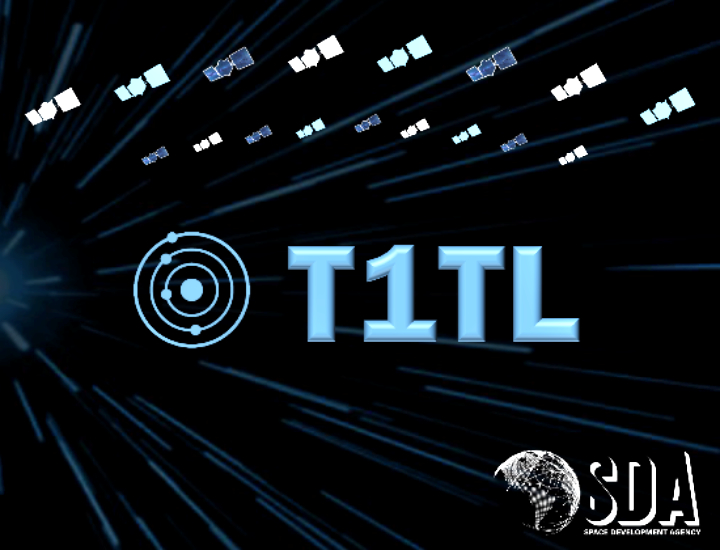
Northrop Grumman’s T1TL mesh satellite constellation will provide resilient, low-latency, high-volume data transport supporting U.S. military missions around the world and serve as a critical element for Joint All Domain Command Control. Image is courtesy of the company.

Northrop Grumman Corporation (NYSE: NOC) has won a competition to build and deploy a proliferated low-Earth orbit constellation of 14 satellites with infrared sensors for the Space Development Agency’s (SDA) Tranche 1 Tracking Layer (T1TRK).

T1TRK will detect, identify and track hypersonic weapons and other advanced missiles from their earliest stages of launch through interception. T1TRK will detect, identify and track hypersonic weapons and other advanced missiles from their earliest stages of launch through interception.

Northrop Grumman will leverage its experience with the Tranche 1 Transport Layer (T1TL), to provide a resilient, low-latency, high-volume network in space to support U.S. military missions around the world. In May, Northrop Grumman successfully completed a System Requirements Review for T1TL – another element of SDA’s National Defense Space Architecture.

Once deployed in 2025, the T1TRK satellites will operate in up to four, LEO planes, interconnected with T1TL satellites. Each will feature a wide field-of-view infrared sensor, three optical communications terminals, and a Ka-band payload for communications.

“Northrop Grumman will provide an integrated space vehicle that will accelerate our nation’s ability to defend against the most pressing challenges in missile defense,” said Robert Fleming, Northrop’s Vice President and General Manager of the Strategic Space Systems Division. “T1TRK builds upon Northrop Grumman’s experience with T1TL and will demonstrate a capability to track advanced missile threats.”

Filed Under: Contracts & Commercial Deals, LEO Constellations Tagged With: Featured

Primary Sidebar

Coverage

  • Missions & Constellations
  • Business & Finance
  • Military & Defense
  • Launch
  • Software Automation & Ground Systems
  • Government & Regulation
  • Services & Applications

Most Read Stories

  • SmallSat Europe Speaker Focus: Merek Chertkow, The Radiation Team
  • Bad news, but good news followed
  • AST SpaceMobile Pivots to SpaceX for Mid-June Launch of Three BlueBird Satellites
  • FCC Grants AST SpaceMobile Authority for 248-Satellite Constellation and Direct-to-Cell Service
  • FAA Grounds Blue Origin Following New Glenn Upper Stage Failure and Facility Anomaly

Secondary Sidebar

Footer


Satnews is a leading provider of satellite news, events, publications, research and other satellite industry information in both commercial and military enterprises worldwide.

Stories By Category

  • Business & Finance
  • Government & Regulation
  • Launch
  • Military & Defense
  • Missions & Constellations
  • Services & Applications
  • Software Automation & Ground Systems
  • Spectrum & Licensing
  • Startups & NewSpace Business

About Us

  • Leadership & Editorial Team
  • SatNews History
  • Free Satnews Subscription
  • SatNews Events
  • Magazines

Navigation

  • Latest Stories
  • Magazines
  • Events
  • Contact
  • Cookie & Privacy Policy for Satnews

We use cookies to ensure that we give you the best experience on our website. If you continue to use this site we will assume that you are happy with it.
x
Sign up Now (For Free)
Access daily or weekly satellite news updates covering all aspects of the commercial and military satellite industry.
Invalid email address
Notify Me Regarding ( At least one ):
We value your privacy and will not sell or share your email or other information with any other company. You may also unsubscribe at anytime.

Click Here to see our full privacy policy.
Thanks for subscribing!