

• Skip to primary navigation
  • Skip to main content
  • Skip to primary sidebar
  • Skip to secondary sidebar
  • Skip to footer
  • NEWS:
  • SatNews
  • SatMagazine
  • MilSatMagazine
  • SmallSat News
  • |     EVENTS:
  • SmallSat Symposium
  • Satellite Innovation
  • MilSat Symposium
  • SmallSat Europe

SatNews

Satellite Industry Intelligence Since 1983

Subscribe
  • LATEST
  • SatNews Events
  • Magazines
  • Calendar
  • Subscribe
  • Missions & Constellations
    • Exploration & Science Missions
    • In-Orbit Servicing & Orbital Operations
    • LEO Constellations
    • Mission Autonomy & Onboard Systems
    • Mission Deployments & Manifests
    • Navigation & PNT
    • SmallSat
    • Spacecraft & Payload Technology
    View All in Missions & Constellations →
    Rohde & Schwarz Introduces Pulsar Signal Simulation to Advance Next-Gen PNT TestingRohde & Schwarz Introduces Pulsar Signal Simulation to Advance Next-Gen PNT Testing
    China Accelerates Orbital Internet Deployment with Successful Smart Dragon-3 Sea LaunchChina Accelerates Orbital Internet Deployment with Successful Smart Dragon-3 Sea Launch
    Smallsats Dominate 2025 Launch Landscape as Mass Efficiency PeaksSmallsats Dominate 2025 Launch Landscape as Mass Efficiency Peaks
    MIT STAR Lab Expands Scope from Lasercom Innovation to Space Policy ArchitectureMIT STAR Lab Expands Scope from Lasercom Innovation to Space Policy Architecture
  • Business
    • Contracts & Commercial Deals
    • Earnings & Financial Reporting
    • Events & Conferences
    • Funding & Venture Capital
    • Market Forecasts
    • Mergers & Acquisitions
    • Personnel Moves & Appointments
    View All in Business & Finance →
    Global Defense Leaders Convene as Space Symposium 41 Addresses Orbital SecurityGlobal Defense Leaders Convene as Space Symposium 41 Addresses Orbital Security
    SmallSat Europe Speaker Focus: Chris Quilty, Quilty SpaceSmallSat Europe Speaker Focus: Chris Quilty, Quilty Space
    “SpaceX and the biggest IPO in history”“SpaceX and the biggest IPO in history”
    SmallSat Europe Speaker Focus: Chiara Manfletti, NeuraspaceSmallSat Europe Speaker Focus: Chiara Manfletti, Neuraspace
  • Defense
    • Counterspace & ASAT
    • Defense Budgets & Procurement
    • ISR & Reconnaissance
    • MILSATCOM
    • Missile Warning & Defense
    • National Security Programs
    • Space Domain Awareness
    View All in Military & Defense →
    NRL to Showcase Sovereign Space Capabilities at 41st Space SymposiumNRL to Showcase Sovereign Space Capabilities at 41st Space Symposium
    Northrop Grumman Minotaur IV Lofted USSF Tech Demonstration Payloads to OrbitNorthrop Grumman Minotaur IV Lofted USSF Tech Demonstration Payloads to Orbit
    The End of the VSAT Parts BinThe End of the VSAT Parts Bin
    Procurement Lag vs. Conflict Speed: Can Defense Buying Cycles Keep Up with Space Innovation?Procurement Lag vs. Conflict Speed: Can Defense Buying Cycles Keep Up with Space Innovation?
  • Gov
    • Export Controls & Compliance
    • International Space Agreements
    • National Space Policy
    • Space Law & Treaties
    • Space Sustainability & Debris Policy
    • Space Traffic Management / Debris Removal
    View All in Government & Regulation →
    FCC Modernizes Satellite Spectrum Rules to Unleash Next-Generation BroadbandFCC Modernizes Satellite Spectrum Rules to Unleash Next-Generation Broadband
    SmallSat Europe Speaker Focus: Daniel Bock, Morpheus SpaceSmallSat Europe Speaker Focus: Daniel Bock, Morpheus Space
    SmallSat Europe Speaker Focus: Dr. Ane Aanesland, ThrustMeSmallSat Europe Speaker Focus: Dr. Ane Aanesland, ThrustMe
    Isaacman’s Budget Math: How NASA Plans to Reach the Moon With a Quarter Less MoneyIsaacman’s Budget Math: How NASA Plans to Reach the Moon With a Quarter Less Money
  • Launch
    • Launch Providers
    • Launch Schedule & Calendars
    • Launch Sites & Infrastructure
    • Rocket Technology & Vehicles
    View All in Launch →
    What the SpaceX IPO Changes for Every Satellite OperatorWhat the SpaceX IPO Changes for Every Satellite Operator
    €30 million Financing for PLD Space’s Small Satellite Launcher€30 million Financing for PLD Space’s Small Satellite Launcher
    Satellite Deployers to be Used on JAXA Small Satellite Mission by ExolaunchSatellite Deployers to be Used on JAXA Small Satellite Mission by Exolaunch
    CAS Space Successfully Launches Kinetica-2, Aiming for Global Cost LeadershipCAS Space Successfully Launches Kinetica-2, Aiming for Global Cost Leadership
  • Software
    • Autonomous Ground Operations
    • Data Processing & AI/ML
    • Digital Twins & Modeling
    • Ground Segment & Teleports
    • Mission Planning & Simulation
    • Space Systems Software Engineering
    • Spectrum & Licensing
    View All in Software Automation & Ground Systems →
    Cloudcomputing Targets 1.5M Identities in Spain and Finalizes Innovate IT AcquisitionCloudcomputing Targets 1.5M Identities in Spain and Finalizes Innovate IT Acquisition
    Archangel Lightworks Secures £10M Series A to Scale Optical Ground InfrastructureArchangel Lightworks Secures £10M Series A to Scale Optical Ground Infrastructure
    Keysight and Sateliot Win ESA and GSMA Foundry Challenge for 6G InnovationKeysight and Sateliot Win ESA and GSMA Foundry Challenge for 6G Innovation
    Automation and Agility: How SSC Space Go is Designed for the New Age of GroundAutomation and Agility: How SSC Space Go is Designed for the New Age of Ground
  • Services & Apps
    • Climate & Environmental Monitoring
    • Disaster Response & Security Mapping
    • Earth Observation & Imaging
    • Maritime & Aviation Satcom
    • Satellite Communications
    View All in Services & Applications →
    Kraken Robotics Integrates KATFISH Sonar on SEFINE RD-22 USV Following Multi-Naval DemonstrationsKraken Robotics Integrates KATFISH Sonar on SEFINE RD-22 USV Following Multi-Naval Demonstrations
    Astroscale Plans World-First Multi-Orbit Satellite Inspection MissionAstroscale Plans World-First Multi-Orbit Satellite Inspection Mission
    The Downlink Deficit: The Pentagon’s Optical Mesh Network and the Terrestrial BottleneckThe Downlink Deficit: The Pentagon’s Optical Mesh Network and the Terrestrial Bottleneck
    Cinemo Reimagines the Vehicle as a Software-Defined Entertainment HubCinemo Reimagines the Vehicle as a Software-Defined Entertainment Hub

ESA signs a deployment deal with ASECNA that brings EGNOS tech to Africa

June 30, 2022

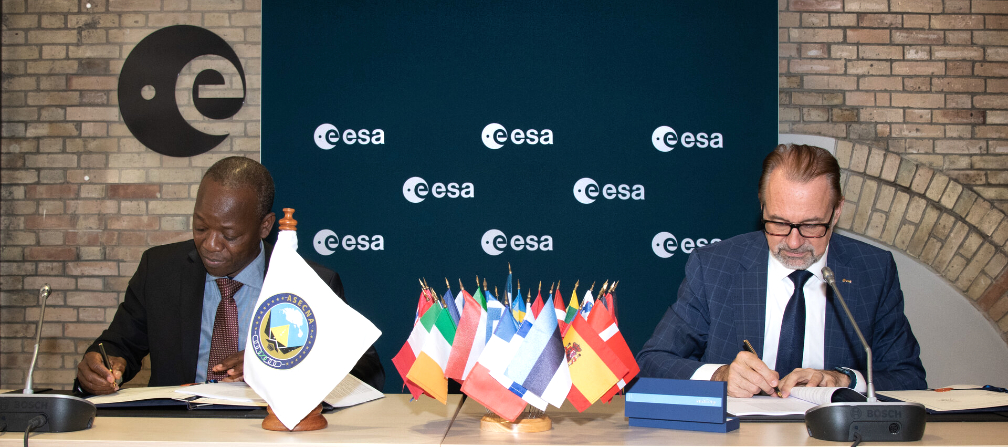
The international cooperation agreement was signed at ESA’s offices in Paris by Louis Bakienon, Director of the ASECNA SBAS Program, and Josef Aschbacher, ESA Director General.

European technology that allows satellite navigation signals to safely guide aircraft down for landing in the majority of Europe’s airports will now also be put to use across Africa and the Indian Ocean. ASECNA, the Agency for Air Navigation Safety in Africa and Madagascar, and ESA have signed an agreement to deploy a Satellite-based Augmentation System (SBAS) across a service region of more than 16.5 million sq. km, one and a half times the size of Europe’s coverage area.

ESA will provide technical support to ASECNA based on Europe’s EGNOS technology and using the Galileo satellites. The system initial operational capabilities are projected to enter into service from 2025.
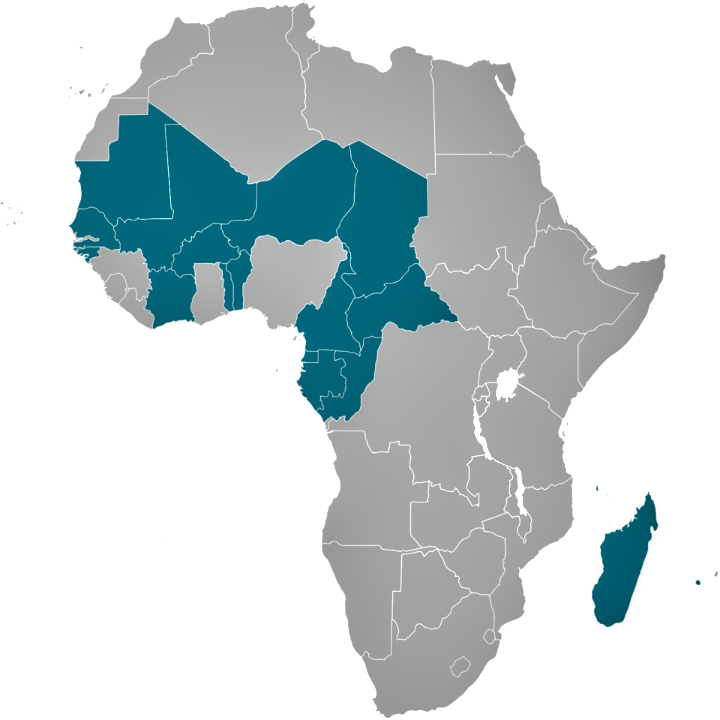
ASECNA Member States Map.

ASECNA provides air navigation services within an airspace of 16.5 million sq. km, divided into six flight information regions covering its Member States: Benin, Burkina Faso, Cameroon, Central African Republic, Comoros, Congo, Côte d’Ivoire, France, Gabon, Guinea Bissau, Equatorial Guinea, Madagascar, Mali, Mauritania, Niger, Senegal, Chad and Togo.

Aschbacher said, “I welcome this exciting new partnership with Africa. International cooperation has always been an ESA priority; space technology has the potential to improve everyone’s lives, and by working together we get to make that happen. EGNOS technology – designed, developed and demonstrated in Europe – will have its clear safety, environmental and economic benefits extended to African airports, airlines and passengers.”

ASECNA logo.

ASECNA Director General, Mohamed Moussa, said, “The implementation of satellite-based augmentation infrastructure will represent a huge step forward towards the unification of the African airspace. Airspace users will benefit across the continent from the most advanced navigation services and will significantly improve the safety and efficiency of their operations, and reduce their environmental impact. This service is sufficiently accurate and reliable to guide aircraft for critical flight operations will also be valuable across many other important sectors, such as land and maritime transport, precision agriculture, drone navigation, mapping and surveying.”

ASECNA Chairman of the Board, Jean Lamy, said, “This program is part of the Africa-EU strategic partnership on satellite navigation. It provides a solution for the implementation of the navigation and positioning component of the Space Policy of the African Union. It will support the development of a continiuum airspace purpose of the single Sky for Africa Project (CUPA Project) developed by ASECNA and which contribute to the African Union’s Single Air Transport Market initiative (SAATM).”
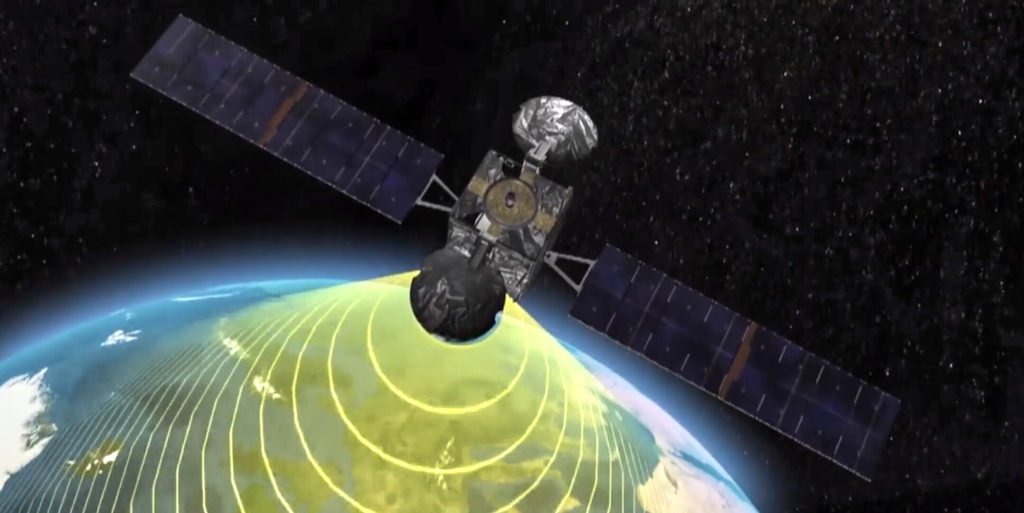
The European Geostationary Navigation Overlay Service (EGNOS) uses additional ground stations being used to enhance the accuracy and reliability of existing satnav services across a given geographic regions. Signal error measurements or integrity warnings highlighting reliability problems are then relayed to geostationary satellites for rebroadcast to users – available to any suitably equipped receiver. The resulting performance enhancements allow satnav to be employed for ‘safety of life’ services, especially aviation, but also any application requiring high precision.

ESA Director of Navigation, Javier Benedicto, said, “Together with Galileo, EGNOS is Europe’s other satellite navigation system, which is today in routine use at around 367 European airports and helipads. Through the use of EGNOS, satellite navigation signals become sufficiently accurate and reliable for all kinds of ‘safety-of-life’ uses. ESA, as the original designer of the EGNOS system, is well-placed to advise on the design and establishment of a new augmentation system with our ASECNA partner.”

Didier Flament, overseeing EGNOS for ESA, added, “Building on past know-how, this new system will deliver positioning with meter-level accuracy and with a high level of Integrity with a progressive coverage of the continent.”

Aircraft pilots are making use of EGNOS for what are known as ‘approach with vertical guidance’ procedures at suitably certified European airports. They can provide vertical guidance down to within 60 m altitude of given runways in all weather and conditions, at which point the pilot does the rest.

Louis Bakienon, Director of the ASECNA SBAS Program, noted, “SBAS services will enhance navigation operations for all phases of flight, from en-route down to precision approaches, and surveillance operations as well, as providing a source of position for terminal and surface surveillance.”

Julien Lapie, Manager of the ASECNA SBAS program, said, “The ASECNA SBAS program primarily aims to provide, through a self-sufficient infrastructure, airspace users with advanced navigation services to enhance significantly flight safety and efficiency, reduce their environmental impacts and improve airport accessibility. This program is a key enabler to the implementation of the Space Policy and Strategy of the Africa Union, and is recognised by the International Civil Aviation Organisation.”

EGNOS, the European Geostationary Navigation Overlay Service, sharpens the accuracy of GPS signals over European territory up to meter-scale precision while also giving a real-time‘integrity’ – or reliability – level of the signals and of the final corrected position thanks to EGNOS. The current EGNOS system relies only on US GPS signals but an updated version is being prepared for implementation later this decade (by 2028) – EGNOS v3 – which will also use Galileo signals, further increasing its accuracy and robustness. Moreover, this second generation will also provide an increased level of resilience to security (in particular cyber security) threats. EGNOS-using airports and helipads EGNOS-using airports and helipads.
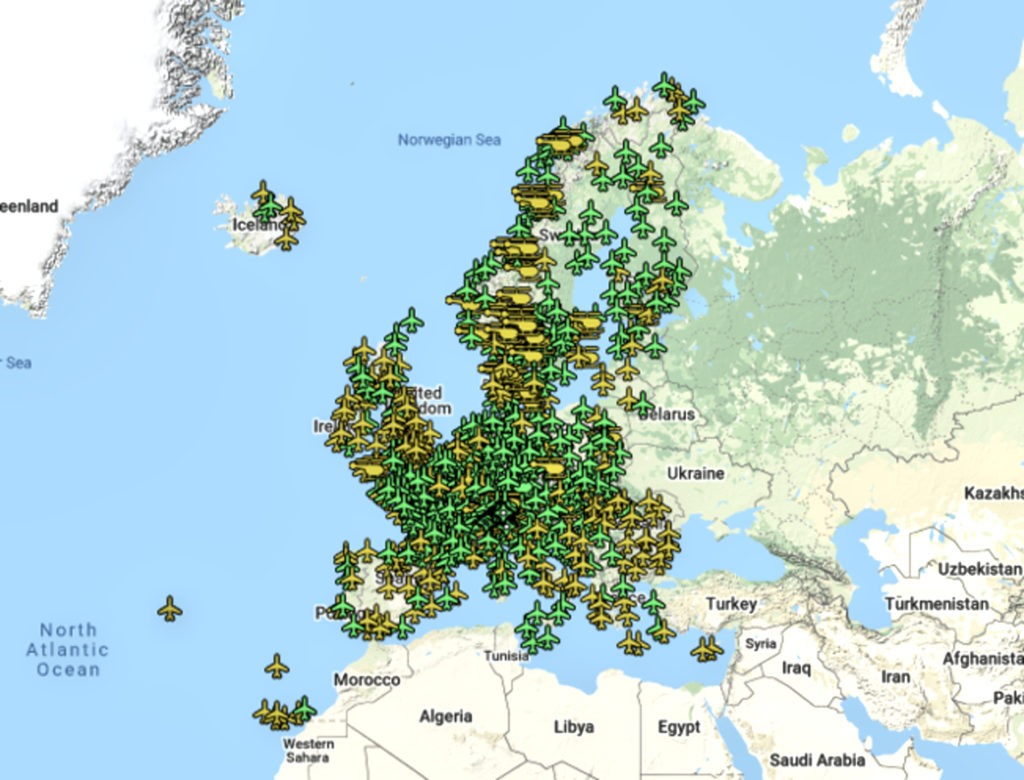
Together with Galileo, EGNOS is Europe’s other satellite navigation system, which is today in routine use at around 367 European airports and helipads. Through the use of EGNOS, satellite navigation signals become sufficiently accurate and reliable for all kinds of ‘safety-of-life’ uses. These airports and helipads are utilising EGNOS-based LPV-200 approaches, short for ‘Localizer Performance with Vertical guidance – 200 ft (60 m)’. The freely-available EGNOS service requires no ground equipment whatsoever, replacing the radio guidance beamed upward by traditional CAT I Instrument Landing System (ILS) infrastructure with no decrease in performance.

The current EGNOS allows aircraft to be guided safely down in any visibility to within 60 metres of height from the runway while the new EGNOS V3 aims at delivering a future capability of an auto-landing service (a first feasibility demonstration of this capability was performed in November 2019 with an Airbus A350 at Toulouse Airport).

The Satellite-based Augmentation system of ASECNA will provide the same levels of services, based on an fully-fledged African infrasctructure, composed of a ground segment (reference stations, mission control centers, uplink stations) and a space segment.

ASECNA signed an international agreement with the European Union in 2018 on satellite navigation, and is benefiting from funding and access to the EGNOS technology. ESA will deploy a team of around ten experts, providing technical support focused on ground infrastructure for the SBAS while French space agency CNES will advise on engineering of the demonstrator, the space segment and performance.

Filed Under: Contracts & Commercial Deals, Government & Regulation Tagged With: Featured

Primary Sidebar

Coverage

  • Missions & Constellations
  • Business & Finance
  • Military & Defense
  • Launch
  • Software Automation & Ground Systems
  • Government & Regulation
  • Services & Applications

Most Read Stories

  • SpaceX Loses Contact With Starlink Satellite
  • L3Harris Unveils XL-300P: The First P25 Handheld with 5G and Satellite Direct-to-Device Connectivity
  • Rheinmetall Walked Away. Germany Should Take the Hint.
  • Rocket Lab Emerging as Potential Bus Provider for 2,800-Satellite Equatys Constellation
  • SpaceX Accelerates Record-Breaking IPO Following Trillion-Dollar xAI Merger

Secondary Sidebar

Footer


Satnews is a leading provider of satellite news, events, publications, research and other satellite industry information in both commercial and military enterprises worldwide.

Stories By Category

  • Business & Finance
  • Government & Regulation
  • Launch
  • Military & Defense
  • Missions & Constellations
  • Services & Applications
  • Software Automation & Ground Systems
  • Spectrum & Licensing
  • Startups & NewSpace Business

About Us

  • Leadership & Editorial Team
  • SatNews History
  • Free Satnews Subscription
  • SatNews Events
  • Magazines

Navigation

  • Latest Stories
  • Magazines
  • Events
  • Contact
  • Cookie & Privacy Policy for Satnews

We use cookies to ensure that we give you the best experience on our website. If you continue to use this site we will assume that you are happy with it.
x
Sign up Now (For Free)
Access daily or weekly satellite news updates covering all aspects of the commercial and military satellite industry.
Invalid email address
Notify Me Regarding ( At least one ):
We value your privacy and will not sell or share your email or other information with any other company. You may also unsubscribe at anytime.

Click Here to see our full privacy policy.
Thanks for subscribing!