

• Skip to primary navigation
  • Skip to main content
  • Skip to primary sidebar
  • Skip to secondary sidebar
  • Skip to footer
  • NEWS:
  • SatNews
  • SatMagazine
  • MilSatMagazine
  • SmallSat News
  • |     EVENTS:
  • SmallSat Symposium
  • Satellite Innovation
  • MilSat Symposium
  • SmallSat Europe

SatNews

Satellite Industry Intelligence Since 1983

Subscribe
  • LATEST
  • SatNews Events
  • Magazines
  • Calendar
  • Subscribe
  • Missions & Constellations
    • Exploration & Science Missions
    • In-Orbit Servicing & Orbital Operations
    • LEO Constellations
    • Mission Autonomy & Onboard Systems
    • Mission Deployments & Manifests
    • Navigation & PNT
    • SmallSat
    • Spacecraft & Payload Technology
    View All in Missions & Constellations →
    Viasat Completes ViaSat-3 Constellation with Successful Flight 3 LaunchViasat Completes ViaSat-3 Constellation with Successful Flight 3 Launch
    GMV to Lead Mission Planning for ESA’s Next-Generation Copernicus ExpansionGMV to Lead Mission Planning for ESA’s Next-Generation Copernicus Expansion
    Canada Tightens Re-entry Regulations as SpaceX Starlink Constellations DescendCanada Tightens Re-entry Regulations as SpaceX Starlink Constellations Descend
    The waiver was the policy. Thursday is the paperwork.The waiver was the policy. Thursday is the paperwork.
  • Business
    • Contracts & Commercial Deals
    • Earnings & Financial Reporting
    • Events & Conferences
    • Funding & Venture Capital
    • Market Forecasts
    • Mergers & Acquisitions
    • Personnel Moves & Appointments
    View All in Business & Finance →
    SmallSat Europe Speaker Focus: Jorge Ciccorossi, ITU Radiocommunications BureauSmallSat Europe Speaker Focus: Jorge Ciccorossi, ITU Radiocommunications Bureau
    SmallSat Europe Speaker Focus: Koen Willems, ST Engineering iDirect EuropeSmallSat Europe Speaker Focus: Koen Willems, ST Engineering iDirect Europe
    U.S. Commercial Service to Host “Future in Orbit” Networking Event at SpaceBR 2026U.S. Commercial Service to Host “Future in Orbit” Networking Event at SpaceBR 2026
    SmallSat Europe Speaker Focus: Dr. Jakob Stöber, McKinsey & CompanySmallSat Europe Speaker Focus: Dr. Jakob Stöber, McKinsey & Company
  • Defense
    • Counterspace & ASAT
    • Defense Budgets & Procurement
    • ISR & Reconnaissance
    • MILSATCOM
    • Missile Warning & Defense
    • National Security Programs
    • Space Domain Awareness
    View All in Military & Defense →
    BAE Systems Enters Production for NavGuide M-Code GPS ReceiverBAE Systems Enters Production for NavGuide M-Code GPS Receiver
    Space Force Awards $3.2 Billion in Golden Dome Contracts for Orbital Interceptor ConstellationSpace Force Awards $3.2 Billion in Golden Dome Contracts for Orbital Interceptor Constellation
    USSF Finalizes GPS III Constellation with Successful SV-10 DeploymentUSSF Finalizes GPS III Constellation with Successful SV-10 Deployment
    Meink: Space Force Programs Ready to Execute Once FY27 Budget LandsMeink: Space Force Programs Ready to Execute Once FY27 Budget Lands
  • Gov
    • Export Controls & Compliance
    • International Space Agreements
    • National Space Policy
    • Space Law & Treaties
    • Space Sustainability & Debris Policy
    • Space Traffic Management / Debris Removal
    View All in Government & Regulation →
    SmallSat Europe Speaker Focus: Tanja Masson-Zwaan, Leiden UniversitySmallSat Europe Speaker Focus: Tanja Masson-Zwaan, Leiden University
    How CubeSat Proliferation is Redefining Sovereignty and Diplomatic Leverage at the United NationsHow CubeSat Proliferation is Redefining Sovereignty and Diplomatic Leverage at the United Nations
    FCC Modernization of Spectrum Rules Unlocks Sevenfold Gain in Satellite CapacityFCC Modernization of Spectrum Rules Unlocks Sevenfold Gain in Satellite Capacity
    The Smartest Money in the Room Is Looking UpThe Smartest Money in the Room Is Looking Up
  • Launch
    • Launch Providers
    • Launch Schedule & Calendars
    • Launch Sites & Infrastructure
    • Rocket Technology & Vehicles
    View All in Launch →
    FAA Grounds Blue Origin Following New Glenn Upper Stage Failure and Facility AnomalyFAA Grounds Blue Origin Following New Glenn Upper Stage Failure and Facility Anomaly
    NanoAvionics to Launch Trio of Milestone Payloads on SpaceX CAS500-2 MissionNanoAvionics to Launch Trio of Milestone Payloads on SpaceX CAS500-2 Mission
    Astrobotic Achieves Record 300-Second Burn with New Detonation EngineAstrobotic Achieves Record 300-Second Burn with New Detonation Engine
    Bad news, but good news followedBad news, but good news followed
  • Software
    • Autonomous Ground Operations
    • Data Processing & AI/ML
    • Digital Twins & Modeling
    • Ground Segment & Teleports
    • Mission Planning & Simulation
    • Space Systems Software Engineering
    • Spectrum & Licensing
    View All in Software Automation & Ground Systems →
    Global Invacom Secures Exclusive Worldwide Distribution for Prodelin Antenna RangeGlobal Invacom Secures Exclusive Worldwide Distribution for Prodelin Antenna Range
    SmallSat Europe Speaker Focus: Giovanni Pandolfi Bortoletto, Leaf SpaceSmallSat Europe Speaker Focus: Giovanni Pandolfi Bortoletto, Leaf Space
    SpinLaunch Selects Equinix to Deploy Global Ground Infrastructure for Meridian Space ConstellationSpinLaunch Selects Equinix to Deploy Global Ground Infrastructure for Meridian Space Constellation
    RF-Design Launches FiberLink CompactLine FCLR1811S4 for Ground Segment OptimizationRF-Design Launches FiberLink CompactLine FCLR1811S4 for Ground Segment Optimization
  • Services & Apps
    • Climate & Environmental Monitoring
    • Disaster Response & Security Mapping
    • Earth Observation & Imaging
    • Maritime & Aviation Satcom
    • Satellite Communications
    View All in Services & Applications →
    Solstar Confirms Successful On-Orbit Operation of Deke Space Communicator Following Launch on SpaceX Transporter-16 MissionSolstar Confirms Successful On-Orbit Operation of Deke Space Communicator Following Launch on SpaceX Transporter-16 Mission
    IEC Telecom Unveils Voucher-Based Connectivity Solution at Singapore Maritime Week 2026IEC Telecom Unveils Voucher-Based Connectivity Solution at Singapore Maritime Week 2026
    GomSpace and STETMAN Establish UASAT Joint Venture for Ukrainian Sovereign CommunicationsGomSpace and STETMAN Establish UASAT Joint Venture for Ukrainian Sovereign Communications
    Market Dynamics and Non-Terrestrial Network (NTN) ChipsetsMarket Dynamics and Non-Terrestrial Network (NTN) Chipsets

Orbital’s Rocket Pegasus® Releases NASA Satellite… This IRIS Can Look At The Sun And Not Blink (Launch)

June 27, 2013

[SatNews] A satellite was launched that will observe the sun’s million degree atmosphere.


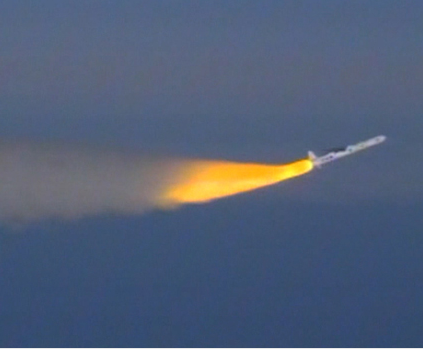
The Pegasus rocket ignites to send NASA’s IRIS spacecraft into orbit. Photo credit: NASA TV.

Orbital Sciences Corporation (NYSE: ORB) announced today that its Pegasus® rocket successfully launched the Interface Region Imaging Spectrograph (IRIS) satellite for the National Aeronautics and Space Administration (NASA).  The IRIS spacecraft was deployed into its targeted orbit approximately 400 miles above the Earth and early results confirm that the satellite is operating as anticipated at this stage of its mission.

The launch of the Pegasus rocket originated from Vandenberg Air Force Base (VAFB), California when Orbital’s’ L-1011 “Stargazer” carrier aircraft took off from the airfield at approximately 6:30 p.m. (PDT).  Following a one-hour preplanned positioning flight, the Pegasus rocket was released at approximately 40,000 feet from Orbital’s L-1011 “Stargazer” carrier aircraft at 7:27 p.m. (PDT). After a 13-minute powered flight sequence, Pegasus launched the 440-pound IRIS satellite into its polar, sun-synchronous Earth orbit.

“The Pegasus rocket carried out another successful mission for NASA today, extending its record of consecutive successful missions to 28 over a 16-year period,” said Mr. Ron Grabe, Orbital’s Executive Vice President and General Manager of its Launch Systems Group. “We are proud of our launch team and are pleased to have contributed to a successful beginning of this important NASA heliophysics science mission.”
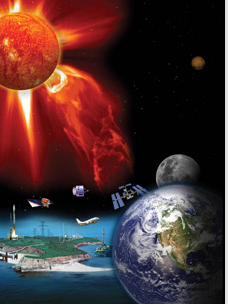

The Study of the Sun and its Interaction with Earth and the Solar System is called Heliophysics.

“We are thrilled to add IRIS to the suite of NASA missions studying the sun,” said John Grunsfeld, NASA’s associate administrator for science in Washington. “IRIS will help scientists understand the mysterious and energetic interface between the surface and corona of the sun.”

“Congratulations to the entire team on the successful development and deployment of the IRIS mission,” said IRIS project manager Gary Kushner of the Lockheed Martin Solar and Atmospheric Laboratory in Palo Alto, California. “Now that IRIS is in orbit, we can begin our 30-day engineering checkout followed by a 30-day science checkout and calibration period.”

IRIS is expected to start science observations upon completion of its 60-day commissioning phase. During this phase the team will check image quality and perform calibrations and other tests to ensure a successful mission.

NASA’s Explorer Program at Goddard Space Flight Center in Greenbelt, Md., provides overall management of the IRIS mission. The principal investigator institution is Lockheed Martin Space Systems Advanced Technology Center. NASA’s Ames Research Center will perform ground commanding and flight operations and receive science data and spacecraft telemetry.

The Smithsonian Astrophysical Observatory designed the IRIS telescope. The Norwegian Space Centre and NASA’s Near Earth Network provide the ground stations using antennas at Svalbard, Norway; Fairbanks, Alaska; McMurdo, Antarctica; and Wallops Island, Va. NASA’s Launch Services Program at the agency’s Kennedy Space Center in Florida is responsible for the launch service procurement, including managing the launch and countdown. Orbital Sciences Corporation provided the L-1011 aircraft and Pegasus XL launch system.
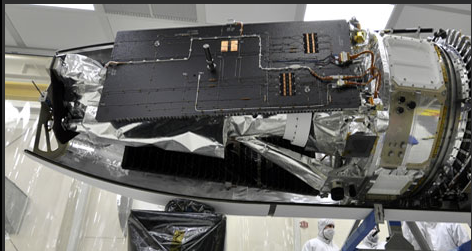

IRIS to Take Precise Look at Sun’s Energy NASA’s IRIS spacecraft will use an ultraviolet telescope to look at a small area of the sun to answer detailed questions.

IRIS is a NASA Explorer Mission to observe how solar material moves, gathers energy and heats up as it travels through a little-understood region in the sun’s lower atmosphere. This interface region between the sun’s photosphere and corona powers its dynamic million-degree atmosphere and drives the solar wind. The interface region also is where most of the sun’s ultraviolet emission is generated. These emissions impact the near-Earth space environment and Earth’s climate.

The Pegasus XL carrying IRIS was deployed from an Orbital L-1011 carrier aircraft over the Pacific Ocean at an altitude of 39,000 feet, off the central coast of California about 100 miles northwest of Vandenberg. The rocket placed IRIS into a sun-synchronous polar orbit that will allow it to make almost continuous solar observations during its two-year mission.

The launch of IRIS marks the 45th overall mission for the Pegasus program. Its launch history now includes 42 launches to orbit, which collectively have deployed more than 80 satellites for Earth and space science missions overseen by NASA; military and technology demonstration spacecraft for the U.S. Department of Defense; and communications and imaging satellites for commercial customers.  Pegasus technology has also been used to launch three hypersonic flight experiments in Earth’s stratosphere for NASA’s HyperX program.

IRIS is a NASA Small Explorer (SMEX) mission designed to observe how solar material moves, gathers energy and heats up as it travels through a little-understood region in the Sun’s lower atmosphere. This interface region between the Sun’s photosphere and corona powers its dynamic million-degree atmosphere and drives the solar wind. The interface region also is where most of the Sun’s ultraviolet emission is generated that impacts the near-Earth space environment and Earth’s climate.

IRIS is expected to start science observations upon completion of its 60-day commissioning phase. During this phase the team will check image quality and perform calibrations and other tests to ensure a successful mission.

Pegasus provides launch systems for the deployment of small satellites into low-Earth orbit. Its patented air-launch system, in which the rocket is launched from beneath Orbital’s “Stargazer” L-1011 carrier aircraft over the ocean, reduces cost and provides customers with unparalleled flexibility to operate from virtually anywhere on Earth with minimal ground support requirements.  It is the world’s only small space launch vehicle that is certified with NASA’s Payload Risk Category 3, which the space agency reserves for its highest value space missions. Past Pegasus flights have originated from six launch sites around the globe.

Orbital develops and manufactures small- and medium-class rockets and space systems for commercial, military and civil government customers.  The company’s primary products are satellites and launch vehicles, including low-Earth orbit, geosynchronous-Earth orbit and planetary spacecraft for communications, remote sensing, scientific and defense missions; human-rated space systems for Earth-orbit, lunar and other missions; ground- and air-launched rockets that deliver satellites into orbit; and missile defense systems that are used as interceptor and target vehicles. Orbital also provides satellite subsystems and space-related technical services to government agencies and laboratories.

NASA’s Explorer Program at Goddard Space Flight Center in Greenbelt, Maryland, provides overall management of the IRIS mission. The principal investigator institution is Lockheed Martin Space Systems Advanced Technology Center. NASA’s Ames Research Center will perform ground commanding and flight operations and receive science data and spacecraft telemetry.

Filed Under: Launch Providers

Primary Sidebar

Coverage

  • Missions & Constellations
  • Business & Finance
  • Military & Defense
  • Launch
  • Software Automation & Ground Systems
  • Government & Regulation
  • Services & Applications

Most Read Stories

  • Planet Labs Imposes Indefinite Blackout on Iran Satellite Imagery at U.S. Request
  • What the SpaceX IPO Changes for Every Satellite Operator
  • Amazon in Reported Talks to Acquire Globalstar in $9 Billion Move to Challenge Starlink
  • Russia Replaces Starlink With European-Built Satellites
  • The Downlink Deficit: The Pentagon's Optical Mesh Network and the Terrestrial Bottleneck

Secondary Sidebar

Footer


Satnews is a leading provider of satellite news, events, publications, research and other satellite industry information in both commercial and military enterprises worldwide.

Stories By Category

  • Business & Finance
  • Government & Regulation
  • Launch
  • Military & Defense
  • Missions & Constellations
  • Services & Applications
  • Software Automation & Ground Systems
  • Spectrum & Licensing
  • Startups & NewSpace Business

About Us

  • Leadership & Editorial Team
  • SatNews History
  • Free Satnews Subscription
  • SatNews Events
  • Magazines

Navigation

  • Latest Stories
  • Magazines
  • Events
  • Contact
  • Cookie & Privacy Policy for Satnews

We use cookies to ensure that we give you the best experience on our website. If you continue to use this site we will assume that you are happy with it.
x
Sign up Now (For Free)
Access daily or weekly satellite news updates covering all aspects of the commercial and military satellite industry.
Invalid email address
Notify Me Regarding ( At least one ):
We value your privacy and will not sell or share your email or other information with any other company. You may also unsubscribe at anytime.

Click Here to see our full privacy policy.
Thanks for subscribing!