

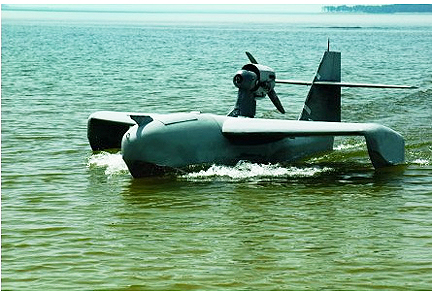
 Rear Admiral Mark Kenny, who leads irregular warfare ops for the U.S. Navy, stated that Navy subs known as SSGNs have been equipped with unmanned vehicles and detailed how they used. The Navy currently has four subs whose nuclear missile components have been removed to make room for more conventional weapons and for Navy SEAL deployment chambers as well as for aerial and aquatic robots. These subs’ missile tubes are now actually payload tubes to deliver various equipment needs, including UAVs. These UAV payloads include a torpedo sized UAV named Sea Stalker that is used for electronic eavesdropping, the 45 pound Scan Eagle UAV that can carry weapons (currently being used by U.S. Marines in Afghanistan and Iraq), and a 15 pound UAV named BUSTER for video and radio traffic relays back to a sub’s command center. This trend is on the increase, according to the Admiral, with additional subs trading out their nuclear control facilities for the more easily deployed drones. In fact, the U.S. Navy’s new attack submarines of the Virginia class could be outfitted with various payload modules for drone delivery. (Photo: U.S. Navy’s Sea Scout USV – UAV)
Victory @ Sea With UAVs?
Via Wired’s Danger Room and Stuart Fox of POPSCI.COM, seems as though the U.S. Navy wants to get in on the drone information cycle.
Rear Admiral Mark Kenny, who leads irregular warfare ops for the U.S. Navy, stated that Navy subs known as SSGNs have been equipped with unmanned vehicles and detailed how they used. The Navy currently has four subs whose nuclear missile components have been removed to make room for more conventional weapons and for Navy SEAL deployment chambers as well as for aerial and aquatic robots. These subs’ missile tubes are now actually payload tubes to deliver various equipment needs, including UAVs. These UAV payloads include a torpedo sized UAV named Sea Stalker that is used for electronic eavesdropping, the 45 pound Scan Eagle UAV that can carry weapons (currently being used by U.S. Marines in Afghanistan and Iraq), and a 15 pound UAV named BUSTER for video and radio traffic relays back to a sub’s command center. This trend is on the increase, according to the Admiral, with additional subs trading out their nuclear control facilities for the more easily deployed drones. In fact, the U.S. Navy’s new attack submarines of the Virginia class could be outfitted with various payload modules for drone delivery. (Photo: U.S. Navy’s Sea Scout USV – UAV)
Rear Admiral Mark Kenny, who leads irregular warfare ops for the U.S. Navy, stated that Navy subs known as SSGNs have been equipped with unmanned vehicles and detailed how they used. The Navy currently has four subs whose nuclear missile components have been removed to make room for more conventional weapons and for Navy SEAL deployment chambers as well as for aerial and aquatic robots. These subs’ missile tubes are now actually payload tubes to deliver various equipment needs, including UAVs. These UAV payloads include a torpedo sized UAV named Sea Stalker that is used for electronic eavesdropping, the 45 pound Scan Eagle UAV that can carry weapons (currently being used by U.S. Marines in Afghanistan and Iraq), and a 15 pound UAV named BUSTER for video and radio traffic relays back to a sub’s command center. This trend is on the increase, according to the Admiral, with additional subs trading out their nuclear control facilities for the more easily deployed drones. In fact, the U.S. Navy’s new attack submarines of the Virginia class could be outfitted with various payload modules for drone delivery. (Photo: U.S. Navy’s Sea Scout USV – UAV)
