

• Skip to primary navigation
  • Skip to main content
  • Skip to primary sidebar
  • Skip to secondary sidebar
  • Skip to footer
  • NEWS:
  • SatNews
  • SatMagazine
  • MilSatMagazine
  • SmallSat News
  • |     EVENTS:
  • SmallSat Symposium
  • Satellite Innovation
  • MilSat Symposium
  • SmallSat Europe

SatNews

Satellite Industry Intelligence Since 1983

Subscribe
  • LATEST
  • SatNews Events
  • Magazines
  • Calendar
  • Subscribe
  • Missions & Constellations
    • Exploration & Science Missions
    • In-Orbit Servicing & Orbital Operations
    • LEO Constellations
    • Mission Autonomy & Onboard Systems
    • Mission Deployments & Manifests
    • Navigation & PNT
    • SmallSat
    • Spacecraft & Payload Technology
    View All in Missions & Constellations →
    Rapid Deployment: ZeroUSV Streamlines Uncrewed Vessel Portability for Defense and Survey MissionsRapid Deployment: ZeroUSV Streamlines Uncrewed Vessel Portability for Defense and Survey Missions
    High-Stakes Rescue: Commercial Satellite Servicer Encapsulated for Swift Telescope Orbital BoostHigh-Stakes Rescue: Commercial Satellite Servicer Encapsulated for Swift Telescope Orbital Boost
    SpaceX’s Secret ‘Starfall’ Capsule Wins FAA Approval for Pacific Reentry TestsSpaceX’s Secret ‘Starfall’ Capsule Wins FAA Approval for Pacific Reentry Tests
    NOAA Activates First Dedicated U.S. Space Weather Satellite One Million Miles from EarthNOAA Activates First Dedicated U.S. Space Weather Satellite One Million Miles from Earth
  • Business
    • Contracts & Commercial Deals
    • Earnings & Financial Reporting
    • Events & Conferences
    • Funding & Venture Capital
    • Market Forecasts
    • Mergers & Acquisitions
    • Personnel Moves & Appointments
    View All in Business & Finance →
    Global Convergence: Viasat and India’s WiSig Networks Begin Live Testing of 5G Satellite IoT ChipsetGlobal Convergence: Viasat and India’s WiSig Networks Begin Live Testing of 5G Satellite IoT Chipset
    Ground Segment Shakeup: Gilat to Acquire Comtech’s Satellite & Space Division for $157.5 MillionGround Segment Shakeup: Gilat to Acquire Comtech’s Satellite & Space Division for $157.5 Million
    Space Force Modernization: Viasat Secures Prime Contract for Agile PTS-G ‘Swarm 1’ FleetSpace Force Modernization: Viasat Secures Prime Contract for Agile PTS-G ‘Swarm 1’ Fleet
    SpaceX: The targets might be toughSpaceX: The targets might be tough
  • Defense
    • Counterspace & ASAT
    • Defense Budgets & Procurement
    • ISR & Reconnaissance
    • MILSATCOM
    • Missile Warning & Defense
    • National Security Programs
    • Space Domain Awareness
    View All in Military & Defense →
    Space Logistics Pivot: USSF Launches Challenge to Develop Multi-Orbit ‘Warehouses’ and Fuel DepotsSpace Logistics Pivot: USSF Launches Challenge to Develop Multi-Orbit ‘Warehouses’ and Fuel Depots
    Savox Communications Unveils ‘MissionCore’ to Unify Disconnected Battlefield Data LinksSavox Communications Unveils ‘MissionCore’ to Unify Disconnected Battlefield Data Links
    Space-Based Shield: Spire Global and Diehl Defence Partner to Build European Missile Warning NetworkSpace-Based Shield: Spire Global and Diehl Defence Partner to Build European Missile Warning Network
    Qorvo Unveils Compact X-Band Radar Module to Enhance Defense System PerformanceQorvo Unveils Compact X-Band Radar Module to Enhance Defense System Performance
  • Gov
    • Export Controls & Compliance
    • International Space Agreements
    • National Space Policy
    • Space Law & Treaties
    • Space Sustainability & Debris Policy
    • Space Traffic Management / Debris Removal
    View All in Government & Regulation →
    Orbital Paperwork War: China’s Spectrum Squatting Reserves 244,000 Satellite Slots to Combat SpaceX’s LEO MonopolyOrbital Paperwork War: China’s Spectrum Squatting Reserves 244,000 Satellite Slots to Combat SpaceX’s LEO Monopoly
    The Next Arena: Why the WRC-27 Summit in Shanghai is the New Space Tech FrontlineThe Next Arena: Why the WRC-27 Summit in Shanghai is the New Space Tech Frontline
    American military space closed around one company in seven daysAmerican military space closed around one company in seven days
    Major opportunities for 2 GHz over EuropeMajor opportunities for 2 GHz over Europe
  • Launch
    • Launch Providers
    • Launch Schedule & Calendars
    • Launch Sites & Infrastructure
    • Rocket Technology & Vehicles
    View All in Launch →
    Breaking the TRL Bottleneck: Space Phoenix Systems Debuts Cost-Effective Space Test-and-Return ServiceBreaking the TRL Bottleneck: Space Phoenix Systems Debuts Cost-Effective Space Test-and-Return Service
    Twelve Scientific Payloads Experience Microgravity Aboard SubOrbital Express-5Twelve Scientific Payloads Experience Microgravity Aboard SubOrbital Express-5
    Amazon Leo Constellation Surpasses 330 Satellites Following Latest Atlas V LaunchAmazon Leo Constellation Surpasses 330 Satellites Following Latest Atlas V Launch
    If You Thought Space Was Hard Try to Get Your Satellite On a RocketIf You Thought Space Was Hard Try to Get Your Satellite On a Rocket
  • Software
    • Autonomous Ground Operations
    • Data Processing & AI/ML
    • Digital Twins & Modeling
    • Ground Segment & Teleports
    • Mission Planning & Simulation
    • Space Systems Software Engineering
    • Spectrum & Licensing
    View All in Software Automation & Ground Systems →
    Poland Sovereignty: GMV to Develop Core Ground Control Platform for CAMILA ConstellationPoland Sovereignty: GMV to Develop Core Ground Control Platform for CAMILA Constellation
    Software Over the Air: FatPipe Launches Acceleration Tool to Unclog Starlink and Amazon LEO LinksSoftware Over the Air: FatPipe Launches Acceleration Tool to Unclog Starlink and Amazon LEO Links
    Three LEO Operators Bet 2026 on a Supply Chain Built for 2027Three LEO Operators Bet 2026 on a Supply Chain Built for 2027
    NASA Advances Interoperable Space Networks with Successful PExT DemonstrationNASA Advances Interoperable Space Networks with Successful PExT Demonstration
  • Services & Apps
    • Climate & Environmental Monitoring
    • Disaster Response & Security Mapping
    • Earth Observation & Imaging
    • Maritime & Aviation Satcom
    • Satellite Communications
    View All in Services & Applications →
    Space-Based Underwriting: Liberty and ICEYE Launch Satellite-Powered Parametric Wildfire InsuranceSpace-Based Underwriting: Liberty and ICEYE Launch Satellite-Powered Parametric Wildfire Insurance
    Eutelsat and Tototheo Global Forge Partnership to Deliver LEO Connectivity Across Maritime and Government SectorsEutelsat and Tototheo Global Forge Partnership to Deliver LEO Connectivity Across Maritime and Government Sectors
    Marlink Equips Groupama-FDJ Cycling Team with Hybrid Starlink and LTE NetworkMarlink Equips Groupama-FDJ Cycling Team with Hybrid Starlink and LTE Network
    Viasat Secures Lockheed Martin Contract for NOAA’s Next-Generation AircraftViasat Secures Lockheed Martin Contract for NOAA’s Next-Generation Aircraft

India Weighs In with Heaviest Heavyweight Satellite Bus

July 27, 2009

While everyone is weight conscious, being heavy isn’t necessarily bad as India is proving as they soon design and develop its heaviest communications satellite GSAT-11 to provide advanced telecom services from 2011-12. Word came from a senior official of the Indian Space Research Organisation (ISRO). At 4.5 tonnes, it will weigh more than twice as much as the biggest Indian satellite in orbit now.

“Activities to design and develop GSAT-11 will start immediately, as the project has been cleared by the government at a cost of Rs.5-billion (Rs.500 crore),” ISRO Director S. Satish said.

The advanced communications technology satellite will be launched in mid-2011 on board the Geo-Synchronus Satellite Launch Vehicle (GSLV-Mark III) from ISRO’s spaceport at Sriharikota, about 80 km north-east of Chennai.
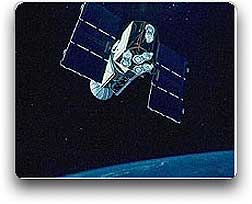
India Sat Bus The advanced satellite will employ a new 1-4K Bus (computer network). It will be configured with two-sided large solar array panels generating 11 KW of power. In the run-up to GSAT-11, the space agency is scheduling the launch of other communications satellites in the GSAT series over the next two years.

“The satellite will be designed at our satellite centre in Bangalore, payloads consisting of 40 transponders in Ku/Ka band will be built at the space applications center in Ahmedabad and the 630-tonne rocket (GSLV-Mark III) will be rolled out from the liquid propulsion systems center in Thiruvananthapuram,” Satish told IANS.

The indigenously developed GSAT series of satellites are aimed at revolutionizing communications, spanning digital audio, data and video broadcasting. The earlier versions of GSAT such as GSAT-1 and GSAT-2 were designed with two S-band and three C-band transponders.

“With 16 high capacity multi-beams in Ku/Ka band, GSAT-11 will provide much faster uplinks for a host of communications and broadcasting services, including direct-to-home (DTH television). With a dry mass of 2.1 tonne, the spacecraft will provide 10 GHz of bandwidth, which will be equivalent to about 220 transponders of 36 MHz,” Satish pointed out.

The advanced satellite will employ a new 1-4K Bus (computer network). It will be configured with two-sided large solar array panels generating 11 KW of power. In the run-up to GSAT-11, the space agency is scheduling the launch of other communications satellites in the GSAT series over the next two years.

“The two-tonne GSAT-4, slated for launch by this year on board GSLV-Mark II, will have a communication payload comprising multi-beam Ka-band pipe and regenerative transponder and navigation payload in C, L1 and L5 bands,” Satish said. GSAT-4 will also carry a scientific payload, Tauvex, consisting of three ultra violet (UV) band telescopes developed by Tel Aviv University and Israel space agency for surveying a large part of the sky in the 1,400-3,200 ≈ngstrom wavelengths.

Propulsion with four stationary plasma thrusters, Bus Management Unit (BMU), miniaturized dynamically tuned gyros, 36 AH Lithium ion battery, 70 V bus for Ka-band and on board structural dynamic vibration beam accelerometer are some of the new technologies developed for GSAT-4.

“GSAT-4 spacecraft will a power generation capability of 2,500 watts and will be positioned at 82 degrees east longitude in a geo-stationary orbit, about 36,000 km above the earth,” the official said.

GSAT-1 was launched on board a technology demonstrator (GSLV-D1) April 18, 2001 as an experimental satellite for performance monitoring, tracking, range safety/flight safety and preliminary orbit determination. GSAT-2 was launched May 8, 2003 and is located at 48 degrees east Longitude and carries four C-band transponders and two Ku-band transponders.

“The dedicated satellite for distance education (Edusat), launched in September 2004, is part of the GSAT series and can be considered as GSAT-3. Its transponders and their ground coverage are specially configured to cater to educational requirements,” Satish added.

The remaining spacecraft in GSAT series such as GSAT-5, GSAT-6 and GSAT-8 will be equated with INSAT-4 series of communication satellites. In the series, the government has not yet approved the development of GSAT-7 and GSAT-10 satellites.

GSAT-5 or INSAT-4D will be configured as an exclusive C-band communication satellite. It will carry 12 normal C-band transponders and six extended C-band transponders with wider coverage in uplink and downlink over Asia, Africa and Eastern Europe as well as zonal coverage. GSAT-5 will be launched on board GSLV in 2010 and positioned at 82 degrees east longitude.

The two-tonne GSAT-6/INSAT-4E will have a multimedia mobile S-band transponder to provide entertainment and information services to consumers and vehicles through digital multimedia consoles and multimedia mobile phones. It is also slated for launch next year and will have a mission life of 12 years.

GSAT-8/INSAT-4G is proposed as a Ku-band satellite with 24 transponders similar to that of INSAT-4A and INSAT-4B.

“It will also carry the second GPS aided Geo Augmented Navigation (GAGAN) payload,” Satish told IANS. “The satellite is expected to be launched in the second half of 2010 and will be positioned at 55 degrees east longitude.”

Source: by Staff Writers
Bangalore, India (IANS)

Filed Under: Spacecraft & Payload Technology

Primary Sidebar

Coverage

  • Missions & Constellations
  • Business & Finance
  • Military & Defense
  • Launch
  • Software Automation & Ground Systems
  • Government & Regulation
  • Services & Applications

Most Read Stories

  • SpaceX Is Worth $1.75 Trillion. Only 7% of That Is Real.
  • SpaceX: 10,000 Launches Annually
  • American military space closed around one company in seven days
  • The end of GEO?
  • Analyst Projects Massive Subscription Growth for Starlink Ahead of Imminent SpaceX IPO

Secondary Sidebar

Footer


Satnews is a leading provider of satellite news, events, publications, research and other satellite industry information in both commercial and military enterprises worldwide.

Stories By Category

  • Business & Finance
  • Government & Regulation
  • Launch
  • Military & Defense
  • Missions & Constellations
  • Services & Applications
  • Software Automation & Ground Systems
  • Spectrum & Licensing
  • Startups & NewSpace Business

About Us

  • Leadership & Editorial Team
  • SatNews History
  • Free Satnews Subscription
  • SatNews Events
  • Magazines

Navigation

  • Latest Stories
  • Magazines
  • Events
  • Contact
  • Cookie & Privacy Policy for Satnews

We use cookies to ensure that we give you the best experience on our website. If you continue to use this site we will assume that you are happy with it.
x
Sign up Now (For Free)
Access daily or weekly satellite news updates covering all aspects of the commercial and military satellite industry.
Invalid email address
Notify Me Regarding ( At least one ):
We value your privacy and will not sell or share your email or other information with any other company. You may also unsubscribe at anytime.

Click Here to see our full privacy policy.
Thanks for subscribing!