

 COMMUNICATIONS — In just 10-years, Télécoms Sans Frontières (TSF), the first humanitarian organization specializing in emergency telecommunications was born—and never looked back. The concept for Télécoms Sans Frontières was the result of a simple observation made after many years’ experience with general humanitarian charities, and by listening to those in need. During missions responding to the crisis in the Balkans and in Kurdistan during the first Gulf War, TSF’s founders realized that, in addition to medical and food aid, there was a critical need for reliable emergency telecommunications’ services. Conflicts and emergencies often led to massive civilian displacement and separated families. Sometimes the pain of lack of information regarding loved ones is far greater than physical or material suffering. And affected populations are often left with no communications infrastructure in place to find assistance and loved ones.
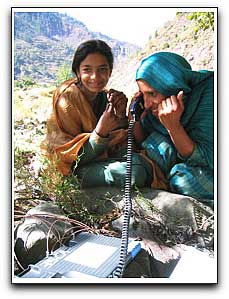 During early missions, TSF’s founders were often approached by refugees with scraps of paper asking them, for example: “When you go home, please call my family at this number, tell them I’m alive, uncle has been killed but I’m alive and I’m here at this refugee camp.” To address the need for communications services, TSF bought its first satellite phone, and the organization was born. Since this time, on every mission TSF has offered a three-minute call to any affected family. After beginning these helpful services, TSF soon found that the international response teams that deploy to emergencies also had a critical
need for reliable telecommunications services in the first days after an emergency. Thus the opening of its first Emergency Communication Centre for the humanitarian community using satellite communications in Mazâr-e charif, Northern Afghanistan.
During early missions, TSF’s founders were often approached by refugees with scraps of paper asking them, for example: “When you go home, please call my family at this number, tell them I’m alive, uncle has been killed but I’m alive and I’m here at this refugee camp.” To address the need for communications services, TSF bought its first satellite phone, and the organization was born. Since this time, on every mission TSF has offered a three-minute call to any affected family. After beginning these helpful services, TSF soon found that the international response teams that deploy to emergencies also had a critical
need for reliable telecommunications services in the first days after an emergency. Thus the opening of its first Emergency Communication Centre for the humanitarian community using satellite communications in Mazâr-e charif, Northern Afghanistan.
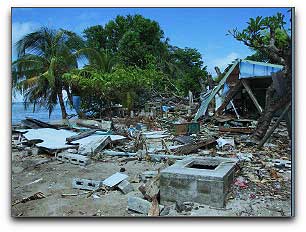 TSF then expanded its operations, improved its technology, and began to establish rapidly deployable emergency telecommunications centers to serve UN, government, and Non-Governmental Organization (NGO) humanitarian workers, and developed a reputation for being among the first to arrive after disasters. “In emergencies there is an urgent need for food, water, shelter, and medical help. None of these things are possible without quick and reliable communications. Our role is to help other organizations to save lives and we also directly support victims,” said Monique Lanne-Petit, Founding Director of TSF.
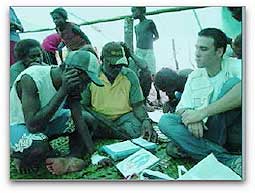 Today TSF plays a key role in strengthening coordination and communication by deploying telecommunications centers within 24 hours of an emergency. These centers offer broadband Internet access, voice communications, fax lines and all the IT equipment needed for a field office. To do its work TSF uses highly portable and light satellite terminals deployable within minutes with a worldwide coverage, and teams in TSF’s three regional bases are on call 24 hours a day, seven days a week.
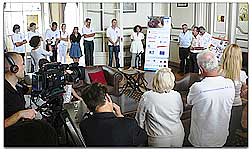
In honor of this 10th anniversary, and to accomodate a large turnout, TSF’s 10th anniversary event took place at the French National Football Team training centre in Clairefontaine on June 29th in the presence of its corporate and institutional partners. The event included a demonstration of the communications equipment used in a typical TSF deployment and an exhibition of photos, testimonials and more of TSF’s 10 years. The IT Cup, the charity football tournament for IT & Telecom companies, also took place on June 29th. Each team pays an entry fee depending on their company’s turn over and funds raised are then donated to a charity putting new technologies at the heart of its project. For the third consecutive year, TSF has been chosen as beneficiary. The 2006 and 2007 editions funded Community Communication Centres in Niger and Nicaragua.
Forty-two teams participated this year and the funds collected will be used towards a project to support four clinics working with Burmese refugees at the border between Burma and Thailand. Since 1998, TSF has deployed to over 50 countries on all of the five continents to the benefit of over 500 NGOs and UN agencies and millions of victims.
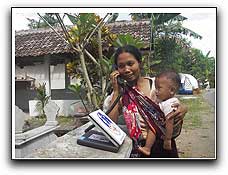 This amazing organization over the last 10 years has been deployed 350 days per year, on average, with the help of three deployment bases, in France, Nicaragua and Thailand. As an international recognition of the importance of telecommunications in emergency situations TSF became the Telecom Partner of the European Commission’s Aid Department (ECHO) in 2002 and led its first mission under European mandate in Iraq the following year from April to October.
In October 2006, TSF signed the first worldwide partnership between a Non-Governmental Organization (NGO) and the United Nations agencies OCHA and UNICEF, and also became First Responder of the Emergency Telecommunications Cluster. Télécoms Sans Frontières also extended its appreciation to its partners; Inmarsat, the Vodafone Group Foundation, the United Nations Foundation, Eutelsat, AT&T, Cable & Wireless, Vizada, the IT Cup and the Regional Council of Aquitaine.
While they may be large corporations, they also believed in a group of volunteers and helped them continue their humanitarian work and create a professional organization that is the leading non-governmental organization specializing in emergency telecommunications. Yet, they recognize the fact that there is still much to be done, particularly in the areas of prevention, disaster preparedness as well as development. Telecommunications can indeed play a key role to reduce the impact of humanitarian crisis and offer long term solutions.
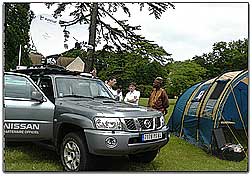 With its 24-hour monitoring center, and its operational bases in France, Nicaragua and in Thailand, Télécoms Sans Frontières (TSF) crews of IT and telecoms specialists can intervene anywhere in the world in less than 24 hours after any sudden onset disaster or conflict, and, in a matter of minutes, set up a satellite-based telecoms centre offering broadband Internet, phone and fax lines. In emergencies telecommunication networks are often seriously damaged or destroyed. Some humanitarian crises also strike in areas with no existing communication facilities. TSF’s rapid response telecommunications centers enable relief and rescue teams to save lives by sending and receiving information on logistics and the needs of the population within hours of an emergency. And home offices TSF’s civilian calling program supplements this service by give affected civilians a free call anywhere in the world to receive personalized assistance and mental support, help reunite families and reinsure family abroad that they are alive and safe after the emergency—a blessing to all involved, no doubt.
