

The diplomatic effort to restrict Iran’s nuclear program via a structured international agreement introduces a critical, unintended secondary effect: the rapid acceleration of Iran as a system-integrated, space-enabled power.
Rather than dissolving Iran’s strategic posture, a comprehensive diplomatic bottleneck on nuclear enrichment forces a wholesale reallocation of state resources. The financial, scientific, and industrial capacity originally earmarked for nuclear development—estimated to exceed several billion dollars annually—is shifting laterally into adjacent high-tech domains.
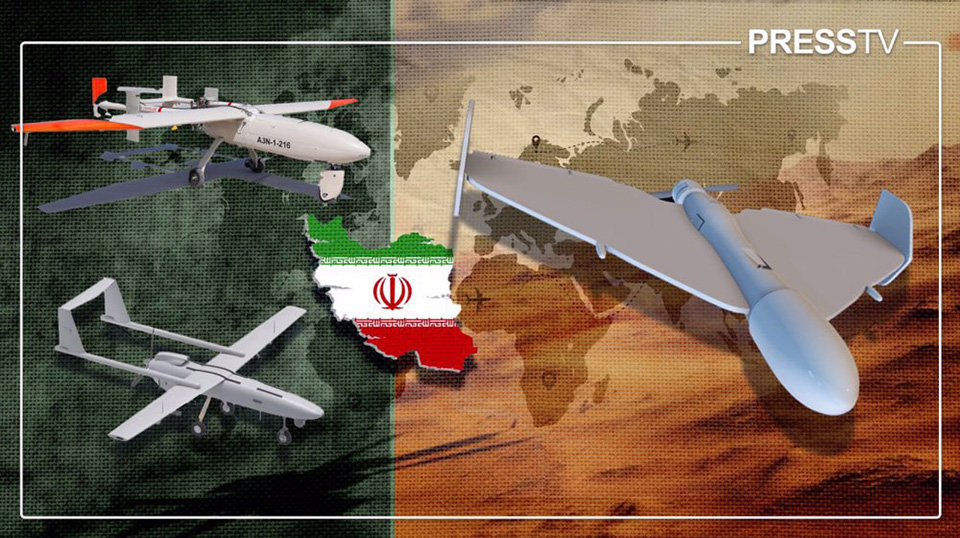
This pivot directly feeds Iran’s domestic development of low-Earth orbit (LEO) satellite systems, advanced space launch vehicles (SLVs), proliferated drone networks, and real-time missile-data integration.
The Paradigm Shift: Integrated System Architectures
Modern geopolitical influence no longer relies solely on the raw destructive power of isolated weapons systems. Instead, it is governed by the structural alignment of integrated operational architectures. Iran’s emerging military-industrial doctrine focuses on compressing the data lifecycle—the time elapsed between identifying a target and executing a strike—from days down to mere seconds.
             THE PERSISTENT DATA-TO-STRIKE CYCLE
  +--------------------------------------------------------+
  | 1. DETECTION & SURVEILLANCE                            |
  |    Sovereign LEO Satellites (e.g., Chamran, Nour)      |
  +--------------------------------------------------------+
                             | (Real-time data stream)
                             v
  +--------------------------------------------------------+
  | 2. ANALYSIS & PROCESSING                               |
  |    Decentralized Ground Command & Data Links           |
  +--------------------------------------------------------+
                             | (Precision targeting coordinates)
                             v
  +--------------------------------------------------------+
  | 3. KINETIC & ADAPTIVE EXECUTION                        |
  |    Proliferated Drone Swarms & Precision Missiles      |
  +--------------------------------------------------------+
Iran is not attempting to compete with Western commercial aerospace giants on launch capacity or economic scale. Instead, its space program is modeled around strategic sovereignty, modular scalability, and asymmetrical operational resilience.
Core Analytical Conclusions
- Distributed Capability Transformation: Diplomatic constraints do not eliminate sovereign military innovation; they redirect it. The traditional, highly concentrated threat of a nuclear payload is being broken down and distributed as advanced aerospace hardware, localized signal-jamming capabilities, and automated battlefield network data systems.
- Speed and Persistence as Power: The integration of space-based assets shifts regional conflict from episodic escalations to a state of permanent, real-time friction. Battlefield supremacy belongs to the actor capable of turning telemetry data into kinetic action faster than an opponent can calculate a response.
- Data-Enabled Proliferation via Proxies: The primary security risk has moved beyond state-on-state warfare. Through its established network of regional proxy forces, Iran can diffuse space-derived surveillance, positioning, and targeting feeds down to non-state actors. This introduces a dangerous new category of threat: asymmetrical, data-enabled lethality proliferation.
Cross-Theater Validation
The viability of this distributed, space-reliant architecture is actively demonstrated across several active geopolitical theaters:
| Conflict Theater | Operational Dynamics | Strategic Takeaway |
| Ukraine | Commercial satellite communications paired natively with low-cost FPV drone swarms. | Decentered space data drastically lowers cost structures while paralyzing rigid, heavy armored divisions. |
| The Red Sea | Precision-timed maritime drone and missile strikes bypassing defensive radar geometries. | Low-cost tracking assets can systematically disrupt critical global maritime trade funnels. |
| Israel | High-density multi-layered missile and air defense tracking. | Interception math depends completely on real-time data integration across distributed sensors. |
The New Space Race
The global space domain has outgrown the era of launch volume metrics and technological prestige. Power is defined by how seamlessly an operator can transform orbital data into immediate operational advantages.
The U.S.–Iran framework does not eliminate national security friction; it redistributes it from a concentrated nuclear pinpoint into a persistent, distributed, and continuously adaptive aerospace network.
