

The rapid adoption of high-bandwidth low-Earth orbit satellite constellations has triggered an unprecedented digital evolution across the global shipping sector. Vessels that once operated as isolated industrial endpoints are now fully integrated nodes within cloud-managed supply chains.
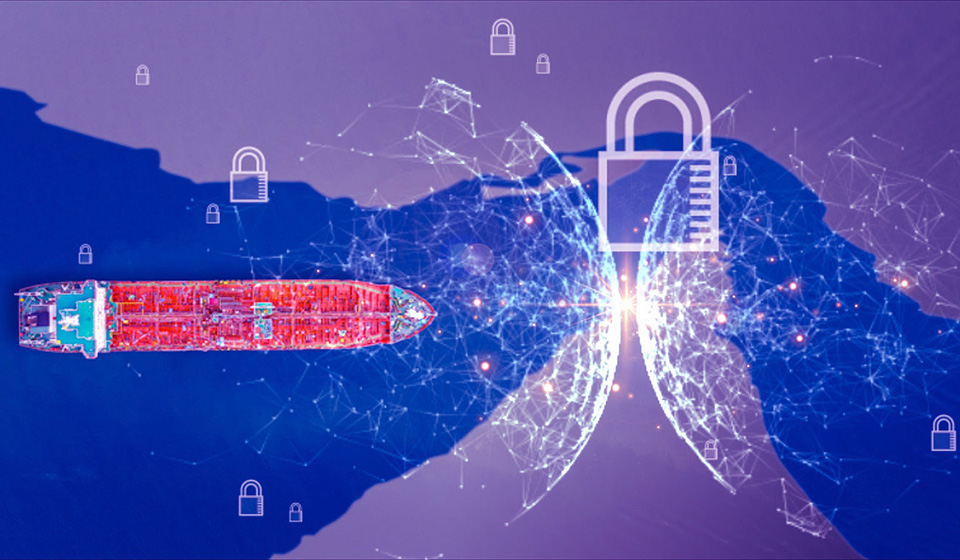
However, this hyper-connected infrastructure is expanding faster than the maritime industry’s underlying cybersecurity frameworks can secure it.
According to market intelligence from maritime technology firm Tototheo Global, the industry’s true structural exposure stems not from a lack of financial investment, but from severe systems fragmentation. Maritime cyber incidents experienced a massive 103% year-on-year surge, while specialized attacks targeting onboard operational technology—the critical physical systems that control propulsion, steering, and cargo handling—skyrocketed by 150%.
The financial and operational stakes have fundamentally shifted: the average maritime ransomware resolution now surpasses $10 million, and a recent industry survey by DNV revealed that 60% of maritime professionals expect a cyber-attack to directly cause a physical ship collision.
The Problem with Layered Security Architecture
As shipping companies scramble to satisfy changing insurance requirements and combat real-world threats like regional GPS jamming and spoofing, many have fallen into the trap of purchasing standalone, uncoordinated security patches.
This approach often results in a deeply disjointed onboard technology stack, where a vessel might run separate, unlinked software programs for satellite bandwidth management, engine performance monitoring, crew welfare access, and network firewalls.
This fragmentation creates dangerous visibility blind spots. An attack that gains entry through an unpatched, isolated crew Wi-Fi network can easily migrate across poorly segmented bridges into critical operational networks, corrupting Electronic Chart Display and Information Systems (ECDIS) or automated ballast controls.
When security solutions operate in silos, detecting lateral network movements before an intruder deploys ransomware becomes exceptionally difficult for shore-based operations teams.
Transitioning to Regenerative Cyber Resilience
To eliminate these vulnerabilities, maritime operators must shift their digital strategies away from simply adding more defensive software layers, moving instead toward a framework of regenerative cyber resilience. Under this model, cybersecurity, vessel connectivity, and real-time fleet data are consolidated into a single unified operational picture.
Regenerative resilience means engineering a network environment that assumes breach attempts will occur and focuses on minimizing the blast radius. By utilizing automated micro-segmentation and continuous threat intelligence, an integrated network can actively adapt, learn, and isolate compromised systems in real time, ensuring the vessel maintains baseline navigational and propulsion capabilities even while under an active cyber assault.
Cyber Posture as a Commercial Advantage
This structural transformation has rapidly evolved from an administrative IT box-checking exercise into a core commercial differentiator on par with fuel efficiency. The International Association of Classification Societies (IACS) has enacted UR E26 and E27, making advanced cyber-resilient design completely mandatory for all newbuild vessels.
Concurrently, marine hull insurers, international flag states, and high-value cargo charterers are aggressively auditing the unified network security posture of fleets before finalizing service contracts. Shipping lines that proactively unify their digital infrastructure to eliminate fragmentation do more than just protect their crews and physical assets from physical disruption; they secure a distinct operational and financial advantage in an increasingly regulated global market.
