

SatNews reported in July that SpaceX had stopped accepting new commercial bookings for its Transporter and Bandwagon rideshare missions beyond late 2028. The confirmation came from operators and integrators, not SpaceX. On October 1, Transporter-18 carried 130 spacecraft to orbit from Vandenberg Space Force Base. The lawyer who spent twelve years selling rideshare slots takes the Satellite Innovation stage at Silicon Valley Space Week in October.
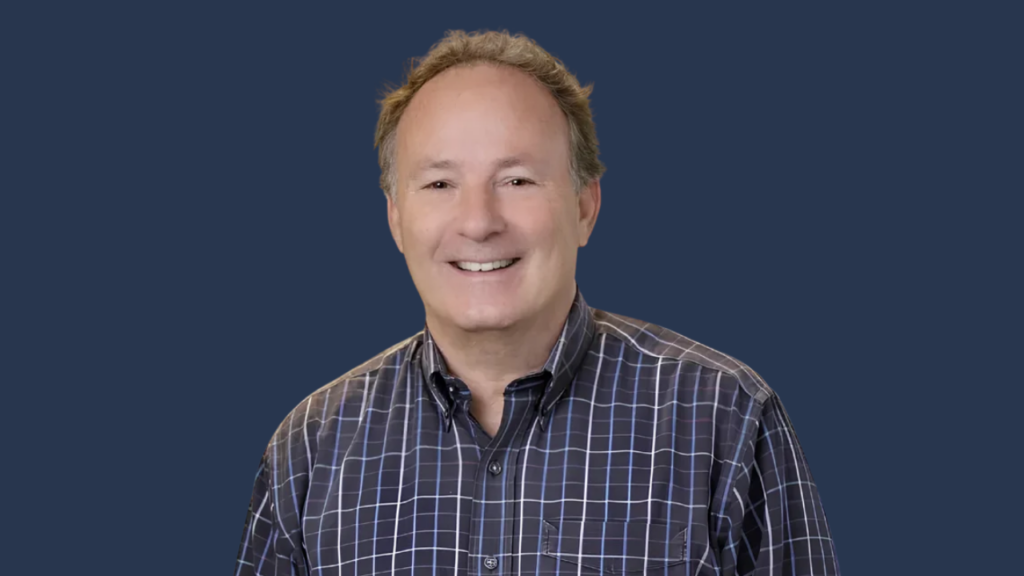
Curt Blake is Senior Of Counsel at Wilson Sonsini Goodrich & Rosati, in the firm’s Seattle office and its corporate practice. He stepped down in February 2023 after twelve years as chief executive of Spaceflight, Inc. Firefly Aerospace announced on June 8 that year that it was buying the company, and said it would honor existing contracts but would not aggregate payloads on other launch vehicles. Blake joined Wilson Sonsini the same month. The firm’s biography puts Spaceflight’s record under him at more than 470 satellites across 56 launches and ten vehicles. SatNews quoted him as Spaceflight’s president in December 2018, when the company placed 64 spacecraft into sun-synchronous orbit on a single Falcon 9, described at the time as the largest single rideshare from a U.S. launch vehicle to date. The conference biography also credits him with opening India’s PSLV to U.S. commercial customers, with SpaceIL’s first private lunar mission, and with the Sherpa orbital transfer vehicles.
The program bills the session as a reframing, from vehicle showcase to allocation economics, and asks who gets a manifest slot. The word doing the work in that title is queues. One of Blake’s panelists has already described one in public. At World Space Business Week on September 15, Firefly’s Michael Creech told the room he would “wonder which rock you have been living under” if anyone thought supply was adequate, and said Firefly is “fully sold 24 months out.” The same day Space Intel Report said SpaceX had begun telling prospective customers it was no longer taking orders for commercial Falcon 9 launches. Elon Musk wrote on August 22 that it will make sense to shift production resources to Starship once it flies reliably several times a week. Blue Origin’s New Glenn exploded during a static fire on May 28, damaging the only operational pad it flies from. Blue Origin says it aims to return to flight before the end of the year. How long the pad takes to rebuild is not settled. The year in the title has a provenance. In Paris, D-Orbit’s Renato Panesi put the critical moment at “2029, 2030, maybe 2031.” SatNews reported in May that brokers were holding their position by selling deployment hardware and transfer vehicles rather than access alone.
Blake moderates “Launch Isn’t Settled: Scarcity, Queues, and the 2029 Gap” on Tuesday, October 27, from 4:15 p.m. to 5:00 p.m. in the Hahn Auditorium at the Computer History Museum in Mountain View. The panelists are Nishant Choksi, Director of Commercial and International Sales at Blue Origin; Michael Creech, Vice President of Strategy and Business Development at Firefly Aerospace; Evan Hoyt, President at SEOPS; Clint Hunt, Senior Director of Government Operations at United Launch Alliance; and Devon Papandrew, Vice President of Business Development at Stoke Space. It is the last panel of Satellite Innovation’s opening day, followed by two technical briefs, on mission software and on tracking traffic in low Earth orbit. Wilson Sonsini, Blake’s firm, and SEOPS and Stoke, whose executives are on the panel, are conference sponsors.
Silicon Valley Space Week runs Tuesday, October 27 through Thursday, October 29 at the Computer History Museum, with Satellite Innovation across the first two days and the MilSat Symposium across the last two. Blake closes the opening day’s panels. SpaceX is not taking new rideshare bookings past late 2028. Three Transporter missions remain scheduled, the next no earlier than February 2027. The program says analysts project a rough spot in 2029 and 2030.
