

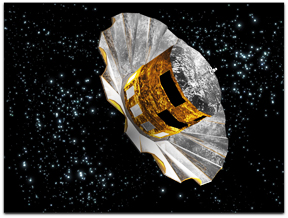
 CTA (Aeronautical Technologies Center) has, until now engaged in the field of aeronautical tests. CTA has now entered into the field of space components with SENER Engineering and Systems, in charge of the design of the sunshield for GAIA satellite. Mission GAIA is an ESA project that aims to draw up the most extensive 3D map of the stars. The spacecraft will be launched to the space in 2011. CTA will house a clean room to perform the functional and vibration tests on the sunshield, which is 11 meters in diameter and brings into play 12 identical marks of simultaneous unfolding. The tests at CTA will begin next month and will extend for approximately a year and a half. The technological center will perform functional tests of the unfolded of the parasol monitoring measurement in three dimensions on this component’s key points. CTA will also handle the vibration tests to verify operation viability in space. The company has acquired vibration equipment of 160 KN and one slip table of 2.3 square meters in order to perform these tests. All these tests will be developed in the new HALT laboratory, inaugurated by CTA in the Technological Park of Álava in November of 2007. The laboratory was built with the objective of responding to the new technological and innovation necessities required by the aeronautical and space sectors, demanding a greater number, but shorter in time, development times. CTA hopes to produce in hours or days what traditional tests require weeks or months to accomplish—Vitoria, Spain
GAIA Gets Going With Parasol Work By CTA
CTA (Aeronautical Technologies Center) has, until now engaged in the field of aeronautical tests. CTA has now entered into the field of space components with SENER Engineering and Systems, in charge of the design of the sunshield for GAIA satellite. Mission GAIA is an ESA project that aims to draw up the most extensive 3D map of the stars. The spacecraft will be launched to the space in 2011. CTA will house a clean room to perform the functional and vibration tests on the sunshield, which is 11 meters in diameter and brings into play 12 identical marks of simultaneous unfolding. The tests at CTA will begin next month and will extend for approximately a year and a half. The technological center will perform functional tests of the unfolded of the parasol monitoring measurement in three dimensions on this component’s key points. CTA will also handle the vibration tests to verify operation viability in space. The company has acquired vibration equipment of 160 KN and one slip table of 2.3 square meters in order to perform these tests. All these tests will be developed in the new HALT laboratory, inaugurated by CTA in the Technological Park of Álava in November of 2007. The laboratory was built with the objective of responding to the new technological and innovation necessities required by the aeronautical and space sectors, demanding a greater number, but shorter in time, development times. CTA hopes to produce in hours or days what traditional tests require weeks or months to accomplish—Vitoria, Spain
