

On August 21, 2026, mission managers from NASA and SpaceX completed the formal Flight Readiness Review (FRR) for the Nancy Grace Roman Space Telescope.
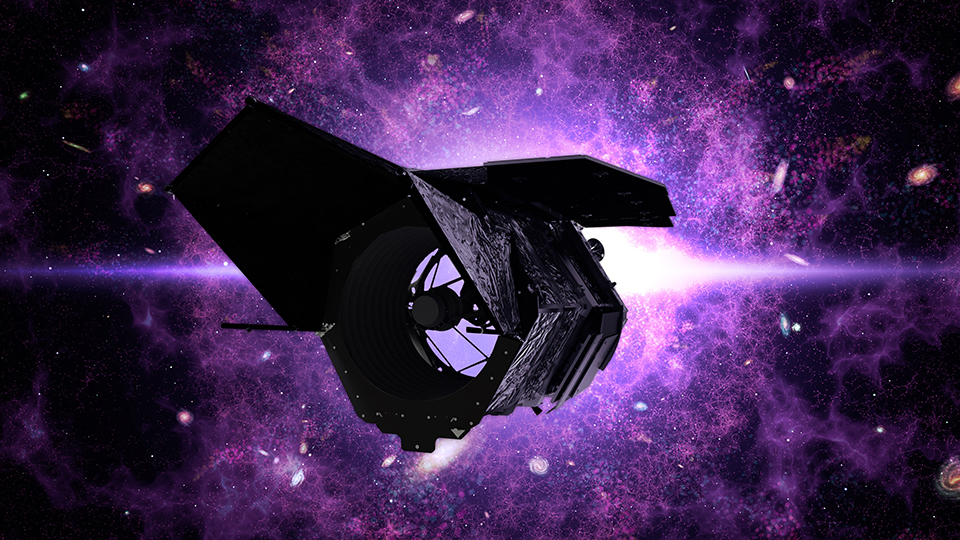
The milestone clears the next-generation astrophysics observatory for launch aboard a SpaceX Falcon Heavy rocket from Launch Complex 39A at Kennedy Space Center, targeting a launch window opening on August 30, 2026.
Observatory Specifications and Instrument Architecture
The Nancy Grace Roman Space Telescope is built around a 2.4-meter primary mirror that matches the optical size of the Hubble Space Telescope. However, the wide-field optical architecture delivers a panoramic field of view 100 times greater than Hubble, allowing the observatory to capture vast swaths of the infrared universe in a fraction of the time.
The spacecraft integrates two primary science instruments. The Wide Field Instrument (WFI), tested and integrated by BAE Systems and NASA’s Goddard Space Flight Center, measures light from hundreds of millions of distant galaxies to survey dark energy and dark matter distribution. The secondary Coronagraph Instrument uses active wavefront control and high-contrast starlight-suppression optics to perform direct imaging and spectroscopy of giant exoplanets orbiting distant stars.
Launch Service Procurement and Mission Context
The upcoming launch fulfills a $255 million launch services contract awarded by NASA to SpaceX in July 2022 under the NASA Launch Services (NLS) II framework. The Falcon Heavy vehicle will operate in an expandable configuration to deliver the 4.2-metric-ton observatory directly into a high-energy trajectory toward the Sun-Earth Lagrange Point 2 (L2), located approximately one million miles from Earth.
Launch Manifest Schedule
The Falcon Heavy launch vehicle has completed propellant loading tests and static fire evaluations at LC-39A. Following launch on August 30, 2026, the spacecraft will execute a three-month cruise phase to L2, followed by three months of in-orbit instrument calibration before initiating its primary five-year survey of the infrared universe.
