

On Friday, October 23, 2026, launch provider Rocket Lab successfully launched an Electron rocket carrying HawkEye 360’s Cluster 16 mission from Launch Complex 1 on the Mahia Peninsula in New Zealand.
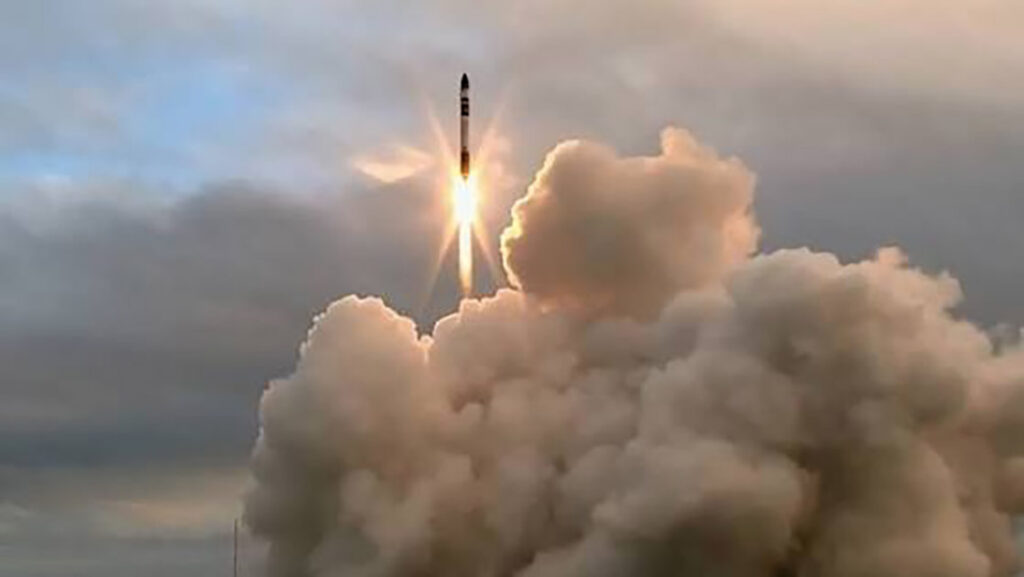
Lifting off at 3:11 a.m. Eastern, the dedicated mission deployed three formation-flying satellites into low Earth orbit, expanding HawkEye 360’s operational radio-frequency intelligence constellation to 39 spacecraft.
Dedicated Customer Allocation and Commercial Packaging
Cluster 16 supports a transition in HawkEye 360’s operational model toward customer-dedicated orbital capacity. Under multi-year commercial agreements, the operator allocates cluster tasking windows to prioritize signal collection over defined geographic areas of interest for specific anchor customers. This framework provides persistent regional monitoring and guaranteed access to radio-frequency data without requiring clients to procure and operate proprietary satellite constellations.
Simultaneous Collection Antenna Architecture and Orbital Parameters
The Cluster 16 spacecraft integrate antenna technology engineered to execute simultaneous radio-frequency collection and mission data downlink. Flying in orbital clusters to geolocate and characterize terrestrial radio-frequency emitters, the satellites detect emissions across high-interest spectrum bands. By transmitting captured intelligence to ground teleports while concurrently surveying new emitter signals, the updated payload architecture reduces operational latency between orbital passes and accelerates data delivery to defense and commercial users.
Constellation Expansion Lineage and Dual-Launch Operations
The launch marks HawkEye 360’s second orbital deployment within a 72-hour window. On Tuesday, October 20, the company launched Cluster 15 aboard SpaceX’s Bandwagon-5 rideshare mission from Cape Canaveral Space Force Station in Florida, coordinating deployments across launch sites on opposite sides of the globe. The mission builds upon launch partnerships established when Rocket Lab launched dedicated Electron missions for HawkEye 360 from its New Zealand and Virginia spaceports.
Orbital Commissioning and Launch Manifest Continuity
Following payload separation, HawkEye 360 mission controllers established two-way communications with the three Cluster 16 satellites and initiated on-orbit system checkouts. To maintain persistent revisit coverage as commercial rideshare capacity tightens across the launch industry, the company has secured forward launch slots through 2028 to support recurring constellation maintenance and expansion.
